Grounded Dreams of the Nakajima G5N Shinzan Japanese Heavy Bomber
In the late 1930s, the Imperial Japanese Navy sought to develop a long-range bomber capable of carrying heavy loads, including bombs or torpedoes, for at least 3,500 miles. To meet its needs, the Navy realized it needed a four-engine aircraft. Because Japanese manufacturers had little experience building such large, complex planes, the Navy looked for an existing foreign model to base its new design on. The service chose the American Douglas DC-4E airliner. In 1939, the Navy bought the only prototype of this airliner, which American airlines had previously rejected. The service secretly gave it to Nippon Koku K.K. (Japan Airlines Co.), which then handed it over to the Nakajima Aircraft Company for disassembly and inspection. The design from this study, designated Nakajima G5N Shinzan, was an all-metal, mid-wing monoplane.
Design of Nakajima G5N Shinzan
Nakajima G5N Shinzan. (Image via Wikipedia)
The Nakajima G5N Shinzan was powered by four 1,530-hp Mitsubishi MK4B Kasei 12 radial engines and had fabric-covered control surfaces. It had a long lower bomb bay, a fully glazed nose, and twin tail fins instead of the three rudders of the DC-4E. It retained the DC-4E’s original wing shape, engine arrangement, and retractable tricycle landing gear. For defense, it had two 20 mm Type 99 Model 1 autocannons, one in a power-operated turret on top and one in a tail turret. It also included hand-operated 7.7 mm Type 92 machine guns mounted in the nose, bottom, and side positions. The seven-crewed Nakajima G5N Shinzan was 101.9 feet long, 28.10 feet high, with a wingspan of 138.2 feet and a wing area of 2,172 square feet. It could carry 8,800 pounds of freight or bombs. Its empty weight was 44,313 pounds, its gross weight was 62,060 pounds, and its maximum takeoff weight was 70,548 pounds.
The Cancellation
Nakajima G5N Shinzan. (Image via Wikipedia)
The Nakajima G5N Shinzan was envisioned to attain a maximum speed of 260 mph, with a cruise speed of 173 mph, a range of 2,650 miles, and a service ceiling of 24,440 feet. The first prototype of the Nakajima G5N Shinzan made its first flight on April 8, 1941. However, its overall performance was disappointing. This was due to its heavy weight, the weak Kasei engines, and the complex design. To improve the project, four additional planes were made with 1,870 hp Nakajima NK7A Mamori 11 engines and renamed G5N2. Although these Nakajima engines were more powerful than the Kasei 12s, they were unreliable. Along with the increased weight of the aircraft, this led to the end of further development. Four out of six completed Shinzans were used as long-range Navy transports. They were given the name G5N2-L Shinzan-Kai Transport. The Allies called the aircraft “Liz” because they thought it would be used as a bomber. Read more Grounded Dreams articles HERE.
Nakajima G5N Shinzan. (Image via Wikipedia)
https://vintageaviationnews.com/warbird-articles/grounded-dreams/nakajima-g5n-shinzan.html
#groundeddreams #navy #imperialjapanese #bomber #becausejapanese #kasei #cancellationnakajima #nakajimaaircraft #design #americandouglas
#rss #feeds #linksharing #qwibbit
The Little Aviatrix: A Young Girl’s Dream Takes Flight at the National Warplane Museum
Sometimes, all it takes is one airplane ride to inspire a lifelong passion for aviation. For young Riley McDonald, that unforgettable experience came at the National Warplane Museum in Geneseo, New York, where a flight aboard a vintage military aircraft helped turn a childhood dream into something much more. Now, Riley’s experience has become the inspiration for The Little Aviatrix, a new children’s book written and illustrated by the McDonald family, celebrating the wonder of flight and the importance of encouraging young aviators.
The McDonald family’s connection to the National Warplane Museum began several years ago when Thomas and Esther McDonald brought their two young daughters, Riley and Rori, to visit. What began as a family outing quickly blossomed into a shared love of aviation and the museum’s historic aircraft. Both Thomas and Esther are skydivers, and their enthusiasm for aviation has clearly rubbed off on their daughters. Riley has already expressed a strong desire to become a pilot, while her younger sister Rori is showing a similar interest in following in her family’s footsteps.
L-21 Riley. | Source: Esther McDonald
The inspiration for The Little Aviatrix came when Riley experienced her first airplane ride with National Warplane Museum pilot Don Nicholls aboard the museum’s Piper L-21 Grasshopper. The flight left a lasting impression on the young aviation enthusiast, providing a memory that her family would eventually transform into a beautifully illustrated children’s story. Through colorful, hand-drawn illustrations and a heartfelt narrative, The Little Aviatrix follows a young girl with an enormous love for aviation as she waits, wonders, dreams, and finally experiences the magic of flight. Based on Riley’s real-life adventure, the book captures the excitement and anticipation familiar to anyone who remembers their first airplane ride.
L-21 Riley. | Source: Esther McDonald
For the McDonald family, however, the book represents something even more meaningful: the friendships, memories, and experiences they have enjoyed together at the museum. “As a family, we have had many amazing trips to the NWM. The idea to put together a book followed an exceptionally magical day, one that hardly felt real,” the family shared. “Each page references an aviation-related experience or memory Riley has had, which made the process of creating this book so much fun.”
Esther Skydive. | Source: Esther McDonald
In a generous gesture of appreciation, the McDonald family has donated a limited batch of The Little Aviatrix to the National Warplane Museum, with proceeds from sales benefiting the museum’s ongoing preservation and educational efforts. Over the years, the family has become a familiar and welcome presence at the museum, developing friendships with volunteers and pilots while continuing to explore the aircraft that make the museum special. From the Piper Grasshopper to the museum’s Fairchild PT-26 Cornell and North American AT-6 Texan, Riley and Rori have had opportunities to discover aviation history firsthand.
The book also reflects one of the museum’s most important missions: introducing younger generations to aviation and inspiring them to pursue their own dreams. For children like Riley and Rori, historic aircraft are more than artifacts from another era. They represent possibilities, adventures, and perhaps even future careers in the cockpit. “Our hope is that families will read the book, be able to relate to Riley’s passion, and to help support our favorite place on earth!” the McDonald family added.
The Little Aviatrix is available for $10 through the National Warplane Museum’s gift shop, both in person in Geneseo and online. Each purchase helps support the museum while sharing a simple but powerful message with young readers: no dream is too big, and sometimes the journey toward becoming a pilot begins with a single unforgettable flight. Purchase The Little Aviatrix from the National Warplane Museum Gift Shop HERE.
McDonalds (Tom & Esther). | Source: Esther McDonald
https://vintageaviationnews.com/vintage-aviation/the-little-aviatrix-a-young-girls-dream-takes-flight-at-the-national-warplane-museum.html
#nationalwarplane #warplanemuseum #littleaviatrix #younggirl #riley #esthermcdonald #flight #newyork #rori
#rss #feeds #linksharing #qwibbit
What Might Have Been
What Might Have Been
Air Facts Journal
I’m still in a bit of a vacation hangover. Not the kind caused by too many drinks with little umbrellas, but the kind caused by returning from a great trip and finding that work has been patiently waiting for you—and apparently multiplying while you were gone.
My wife and I were fortunate enough to make our first trip to Alaska. Since returning, everyone asks the same question: “How was it?” I usually give two answers. The first is easy. It was amazing. Beautiful. More than I hoped it would be.
The second takes a little more explanation. Saying I “saw Alaska” after a week feels a bit like saying I spent a week in Australia and saw the country. Alaska is simply too big for that. I understood its size intellectually. I had looked at maps. I knew the statistics. But I didn’t truly understand its vastness until I stood there and realized how tiny a speck of it I was actually seeing.
As an aviator, Alaska left me seeking answers to questions no one asked me. I want to be careful here. I am not going to tell anyone what aviation means to Alaska or pretend that one week made me knowledgeable about Alaskan flying. There are pilots who have spent their entire lives flying there who know more about that subject than I ever will.
What I am pondering, as I try to avoid work, is the place the airplane seems to hold in Alaska. That is making me think about what aviation is—and what aviation could have been in the lower 48. I’m asking myself if aviation in Alaska provides a glimpse of what some of aviation’s early pioneers imagined airplanes becoming for all of us.
Landing in Anchorage, one of the first things I noticed was simply the amount of general aviation. We taxied past row after row of single-engine airplanes. Just how many tailwheel airplanes were parked at the Class Charlie airport? Single-engine tricycle-gear airplanes were too numerous to count. Working airplanes. Personal airplanes. More little airplanes in one place than I’m accustomed to seeing anywhere outside AirVenture or Sun’n Fun.
And that was just one airport. Right next door is Merrill Field, again covered with general aviation airplanes. Then squeezed between the two is Lake Hood, with more airplanes on floats than I had ever seen gathered in one place.
General aviation was not foreign here. It did not feel as though general aviation had been pushed off into some distant corner. It felt woven into the place. I knew aviation was big in Alaska, but much like the vastness of the state itself, seeing the aircraft on the ramps in Anchorage told me it was bigger than I had imagined.
Then there were the pilots. Everyone seemed to be a pilot. I’m being facetious, of course, but only a little. Mention aviation in a conversation and there was a surprisingly good chance someone nearby flew airplanes. Not necessarily professionally. They might simply be a private pilot who used an airplane out of necessity and enjoyment alike.
If you did not fly an airplane yourself, chances were you had flown in one to get somewhere. A ride in a “private” airplane did not seem reserved for the rich and famous. Small-airplane transportation seemed routine—something people had used more than once simply because they needed to.
The statistics back up my impressions. Air Facts readers know Alaska reports roughly six times as many pilots per capita and 16 times as many aircraft as the country overall. But a statistic on a website is one thing. Sitting in a room, mentioning airplanes, and having multiple people say, “Yeah, I fly,” or “I’ve been in one of those,” is something entirely different.
What also struck me was how utilitarian the airplane seemed to be.
I write a lot about flying for fun, because I fly for fun. I like going somewhere simply because the flight itself is worth taking. The Alaskan pilots I met clearly enjoyed flying too. They talked about the scenery, the places they could reach, and the simple pleasure of being above that landscape.
Still, the utility of GA seemed to reign supreme. The airplane seemed to be treated like a car or a truck. It was used because it served a purpose. Need mail or supplies? An airplane may be involved. Need to see family? Airplane. Need to get to a community that would otherwise require an all-day trip—or has no road at all? Airplane. Medical care, school activities, groceries, work, hunting, fishing, visiting friends. All normal daily activities, all frequently associated with an aircraft.
In the lower 48, it sometimes feels like you have to search for a justification to fly. In Alaska, flight needs little justification. Sometimes it is simply how you get there. It’s almost the antithesis of the proverbial $100 hamburger we talk about so often in the lower 48.
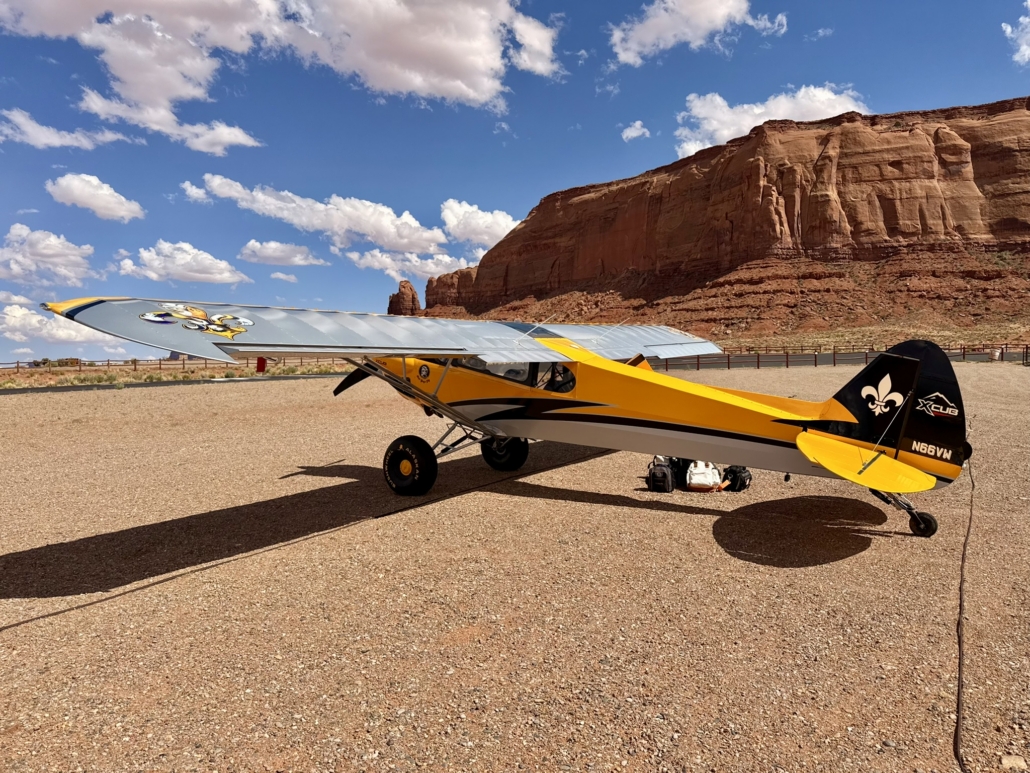
One Alaskan I spoke with keeps his Super Cub on skis. He flies it out of his yard. When he needs groceries, he can fly about 100 miles, land literally in the parking lot, shop, load up, and fly home.
The airplane isn’t being used because he’s a “pilot” looking for somewhere to fly. He’s using the airplane because he is a person who needs groceries. And he was not alone in this.
The attitudes I encountered toward aviation extended well beyond the professional in a white shirt and black pants flying a pressurized turbine. Often, the machine doing the work was a two- or four-seat piston airplane. The flyers were the same working people we meet in the lower 48 every day. In Alaska, an activity that in much of the lower 48 might be dismissed as a weekend hobby involving an expensive toy was considered routine. A plane did what airplanes were originally supposed to do: move ordinary people between ordinary places for ordinary tasks.
Of course, geography deserves much of the credit. Alaska did not choose aviation over a perfectly good interstate highway system. Much of the state simply does not have roads connecting one community to another. The Alaska Department of Transportation says 82 percent of its communities depend on aviation for year-round access.
Yes, necessity molds attitudes.
Still, necessity does not explain all the differences I perceived between Alaska and the lower 48. Obviously, a week in Alaska did not include a scientific survey of attitudes toward airplanes. There may be plenty of Alaskans who dislike aircraft noise, complain about airports, or would rather never see another Super Cub fly over the house.
Yet I didn’t sense the automatic suspicion of general aviation that we sometimes encounter in the lower 48: airplanes are too noisy, they pollute, they are dangerous, they are toys for rich people.
Instead, the airplane seemed to receive the respect—or maybe simply the lack of attention—we normally give other useful tools.
A pickup truck can be transportation, work equipment, recreation, or all three. Nobody finds that combination strange. In Alaska, the airplane seemed to occupy a similar place.
That ordinariness sent my mind wandering backward.
The original Air Facts, founded in 1938, was dedicated to “the development of private air transportation.”
Private air transportation.
Not merely flight training. Not aviation as a hobby.
Transportation. Utility.
For a brief period after World War II, aircraft manufacturers and much of the aviation world imagined a far larger role for the personal airplane. Companies expected returning military pilots to keep flying. Piper, Cessna, Beech and others built airplanes for private owners. Businesspeople would travel in their personal airplanes. Airplanes were even displayed and sold in department stores.
The idea of the “family airplane” was not science fiction. There was serious thought that aviation might become another layer of personal transportation.
Obviously, that future never arrived in the lower 48.
We built suburbs and sprawling highways to connect them. Many towns built community airports but watched as houses and roads spread, while the expected flood of personal airplanes never materialized. Some airports survived and prospered. Others became increasingly isolated from the communities around them. Still others eventually disappeared beneath the development they had once been built to serve.
Meanwhile, the automobile became the obvious choice for most trips. The airplane demanded training, maintenance, hangars, fuel, weather decisions, and an airport—or at least somewhere appropriate to land—at both ends.
In a race toward a transportation future, as America looked toward the neon lining Route 66 and the exits lining the interstates, the car won.
And let’s face it, for most people and most circumstances, it deserved to win. A car requires almost no planning. The weather rarely matters. You can leave whenever you want and usually arrive at the exact building you intended to visit.
The airplane was never going to replace that.
But I do wonder whether we gave up more than we had to.
I am not suggesting we tear up Interstate 40 and replace every entrance ramp with a grass strip. I don’t think anyone ever envisioned a future where someone in the Bronx commuted to Queens in a J-3 Cub. I’m not even sure I want millions of my fellow drivers suddenly becoming pilots.
But in the lower 48, the notion that general aviation could be ordinary largely disappeared. Somewhere along the way, general aviation stopped being viewed as having much utilitarian potential. It became categorized as recreation, training, business travel, or luxury.
Perhaps more importantly, the airplane became something for “pilots,” rather than a tool for ordinary people who happened to fly.
There is a subtle difference.
How many trips in the lower 48 still make sense in a light airplane? The three-hour drive to visit family that becomes a one-hour flight. The specialist whose office is in a city awkward to reach by road. The small town with a restaurant you like. The college football game. The weekend trip where the highway bends around mountains or lakes while the airplane simply crosses them.
Is there a role in the lower 48 for regular daily or weekly use of a lowly piston airplane?
No, not for everyone. Probably not even for most people.
But certainly for more people than take advantage of it now.
Some of us fly that way now. I’m sure many Air Facts readers do. But we operate within a culture that often regards us and our airplanes as a luxury rather than a useful form of transportation. Airports can become nuisances rather than assets. The airplane making noise overhead becomes an annoyance rather than a neighbor going somewhere. Even the idea of an airplane operating somewhere other than a conventional airport can seem unusual.
In Alaska, the airplane still appears to belong.
It is not remarkable that a person owns one, or that a small piston airplane has somewhere useful to go. An airport is not necessarily a fenced-off piece of property at the edge of town that most residents never visit. In many places, it is part of daily life in the same way a road, dock, or ferry terminal is part of daily life. And in some places, off-airport flying is simply part of what airplanes do.
I don’t think the lower 48 can become Alaska, and I wouldn’t want it to. Alaska’s aviation culture exists partly because of geography and necessity that we simply do not share.
But maybe we could preserve a little more of the early vision.
We could value the small airports we still have. We could make them easier to use rather than increasingly fencing them off. We could recognize their utility rather than their property tax value. We could build flying clubs, keep airplanes affordable where we can, welcome people onto airports, and remind our communities that a little airplane can be more than a noise complaint or an expensive hobby.
Maybe the goal is not an airplane in every garage.
Maybe it is simply keeping the airplane within the realm of the ordinary.
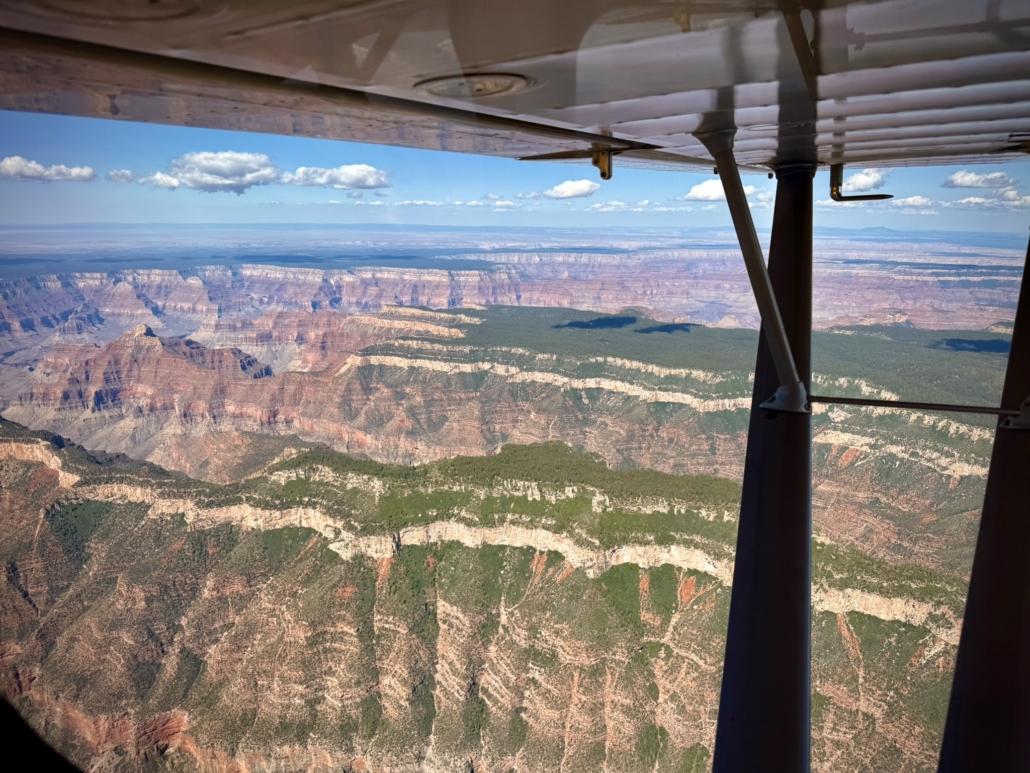
That is the thought I brought home from Alaska. I can imagine leaving home in a Super Cub, flying over countryside that would take hours to cross by road, landing on a dirt road, a field, or a grass strip near a small town where appropriate, walking to the store of my choosing, loading a few things in the back, and flying home.
Would it always be cheaper? No.
Would it always be faster? In many cases, yes. In others, no.
Would weather occasionally leave me sitting somewhere eating another meal while waiting for better conditions? Absolutely.
But on the days when it worked, the airplane would not be an indulgence added to the trip.
It would be transportation. It would be convenience. It would be routine.
It would be ordinary.
In Alaska, I do believe I experienced the vision of so many early aviators. Maybe aviation in the lower 48 was destined to become what it is today. But my time in Alaska has me wondering what might have been—and maybe, in a few places, what still could be.
The post What Might Have Been appeared first on Air Facts Journal.
https://airfactsjournal.com/2026/10/what-might-have-been/
#alaska #airfacts #factsjournal #anchorage
#rss #feeds #linksharing #qwibbit
#alaska
#airfacts
#factsjournal
#anchorage
#rss
AviationHistory18h
Schumacher’s Ferrari Meets Italian Aviation History at Vigna di Valle
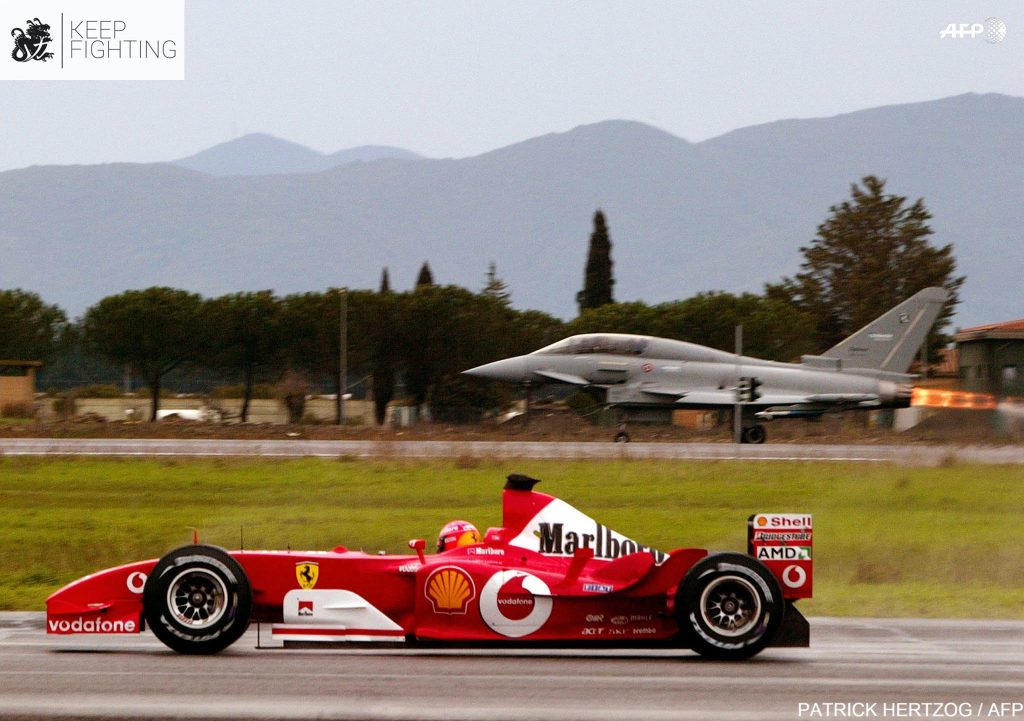
A Formula One racing car has joined the historic aircraft at the Italian Air Force Museum in Vigna di Valle, Italy, as part of an exhibition exploring the pursuit of speed. Running through November 15, 2026, Rosso Corsa – Il Mito della Velocità brings together aviation, motor racing, and sport, with Michael Schumacher’s Ferrari F2003-GA among its principal attractions. Organized with the Ferrari Museum in Maranello and the Centro Studi Militari Aerospaziali, the exhibition opened on October 23. The Ferrari provides a connection to one of the most memorable encounters between motor racing and military aviation. On December 11, 2003, Schumacher brought an F2003-GA to Grosseto Air Base for an acceleration contest against a Eurofighter Typhoon. Test pilot and astronaut Maurizio Cheli flew the fighter, bringing two very different approaches to high performance together on the same airfield. The 2026 exhibition revisits that encounter through the presence of the Ferrari alongside the museum’s aviation collection.
For historic aviation enthusiasts, however, the exhibition’s opening date carries particular significance. On October 23, 1934, Francesco Agello flew the Macchi-Castoldi M.C.72 to an average speed of 709.202 kilometers per hour—approximately 440.68 mph—at Desenzano del Garda. Powered by a Fiat AS.6 engine producing approximately 3,000 horsepower, the Italian racing seaplane established a record that remains unbeaten for piston-powered seaplanes. Preserved at Vigna di Valle, the record-setting M.C.72 provides a direct link to that achievement. Its survival allows visitors to examine the machine behind the statistics: an aircraft developed during an era when international racing and record attempts pushed engine performance and airframe design forward. The museum celebrated the flight’s 90th anniversary during the first Rosso Corsa event in 2024. That edition featured a Ferrari associated with Gilles Villeneuve’s November 1981 contest against an Italian Air Force F-104 Starfighter at Istrana.
This year’s route extends across 14 stops within the museum. Aircraft and artifacts highlighted along the way include Schneider Trophy racing seaplanes, the Campini-Caproni CC.2, the Savoia-Marchetti S.79 Sparviero, the Aerfer Sagittario, the de Havilland Vampire, the F-104 Starfighter, and the Eurofighter Typhoon. Flying equipment and sporting memorabilia broaden the exhibition beyond the machines themselves. Ferrari’s place in this setting also reflects a connection that predates its Formula One success. The company’s prancing horse originated with Francesco Baracca, the Italian WWI fighter ace who carried the emblem on his aircraft. Baracca’s mother subsequently encouraged Enzo Ferrari to adopt it as a good-luck symbol, establishing an enduring link between Italian aviation and motor racing.
Education formed a central part of the opening program, which welcomed approximately 200 students. Activities included workshops conducted by the Ferrari Museum and the aviation museum’s maintenance and restoration staff. The latter presented an instructional Alfa Romeo 126 engine, a type used in the S.79, giving students an opportunity to explore the engineering behind the museum’s exhibits. Rosso Corsa – Il Mito della Velocità continues at the Museo Storico dell’Aeronautica Militare, on Lake Bracciano near Rome, through November 15. A related static modeling exhibition, Dalla carta allo spazio, takes place at Magazzino 22 on October 31 and November 1, with free admission from 10 a.m. to 6 p.m. Visitors should consult the Italian Air Force’s official website for museum access information.
https://vintageaviationnews.com/aviation-museum-news/schumachers-ferrari-meets-italian-aviation-history-at-vigna-di-valle.html
#rss #feeds #linksharing #qwibbit
#rss
#feeds
#linksharing
#qwibbit
AviationHistory20h
Interstate: The History of the Cadet S-1 Maker
Interstate Aircraft and Engineering Corporation was a small American aircraft manufacturer. It operated from April 1937 to 1945 and was based in El Segundo, California. First called Interstate Engineering, the company changed its name to the Interstate Aircraft and Engineering Corporation around July 1937. The company built a new aircraft plant next to Los Angeles Municipal Airport and began operations there that same month. In August 1938, Don P. Smith became the president, and by mid-1939, the company had 100 employees. In a 1940 court case, the National Labor Relations Board ruled against the company. It ordered the company to stop discriminating against employees who joined the United Automobile Workers union. A few months later, the company created the Cadet, a two-seat monoplane, with production starting in July. The Model S-1B was updated to the XO-63, later renamed the XL-6. The US Army Air Forces received a total of 259 XO-63/L-6/L-8 series aircraft. The company planned to produce 900 aircraft each year.
Interstate Cadet. (Image via Wikimedia Commons)
The increase was partly due to the “Fabri-Clip” invention, which allowed workers to attach the fabric covering of airplanes much faster than before. The company also built a trainer for the US Navy, finishing it just nine months after starting with the first designs. Additionally, the company made bomb shackles, machine gun and cannon chargers, hydraulic actuators, and other aircraft parts. There were plans for a larger version of the Cadet with side-by-side seating and a small four-seat twin-engine airplane that was said to be the “world’s smallest.” By November 1941, the company employed 22 deaf and mute workers. In 1945, Interstate manufactured over 700 light aircraft. That year, it sold its aircraft line to the Harlow Aircraft Company because it decided to focus on making appliances. The next year, the company changed its name to Interstate Engineering to match its new business focus. However, in a few years, Interstate started making helicopter fuselages for United Helicopters, Inc. of Palo Alto, California. It also signed contracts with Douglas Aircraft Company, the US Navy, and the US Air Force. Interstate Engineering moved to Anaheim, California, in the mid-1950s.
Interstate BQ-4 assault drone prototype. (Image via Wikimedia Commons)
Figgie International acquired the company in 1967, and then Engles Urso Capital Corporation bought it in 1996. In 1945, Harlow Aircraft sold the manufacturing rights for the Cadet aircraft to Call Aircraft Company in Afton, Wyoming. In the 1960s, Arctic Aircraft purchased these rights and now makes an upgraded version called the Arctic Tern. During its existence, Interstate made 574 Cadets and 195 TDRs. The Interstate Cadet was also known for its role in the attack on Pearl Harbor. Aviator Cornelia Fort was giving a training lesson in an Interstate Cadet near Honolulu. While flying, she spotted a Japanese military aircraft. Her Cadet came under fire, and she had to maneuver to avoid the incoming attack. It made her aircraft one of the first American planes attacked during the raid on Pearl Harbor. The Interstate TDR was an assault drone developed for the US Navy during WWII. It was a remotely controlled, twin-engine plane built to drop bombs or torpedoes on enemy targets. It used an early television link for remote guidance and was used in the Pacific Theater. It made it one of the first operational combat drones in military history. Read more Forgotten Factories articles HERE.
Artist’s concept of the Interstate XBDR-1 jet-powered assault drone in flight. (Image via Wikimedia Commons)
https://vintageaviationnews.com/aviation-history/forgotten-factories-the-companies-behind-aviations-icons/interstate.html
#interstate #aircraft #cadet #engineeringcorporation #maker #history #harlowaircraft #wikimediacommons #california #capitalcorporation
#rss #feeds #linksharing #qwibbit
Tactical Aerial Refueling Squadron 308: The Cold War Skywarrior Legacy Of The Griffins
Tactical Aerial Refueling Squadron 308 (VAK-308), nicknamed Griffins, was a United States Navy Reserve unit located at Naval Air Station Alameda, California. It was established on May 2, 1970, as Tactical Electronic Warfare Squadron 308 (VAQ-308). It was part of a larger effort to improve the combat readiness of reserve forces. The squadron flew the KA-3B Skywarrior and provided electronic warfare, aerial refueling, pathfinding, and carrier support to the Atlantic and Pacific Fleets. On October 1, 1979, it was renamed Tactical Aerial Refueling Squadron 308 and became one of the Navy’s main units for tactical aerial refueling. The VAQ-308 was created as the first squadron of Carrier Air Group 30. It included both civilian Naval Reservists and active-duty personnel. On November 10, 1970, a VAQ-308 KA-3B made the first successful landing for Carrier Air Group 30. The landing took place on the USS Ticonderoga (CVS-14), about 100 miles southwest of San Clemente Island. Despite difficult conditions, including low clouds and 14-foot waves, the Skywarrior landed safely. The event proved that reserve aircrews could handle the demanding qualifications required for naval operations, day or night.
Insignia of the US Navy Tactical Aerial Refueling Squadron 308 (VAK-308) “Griffins”, in 1981. (Image via Wikipedia)
Tactical Aerial Refueling Squadron 308 is important because it was the first A-3 Skywarrior squadron assigned to the Naval Air Reserve and the first heavy-attack unit in the reserve force. It joined VAQ-208 to set a new standard by carrying out combat-support missions in Southeast Asia during the Vietnam War. The unit used civilian reservists who stayed in their regular jobs while taking brief leaves for military duties. The squadron did more than support carrier operations in the Pacific; it also backed peacetime activities and emergency deployments. The Navy relied more on its reserve forces for specialized aviation support. During the Indo-Pakistani War of 1971, Tactical Aerial Refueling Squadron 308 supported operations in the Indian Ocean as tensions rose in South Asia. In 1973, the squadron also participated in the Yom Kippur War, helping move US aircraft toward Israel and demonstrating how a Naval Air Reserve squadron from the US West Coast could support operations far from the Pacific. The squadron also supported efforts during the Turkish invasion of Cyprus, further demonstrating its role in overseas operations.
KA-3B of VAK-308 in flight with VC-12 TA-4J near Roosevelt Roads. (Image via Wikipedia)
Through these deployments, Tactical Aerial Refueling Squadron 308 gave the Navy a backup capability to work alongside active-duty forces without being a full-time unit. The KA-3B’s role changed over time, leading to a new squadron name. On October 1, 1979, VAQ-308 officially became Tactical Aerial Refueling Squadron 308 to adopt the role of an aerial refueling unit. VAK-308 and its sister squadron, VAK-208, were the only US Navy units with aerial refueling as their main mission under this new name. The aircraft was originally built as a heavy attack bomber, but its fuel capacity, range, and payload made it important for supporting other naval aircraft. Tactical Aerial Refueling Squadron 308 thus continued to use the Skywarrior in a way that was different from its original purpose of nuclear strikes. After nearly twenty years of reserve operations, VAK-308 was disbanded at NAS Alameda on September 30, 1988.
A US Navy KA-3 Whale from the USS Bon Homme Richard’s VAH-4 (Detachment L), flies off the left wing of a USAF KC-135 while refueling an F-8 Crusader from VF-24, also from the “Bonnie Dick.” Photo by Matthew Scales
https://vintageaviationnews.com/warbird-articles/squadron-histories/tactical-aerial-refueling-squadron-308-the-cold-war-skywarrior-legacy-of-the-griffins.html
#aerialrefueling #tacticalaerial #refuelingsquadron #navalair #airgroup #reserve #carrierair #navy #war #airstation
#rss #feeds #linksharing #qwibbit
Today In Aviation History: First Flight of the Antonov An-24
Welcome to VAN’s Today in Aviation History | Source: VAN
On this day in aviation history, 67 years ago (October 29, 1959), the Antonov An-24 took flight for the first time. Known to NATO as the “Coke,” the twin-engine turboprop was developed in the Soviet Union as a rugged regional airliner capable of operating from remote and poorly prepared airfields. Designed beginning in 1957, the An-24 was intended to replace the aging piston-powered Ilyushin Il-14 on short- and medium-distance routes. Antonov developed a high-wing aircraft powered by two Ivchenko AI-24 turboprops. Its high-mounted engines helped protect the propellers from debris, while rugged construction and minimal ground-support requirements allowed the aircraft to operate from unprepared airstrips throughout the Soviet Union.
SAT Airlines’ Antonov An-24RV. | Source: Anton Bannikov/Wikimedia Commons
The An-24 entered passenger service in 1962 and proved highly successful. Its rugged airframe was adapted for numerous roles, including military transport, ice reconnaissance, and aerial surveying. The basic design also led to the An-26 tactical transport, An-30 survey aircraft, and more powerful An-32. A total of 1,367 An-24s were constructed in the Soviet Union, while the design was also developed and produced in China as the Xian Y-7 family. The An-24V measured 77 feet 1 inch in length with a wingspan of 95 feet 10 inches and was powered by two 2,820-horsepower Ivchenko AI-24A turboprops. It could reach approximately 310 mph, cruise at around 280 mph, and had a range of roughly 1,700 miles with maximum fuel. The aircraft had a service ceiling of approximately 27,600 feet and could accommodate around 50 passengers.
An An-24PB in Ukraine, 21 May 2005. | Source: Elke Wetzig (Elya)/Wikimedia Commons
https://vintageaviationnews.com/warbird-articles/today-in-aviation-history-first-flight-of-the-antonov-an-24.html
#aviationhistory #sovietunion #flight #wikimediacommons #van #ivchenko #antonbannikov #october #elkewetzig #coke
#rss #feeds #linksharing #qwibbit
Grounded Dreams: Breguet G.111 – The Twin Rotor Pioneer Defeated by the Economy
French aircraft designer Louis Breguet developed his first helicopter, the Breguet-Richet Gyroplane, in 1908. However, his 1935 design, the Gyroplane Laboratoire, was more successful. This helicopter had two main rotors turning in opposite directions, but no tail rotor. In 1947, the French Gyroplane Society asked Breguet to design a helicopter for carrying several passengers. He continued development of his earlier G.34 project with the two-seat Breguet G.11E, or Société Francaises du Gyroplane (SFG) G.11E. The G.11E was a bigger aircraft with the same three-blade twin-rotor layout as the Gyroplane Laboratoire. It was powered by a 240-horsepower Potez 9E nine-cylinder radial engine mounted in the middle of the aircraft, beneath the rotor shafts. The rotors had tapered tube spars and ribs. They were covered with dural on the leading edges and an alloy on the rest. The rotors were attached with flapping hinges and included dampers to reduce drag.
The G.11E
Breguet G.111 in flight. (Image via airwar.ru)
The pilot could change the pitch of the rotors through the control column with the aid of swashplates. The pedals helped the pilot adjust torque and control yaw by altering the collective pitch of each rotor. A mechanical governor prevented rapid rotor acceleration; in emergencies, the pilot could increase pitch only as far as the governor allowed. The G.11E had a tapered, oval fuselage. The front section used a light alloy and a monocoque design, with a well-designed cockpit and two sliding doors for access. The rear fuselage used a steel-tube structure covered in fabric and featured a tall T-tail. The tail had a one-piece moving tailplane that adjusted the cyclic pitch through the control column to prevent pitch oscillations that occur once per revolution. The undercarriage had a wide track, with main wheels attached to horizontal V-struts from the bottom of the fuselage, plus a single bracing strut on each side to the mid-fuselage.
The Breguet G.111
Breguet G.111 at the Museum of Air and Space in Paris. (Image via Wikipedia)
The first flight took place on May 21, 1949. Testing showed the G.11E didn’t have enough power, so the Potez engine was replaced with a larger nine-cylinder radial engine, the Pratt & Whitney Wasp Junior, which produced 450 hp. The aircraft was redesignated Breguet G.111 and underwent some redesigns. The rotor diameter was increased by 3.3 feet, and the fuselage was lengthened by 1.7 feet to add two more seats, allowing it to carry four passengers. Both the empty weight and maximum weight increased to 3,254 lb. The Breguet G.111 began flight tests in 1951, but SFG did not finish them because it went bankrupt the following year, leading to the cancellation of the Breguet G.111. The Breguet G.111 could have been of use. But the struggling aviation economy wouldn’t let it prove itself. Read more Grounded Dreams articles HERE.
Breguet G.111 at the Museum of Air and Space in Paris. (Image via Wikipedia)
https://vintageaviationnews.com/warbird-articles/grounded-dreams/breguet-g-111.html
#breguet #gyroplanelaboratoire #rotor #louisbreguet #twin #societefrancaises
#rss #feeds #linksharing #qwibbit
Old Rhinebeck’s Spirit of St. Louis to Fly to Florida for SUN ’n FUN Centennial Tribute
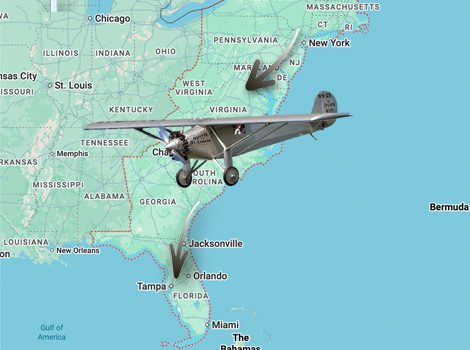
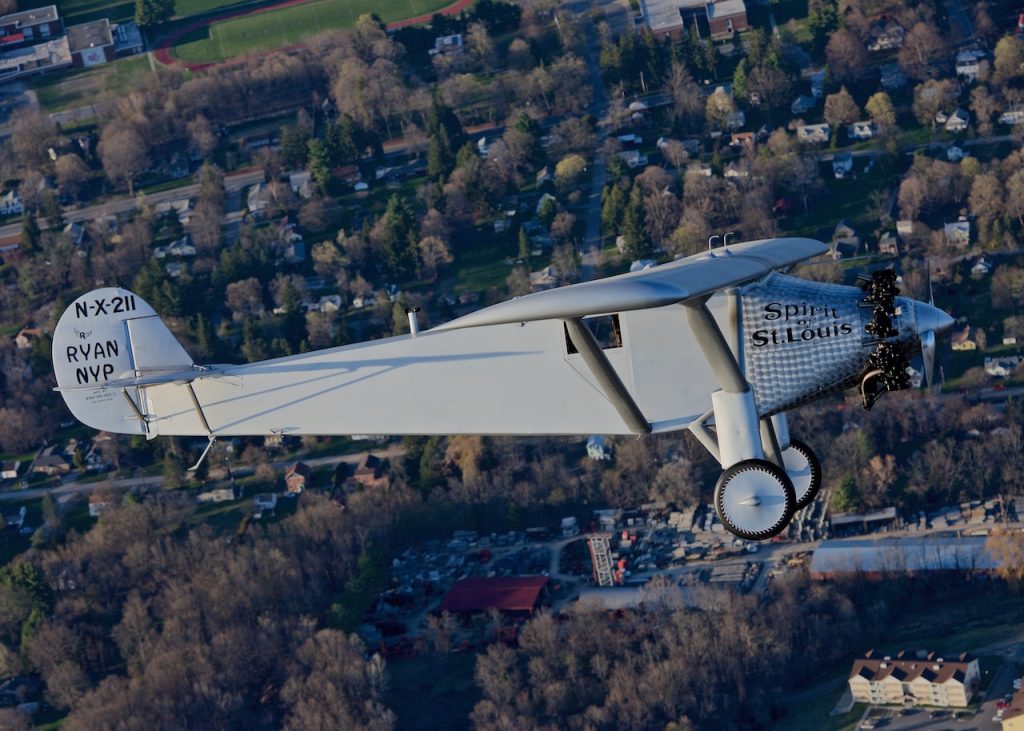
Old Rhinebeck Aerodrome plans to fly its Ryan NYP Spirit of St. Louis replica approximately 1,250 miles from New York to Lakeland, Florida, ahead of a SUN ’n FUN appearance commemorating the centennial of Charles Lindbergh’s 1927 solo nonstop transatlantic flight. The aircraft is scheduled to depart in early November 2026 and spend the winter at Lakeland Linder International Airport. It will participate in flying and static displays during the SUN ’n FUN Aerospace Expo, April 14–19, 2027, preceding the flight’s 100th anniversary on May 20–21. According to the Aerodrome, flying the replica south avoids the difficult disassembly and potential damage associated with transporting it by road.
The journey will bring an aircraft familiar to Old Rhinebeck’s airshow audiences well beyond its home field. It also provides an opportunity for visitors in Florida to see a flying recreation of the airplane Lindbergh piloted from Roosevelt Field on Long Island to Le Bourget, near Paris.
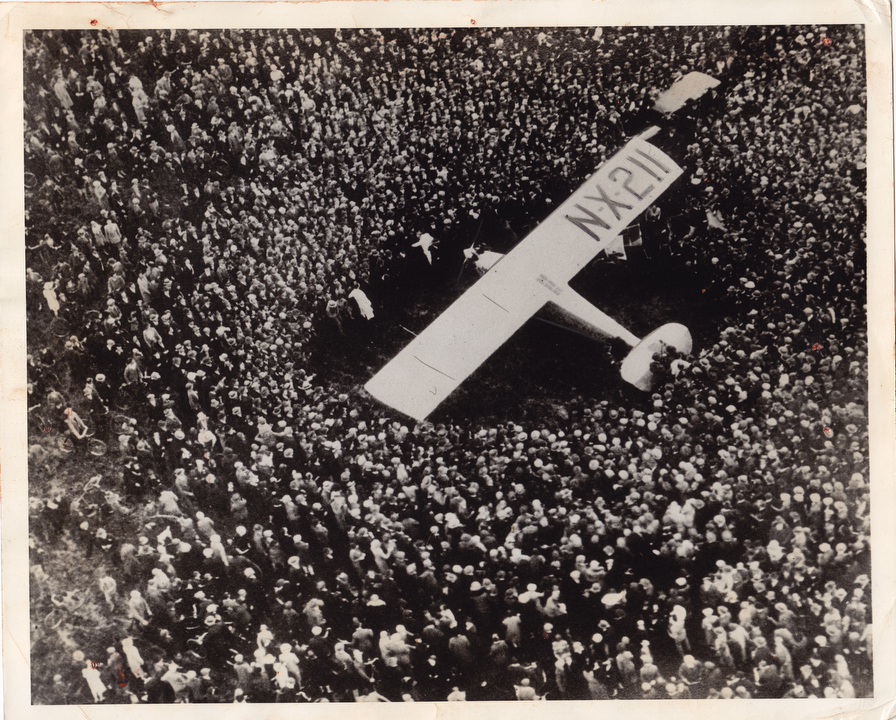
Charles Lindbergh’s arrival at Croydon Field, London, England, May 29, 1927
The replica’s story began with Aerodrome founder Cole Palen, who initiated the project before his death in 1993. Craftsman Ken Cassens subsequently brought it to completion, studying the original aircraft at the Smithsonian Institution through measurements, drawings and photographs. Cassens first flew the replica in December 2015. oldrhinebeck.org Vintage Aviation News previously explored the aircraft’s distinctive handling in “Flying a Legendary Airplane, the Ryan NYP Spirit of St. Louis”. In that feature, Moreno Aguiari spoke with Old Rhinebeck’s Clay Hammond about operating an airplane whose design offers no conventional forward windshield. Hammond explained how the pilot uses peripheral vision through the side windows during takeoff, looks through the overhead skylight during turns, and employs a sideslip on approach to see the runway. Those characteristics offer a practical connection to the demands of Lindbergh’s original aircraft, allowing audiences to appreciate the design through its operation.
Lindbergh took off in the Spirit from Roosevelt Airfield in Garden City, New York, and landed 33 hours, 30 minutes later at Aéroport Le Bourget in Paris, a distance of approximately 3,600 miles (5,800 km). | Source: David Trost
The planned Florida appearance will extend that educational role during the centennial year, connecting the historic crossing with the craftsmanship and flying skills that keep its replica airborne. Old Rhinebeck Aerodrome will publish further information about the journey on its Spirit of St. Louis to SUN ’n FUN project page.
https://vintageaviationnews.com/warbirds-news/old-rhinebecks-spirit-of-st-louis-to-fly-to-florida-for-sun-n-fun-centennial-tribute.html
#oldrhinebeck #centennialtribute #funcentennial #rhinebeckaerodrome #louis #sun #spirit #funaerospace #fly #lindbergh
#rss #feeds #linksharing #qwibbit
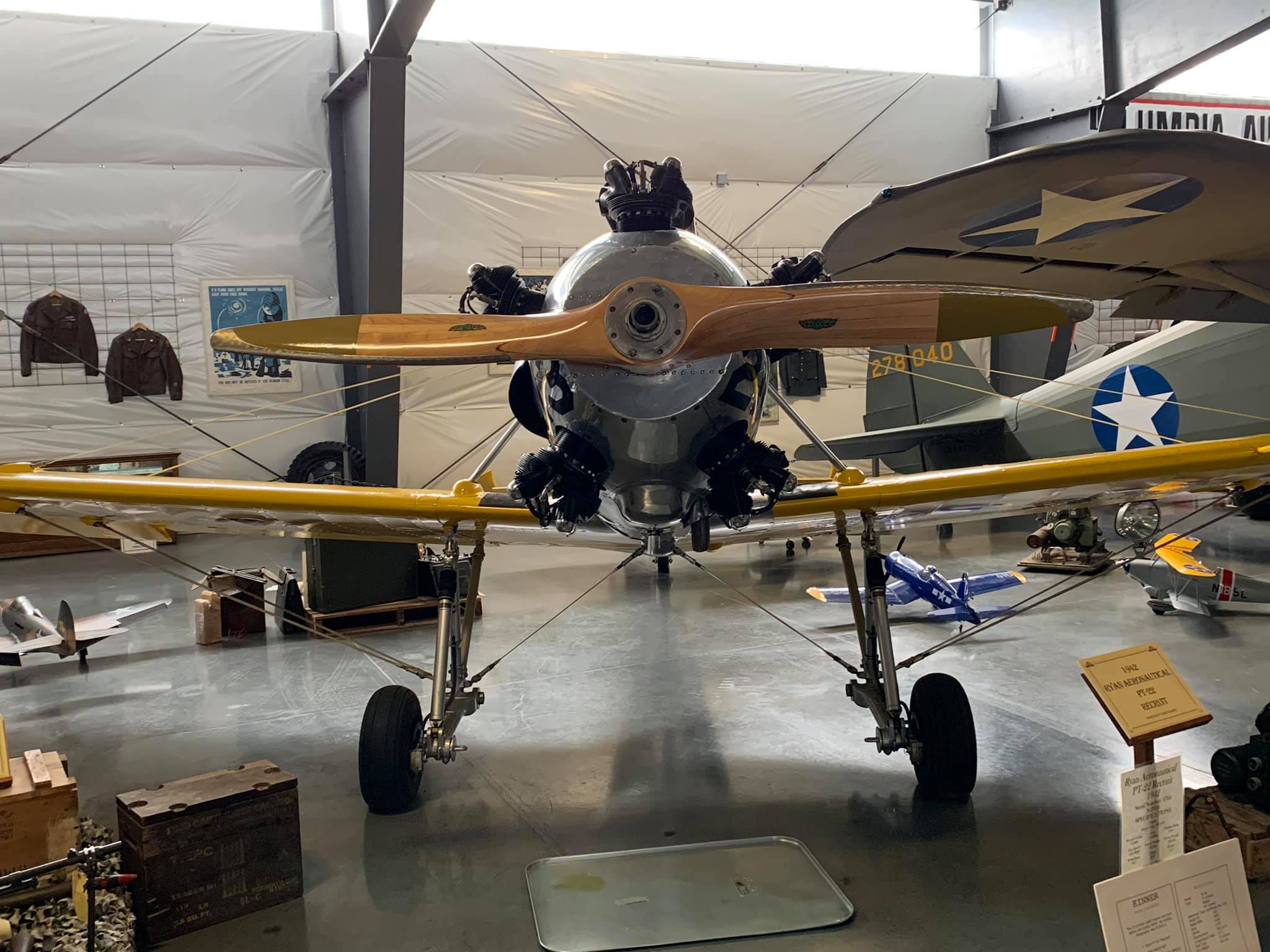
Randy’s Warbird Profiles: Ryan PT-22 Recruit s/n 41-15735
By Randy Malmstrom
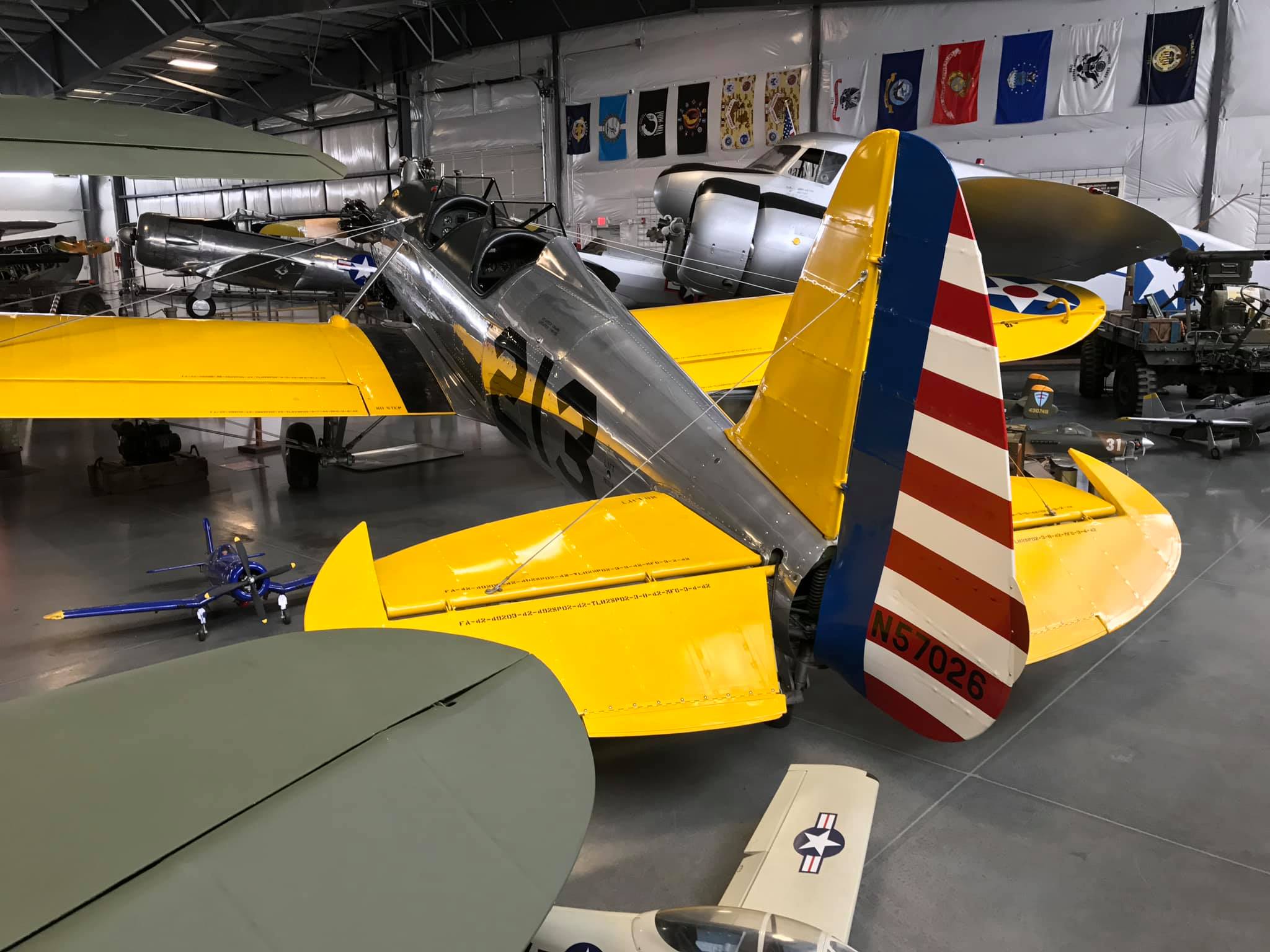
Ryan PT-22 Recruit, USAAC s/n 41-15735. This particular aircraft was built in 1942 by Ryan Aeronautical Company. I have not determined the history of this aircraft. A military version of the Ryan ST3KR (standard trainer with Kinner radial engine), the PT-22 was a primary trainer aircraft used by the United States Army Air Corps and its immediate successor, the United States Army Air Forces. It was the first purpose-built monoplane that the U.S. Army used for primary pilot training, as all previous such aircraft were biplanes. Powerplant: a Kinner R-540-1. My photos at Western Antique Aeroplane & Automobile Museum.
Ryan PT-22 Recruit 41-15735/N57026 on display at the Western Antique Aeroplane & Automobile Museum, Hood River, Oregon. | Source: Randy Malmstrom
Detail of the forward fuselage of Ryan PT-22 Recruit, USAAC serial number 41-15735, at the WAAAM. | Source: Randy Malmstrom
Editor’s notes: Developed from the Ryan ST (ST for “Sport Trainer”) and the subsequent YPT-16, PT-20, and PT-21 trainers ordered by the U.S. Army Air Corps, the PT-22 Recruit was built by the Ryan Aeronautical Company of San Diego, California, as a primary trainer by the USAAC. While the fuselage, wing ribs, and leading edges of the wings were made of aluminum, the wing spars were made of spruce, and the flight control surfaces and trailing edges of the wings were covered in doped fabric. One of the main distinctions between the ST series and the PT-22 is the swept-back design of the wings, and the fairings over the landing gear were removed for better ease of maintenance.
Ryan PT-22 Recruit 41-15735/N57026 at the Western Antique Aeroplane and Automobile Museum. | Source: Randy Malmstrom
Over the course of production, Ryan Aeronautical built 1,048 examples of the PT-22, with the vast majority being flown by the U.S. Army Air Force and were the first low-wing monoplane trainers in the USAAF for introductory flight lessons (primary training), involving first flights with instructors and first solo flights before moving on to more advanced training aircraft. Following the end of WWII, the Ryan PT-22 Recruits were stricken from the USAAF’s inventory and placed for sale on the civilian market, where they have been popular with private pilots ever since.
Profile of the tail of Ryan PT-22 Recruit 41-15735/N57026 at the Western Antique Aeroplane and Automobile Museum. | Source: Randy Malmstrom
The Ryan PT-22 Recruit displayed and maintained at the WAAAM was constructed as construction number 1764, flown by the USAAF as serial number 41-15735, and by 1956, the aircraft was officially registered as N57026. In 1981, it was acquired by Terry Brandt, who would later go on to found the Western Antique Aeroplane & Automobile Museum in 2007.
About the author
Randy Malmstrom grew up in a family steeped in aviation culture. His father, Bob, was still a cadet in training with the USAAF at the end of WWII but did serve in Germany during the U.S. occupation in the immediate post-war period, where he had the opportunity to fly a wide variety of types that flew in WWII. After returning to the States, Bob became a multi-engine aircraft sales manager and, as such, flew a wide variety of aircraft; Randy frequently accompanied him on these flights. Furthermore, Randy’s cousin, Einar Axel Malmstrom, flew P-47 Thunderbolts with the 356th FG from RAF Martlesham Heath. He was commanding this unit at the time he was shot down over France on April 24th, 1944, and spent the rest of the war as a prisoner of war. Following his repatriation at war’s end, Einar continued his military service, attaining the rank of Colonel. He was serving as Deputy Wing Commander of the 407th Strategic Fighter Wing at Great Falls AFB, MT, at the time of his death in a T-33 training accident on August 21, 1954. The base was renamed in his honor in October 1955 and continues to serve in the present USAF as home to the 341st Missile Wing. Randy’s innate interest in history in general, and aviation history in particular, plus his educational background and passion for WWII warbirds, led him down his current path of capturing detailed aircraft walk-around photos and in-depth airframe histories, recording a precise description of a particular aircraft in all aspects.
https://vintageaviationnews.com/warbird-articles/randys-warbird-profiles-ryan-pt-22-recruit-s-n-41-15735.html
#warbirdprofiles #ryan #westernantique #antiqueaeroplane #automobilemuseum #randymalmstrom #recruit #armyair #ryanaeronautical #statesarmy
#rss #feeds #linksharing #qwibbit
Flying stories, vintage airplanes, and lessons from the cockpit. Automated RSS; source content belongs to its owners. Unofficial fan feed; not affiliated with source publishers.