spacestr

đź”” This profile hasn't been claimed yet. If this is your Nostr profile, you can claim it.

Edit
Bruce Berls (Unofficial)
Member since: 2026-10-28
Bruce Berls (Unofficial)
Bruce Berls (Unofficial) 7h

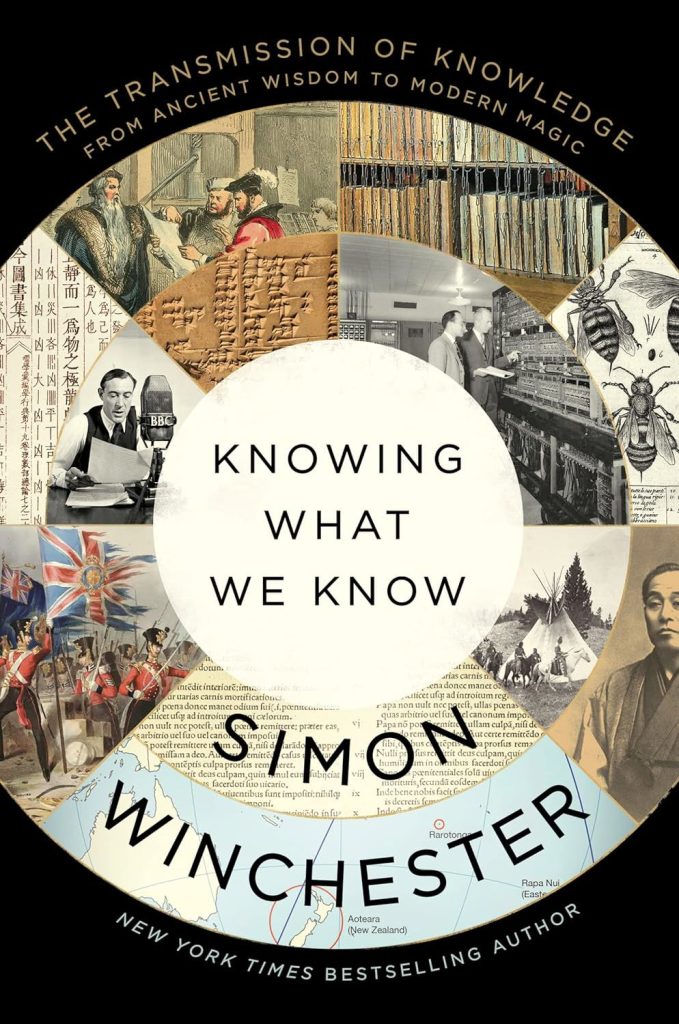
Information Is Not Wisdom You can get answers to all your questions from the AI app in your pocket. Ask any question that occurs to you, no matter how obscure or embarrassing or stupid or trivial. It’s amazing, it’s life-changing, use it, make it your friend. Don’t refuse out of some sense of principle. Do you know what Mark Zuckerberg will do if you refuse to use AI because you want to send a message to the big AI companies? He’ll whack your message with his polo mallet and kick it into his swimming pool and have a good laugh at your expense. But I kinda need to mention the dark side, because everything about AI has a dark side and you might as well hear it. What if having all the answers makes it harder for us to understand anything? Information is not knowledge. The struggle is part of the learning. Readily available information may mean less retention, less thoughtfulness, and ultimately less wisdom. Whoa, heavy, man. Sounds like late-night dorm room stuff, right? But it’s not just theoretical – there are some real world consequences playing out in the news right now. The school problem There has been a progression in education that you’ve never noticed but when I point it out you’ll say, oh, that’s obvious. For most of history, being educated meant you knew things. It was the age of memorization – dates, vocabulary, multiplication tables, scientific principles, literary works. But the explosion of published knowledge after the invention of the printing press started a long shift. During the library age, being educated meant you knew how to find things. When I was in school in the sixties, I spent as much time learning where to look for information as I did memorizing geography. It was the era of card catalogs, indexes, bibliographies, encyclopedias, reference librarians, citations, footnotes. Along came Google in the 1990s and early 2000s. Finding information became trivial. Schools shifted in the last thirty years and began to teach how to synthesize information from multiple sources. Students during the internet era could search for anything and get a million results, so teachers emphasized the process of evaluating sources, explaining the differences, and comparing arguments. And now, seemingly overnight, we’ve entered the AI age and students can delegate the whole task, getting AI to do the entire job in a few seconds. It’s trivial for any student to get ChatGPT to compare sources, identify areas of agreement, and list three possible conclusions. The response that comes back is good enough – and it requires no effort, no thought, no background knowledge, no intellectual skill. Many students are happy to get the answer without doing the thinking. Schools have responded to technological process for decades by moving one step up the intellectual ladder – from knowledge to finding information to evaluating and synthesizing information. Overnight AI changed everything. Today AI takes over the entire process and the students don’t have to get on the ladder at all. What’s the next step? What do schools teach? Knowing What We Know Simon Winchester is a marvel, an author of dozens of bestselling nonfiction books about everything from the Krakatoa explosion to the creation of the Oxford English Dictionary. He combines deep research with digressions, anecdotes, and odd asides. Knowing What We Know: The Transmission of Knowledge From Ancient Wisdom to Modern Magicis a sweeping exploration of how humanity has shared information since the beginning of history. There are stories about cave paintings, ancient scrolls, the Library of Alexandria, the invention of schools, the printing press, and how the Encyclopedia Britannica became a middle-class status symbol in American homes. The stories about Google and Wikipedia are fascinating but the tone of the book shifts as Winchester grapples with the consequences of technological progress. What becomes of humanity when everyone has instant access to all of human knowledge? How many people will take the opportunity to be intellectually lazy, quickly retrieving data but never engaging in the quiet thoughtfulness that turns knowledge into genuine insight? Are we risking our ability to think? What will the world be like if no one in it is wise? The mental work required to acquire, organize, challenge, and synthesize information is itself part of what creates understanding. If AI eliminates the need to do that work, maybe we’re also eliminating part of the process that creates wisdom. It’s similar to something that we’ve all noticed in the last few years. The internet rewards scanning, switching, and rapid attention shifts. The result is the general feeling that everyone in our society has shorter attention spans – less patience for books and movies that require sustained attention, less time spent on meditation and contemplation. Wisdom is knowing what matters, what to doubt, and what to do about it. It emerges from habits of patience, uncertainty, reflection, and intellectual struggle. Simon Winchester doesn’t pretend to have answers but he is clearly troubled by the question: what becomes of humanity if those habits are no longer required? AI Cognitive Atrophy and other scary words If you don’t use the muscle in your head that does deep critical thinking, it can atrophy from lack of use. That’s not just an awkward metaphor, it’s a real phenomenon that researchers are getting alarmed about. Nicholas Carr sounded a warning about cognitive atrophy in his book The Shallows: What the Internet is Doing to Our Brains– and that was released in 2020, before AI started to accelerate the process. Psychology Today published an article a few weeks ago pointing out another level to that problem: adults who offload thinking to AI can lose the mental capacity they built, but children may never build it at all. The author spots a difference in one study between participants over 46 and those between 17-25 and says: “The most likely explanation for this is not generational preference but biological development. The older group probably offloaded tasks they already knew how to perform. The younger group offloaded task they never learned how to perform. These neural pathways for source evaluation and constructing arguments were never formed. You can’t atrophy a muscle that was never built.” It’s called cognitive foreclosure, “the structural prevention of a mental capacity from forming. It happens when a child hands a cognitive task to a machine during the years in which she would otherwise have built the capacity to do it herself. The harm is that the capability never develops.” Humans have always learned and developed wisdom by dealing with ambiguity and doubt and developing skills by working through problems themselves. AI algorithms take away any need to struggle – and strip away the process that develops depth, moral reasoning, and long-term reflection. Last month the mathematical community was rocked by AI solutions to long-standing theoretical problems. Fierce arguments are raging now about whether the AI answers have advanced the field – or set it back by making it unnecessary for mathematicians to learn their craft with deep critical thinking. We’ll talk about that next week. For now, be curious and use AI to satisfy that curiosity. But keep thinking after the answer arrives. That’s where your growth happens. https://arrgle.com/information-is-not-wisdom/?utm_source=rss&utm_medium=rss&utm_campaign=information-is-not-wisdom #rss #feeds #linksharing #qwibbit

#rss #feeds #linksharing #qwibbit
Bruce Berls (Unofficial)
Bruce Berls (Unofficial) 7d

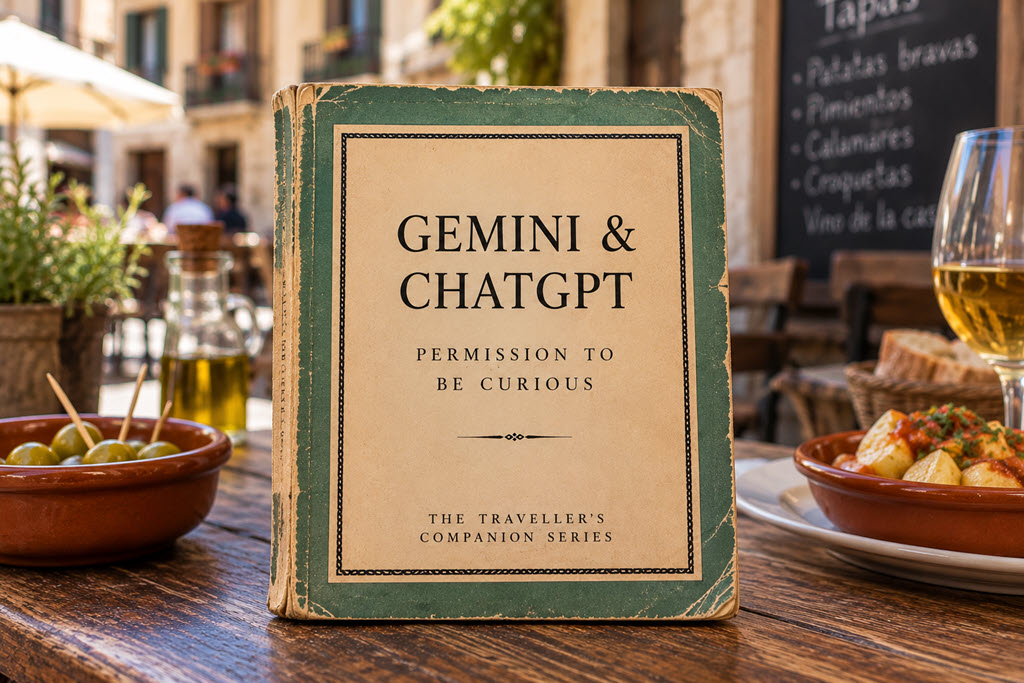
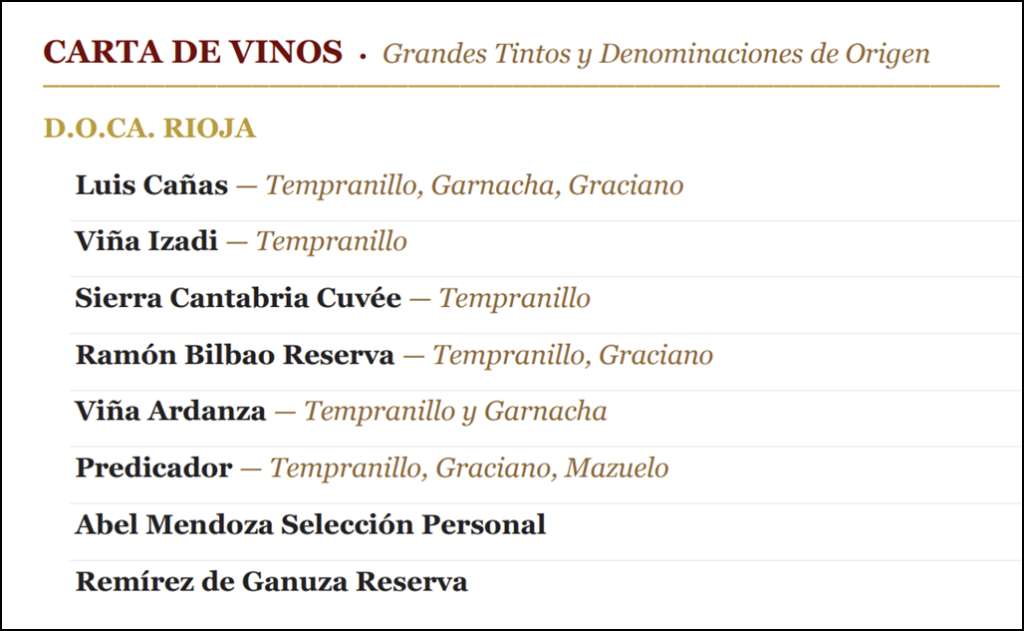
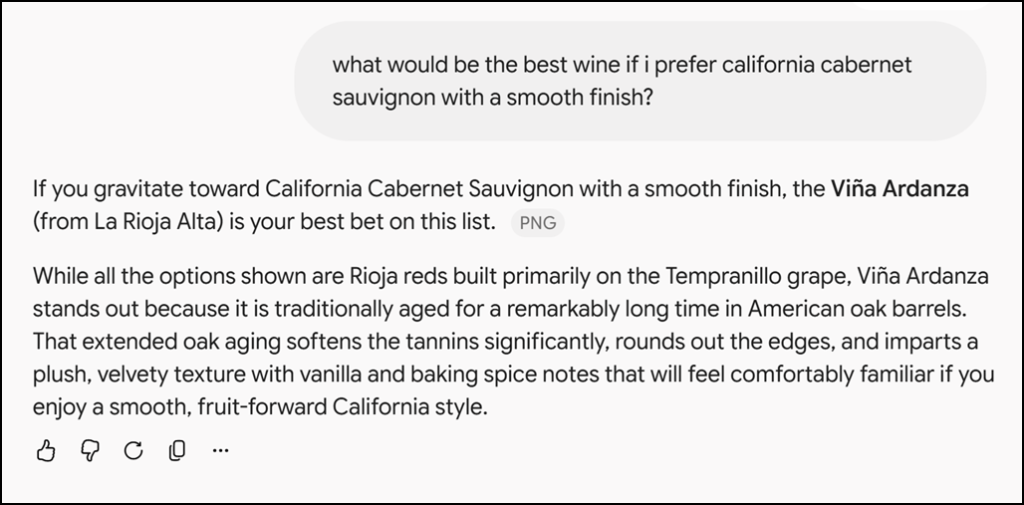
Permission To Be Curious Two weeks ago I was at Restaurante Oliver in Granada’s Old Town in Spain because I’m living a charmed life. The menu was in Spanish but my high school classes were serving me well and I could recognize key words like “tortilla” and “frito bandito.” Then I stopped pretending and picked up the English menu but at least I tried. The red wine selection was a puzzle, though. It was just like getting a wine list at California restaurants with no familiar labels, but at least at home there are recognizable varieties and I can confidently point at a Cabernet Sauvignon as if I have a clue. But in Spain – Tempranillo, Garnacha, and Graciano? Is that a blend? Is it a glass of wine served with olives and sincere thanks? Beats me. We have a new option in 2026. It transformed our trip to Spain. I took out my phone and used Google Lens to take a picture of the wine selection. Then I tapped the microphone icon and said, “What would be the best wine on this list if I prefer California Cabernet Sauvignon with a smooth finish?” In two seconds Gemini suggested the Vina Ardanza. It was so quick that no one at the table noticed I had gotten advice. It was a great glass of wine. I don’t know if you’ve noticed but some people don’t like AI. Something about the possible destruction of humanity or the likelihood of global economic collapse rubs people the wrong way. There are two different conversations about AI. One is what AI may do to society. The other is what AI can do for you. Today’s story is about what it can do for you, today, right now. I want you to start using AI in your everyday life – especially Gemini and Google Lens – despite all that deep and well-deserved hatred for the AI industry. This is possibly the most helpful article I’ve ever written. Pay attention, kids, this is a big one. The world comes with an explainer now Every day we run into little mysteries and simply let them go. We might remember to look them up later, but usually we don’t. AI has removed all the friction. You don’t have to know how to look something up. It doesn’t take any time. Just ask the question. One way to think about it is that having AI in your pocket gives you permission to be curious. Suddenly, unexpectedly, we live in a new world where any information is immediately available for the asking. It might be recipes, weather, flight status, movie recommendations, travel planning, party ideas, what to write in a birthday card, ideas for hobbies you might enjoy and how to get started, writing an email, meal planning, how to fix a plumbing problem, outlining memoirs, comparing car models, analyzing an insurance policy to see if it covers a loss, asking what the reviews of a book say, or getting a summary of something in the news at whatever level makes sense to you. You can ask about almost anything, at any level of detail, in whatever words occur to you. You can ask stupid questions! Whatever you ask, you’ll receive an immediate explanation tailored to what you actually want to know. Traveling with AI We spent three weeks in Spain and we used Gemini constantly. Suggest some restaurants by the Malaga waterfront that aren’t very expensive but aren’t touristy. Where can we find local ceramics. Suggest an itinerary for my first visit to the Prado and minimize Renaissance portraits and pictures of Jesus. Tell me about the tunnel our train just went through. How do we get from Madrid Airport Terminal 4 to Terminal 4S. What specialties at this restaurant do people like the most. Is it worth it to buy an advance ticket to the Alhambra. Suggest some options in Granada that are not well known by tourists. (That’s how we found ourselves in the most amazing Arab baths.) On and on, nonstop, literally dozens of times every day. I didn’t have to do anything technical except remember that Gemini exists. And I want you to believe me when I say that this is not just for tech whiz kids! My wife resists new technology just like all of you normal people and she used Gemini as often as I did. These were three second impulses, not a gee whiz bit of nerd tech. We began to understand the power of Google Lens, the app that lets you point your camera at something and ask a question. A couple of years ago it wasn’t clear what to do with that except to identify what kind of tree you were next to. Now you can point at anything and ask anything. In a Malaga church I pointed my phone at a wood carving of a saint, one of 42 sculptures, and immediately learned that it was Saint Andrew and he wasn’t holding a pair of skis like it appeared but instead was holding the diagonal cross that he was martyred on. In Madrid the statue across from our hotel was bristling with arrows. Google Lens told me it was Saint Sebastian, tied to a post by Emperor Diocletian and shot by archers, leaving him looking “as full of arrows as a hedgehog is of prickles.” Except he didn’t die, so Sebastian took the next opportunity to confront the Emperor again and was immediately dragged away and beaten to death with clubs and thrown into the Roman sewers. Religious stories are weird. But the point is that Google Lens became a tireless assistant to tell me useful things about whatever I was looking at, big or small. What is the domed building in the background. How do I turn on this dishwasher. Tell me about that brand of shoes. Who’s the celebrity in that photo on the wall. How much is that doggie in the window. Why are people standing in line at this tapas restaurant but not the one next door. (The answer was always TikTok and Instagram.) If you’ve picked up the habit of going to YouTube and trying to find badly recorded videos about how to do something, this is frequently a better alternative. Getting started Install Gemini on your phone. (Gemini is better for asking questions about the world. ChatGPT is better for chats and projects. Try them both!) A free account is sufficient for day-to-day use. Google Lens is a free app that uses your camera to do searches using Gemini. It’s likely already on your phone but if you’re not sure where to start, install the “Google” app on an iPhone or the “Google Lens” app on an Android phone. We trained ourselves to do Google searches by typing in a small number of words. AI is different. You don’t need keywords, expertise, or even a well-formed question. Tap the microphone and ask a question in the form in which it occurred to you. Your part can be as long and as detailed as you like. You’ll get an answer which will probably start by telling you that you’re very handsome, then give you an answer that’s better than you expect. Think of your interactions as a conversation. Always think about what you could learn from a followup question. Ask it to tell you about the other side. If you ask about a restaurant and Gemini tells you it’s great, then ask what complaints people have about the restaurant. Don’t assume that the first answer is the end of the story. The apps on your phone have a couple of different icons to click – one for a question and answer, the other for a chat. If you’re not sure how to use the app, ask it for help. If the answer it gives you is too technical, ask it to give you simpler instructions. It’s a conversation. You have an infinitely patient, very well-informed companion in your pocket. Force yourself to remember to use it until it becomes a habit. Obligatory warnings 1) You’re not talking to a person. AI is computers. It’s math. You will not hurt its feelings. You will not be judged. If it tells you something positive, great, being praised is fun, but you’re being praised by math. You don’t have to say Please or Thank you but it won’t hurt if you do that because you’re a nice person. And if you find yourself believing it understands you and you start to have feelings for it, don’t do that. It’s math. 2) Be careful with health questions! AI can be very helpful but it is absolutely not a substitute for advice from trained professionals. Doctors have our charts and their job is to interpret both what we tell them and what they know about us. Without that human professional in the room, we are not good at describing our own symptoms and treatments. AI only knows what we tell it and it can get things wrong if we give it incomplete information. It is particularly important to challenge AI health answers with followup questions, and consult professionals just like always before making decisions. In the next article we’ll talk about why this might destroy the human capacity for insight and creativity. But not in this article! This is a happy article! Go forth and be curious! https://arrgle.com/permission-to-be-curious/?utm_source=rss&utm_medium=rss&utm_campaign=permission-to-be-curious #curious #cabernetsauvignon #oldtown #restauranteoliver #spain #permission #googlelens #californiacabernet #gemini #something #rss #feeds #linksharing #qwibbit

#curious #cabernetsauvignon #oldtown #restauranteoliver #spain

Welcome to Bruce Berls (Unofficial) spacestr profile!

About Me

Unofficial automated RSS/Atom links to Bruce Berls's work on Independent essays examine AI regulation and data-center power. Original work is credited at the source; follow the source links. Zaps support the independent feed operator, not the author.

Interests

  • No interests listed.

Videos

Music

My store is coming soon!

Friends