What My Daughter Wants You to Know About Down Syndrome
We are approaching the end of Down syndrome awareness month. It always sneaks up on me. It’s both an arbitrary designation and also something that works to focus attention on what it means to be a person with Down syndrome and why it matters.
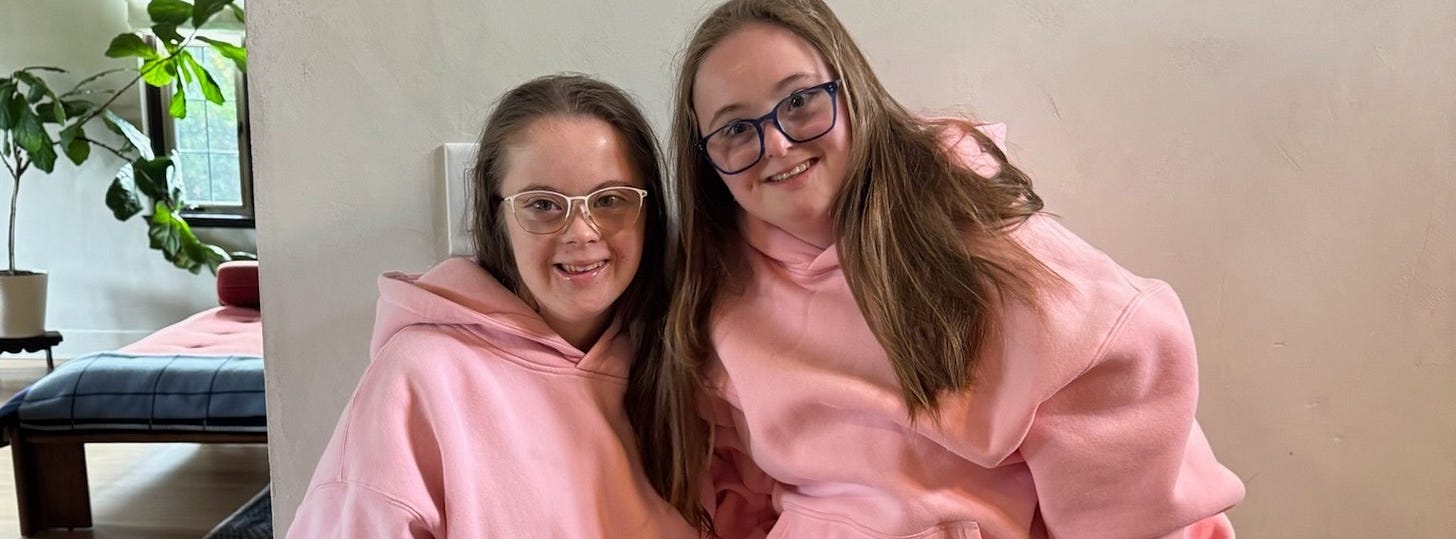
As we come to the close of this month, I decided to ask Penny to reflect on the significance of this time and offer her perspective on having Down syndrome. Her favorite way to tell me what she thinks is for me to write her questions via Google doc and for her to respond, so here is our back and forth. The questions in bold are from me. The answers in italics are from her:
Penny, October is Down syndrome Awareness Month, so I wanted to check in with you about that. Do you think it’s a good idea to have a whole month dedicated to raising awareness about Down syndrome? Why or why not?
It is good for October to acknowledge it, but I don’t think it should be the whole month. I have lived with it since I was born, so I know what it’s like. Throughout every day and every month. The outcome here is it can be acknowledged in October, but my personal preference is for it to not last the whole month.
What are some things you want people to know about Down syndrome?
You are not alone in it. You may think you are, but you’re really not. It can be kinda cool. Not everyone thinks it’s cool, but think about it you can be more physically flexible than other people. You may think you might not have friends, but make some, I know you can.
Are there any things that people don’t understand about Down syndrome that you wish they would?
The only thing I wish people would understand is you have a right to speak up for yourself.
What has been the hardest thing for you about having Down syndrome?
The hardest thing so far is finding the people who matter to me the most. But I have done that, and that made a difference.
Is there anything great about having Down syndrome?
I wouldn’t have discovered a specific book if it wasn’t great. I had the chance to read a book called Special, and one of the main characters has Down syndrome. That book made having Down syndrome great. (Note–more on this book later in the Substack…)
You and I have talked before about how you don’t necessarily see having Down syndrome as a big deal or the defining feature of your life. Do you think it’s an important piece of information about you?
I do think it’s important for medical and health purposes, but in my social status it doesn’t define me.
What are some other things about you that you want other people to know?
I live a pretty cool life. I have grown up living on boarding school campuses. So I get to know the students pretty well. A fun fact about me that most people don’t know is I have been dancing since I was 2.
And finally, for a new mom or dad out there who just had a baby with Down syndrome, what would you want them to know?
My advice is simple: they will have friends one day. You don’t need to worry about that.
SUBSCRIBE to my Substack newsletter: amyjuliabecker.substack.com
JOIN the conversation on Instagram: @amyjuliabecker
LISTEN to my podcasts: amyjuliabecker.com/shows/
CONNECT on YouTube: Amy Julia Becker on YouTube
Amy Julia Becker desires to challenge assumptions about the good life, proclaim the inherent belovedness of every human being, and help us envision and build a world of belonging where everyone matters. Amy Julia invites people to reimagine the good life through her writing and speaking on disability, faith, and culture. She is the author of several books, including To Be Made Well, White Picket Fences, Small Talk, and A Good and Perfect Gift. She is a guest opinion writer for national publications and hosts two podcasts: Take the Next Step and Reimagining the Good Life. Becker is a graduate of Princeton University and Princeton Theological Seminary (MDiv). She is a member of the Disability Ministry Network and the Alliance for Disability Justice and Ethics in Reproductive Genetics. She lives with her husband and their three children in western Connecticut.
The post What My Daughter Wants You to Know About Down Syndrome appeared first on Amy Julia Becker.
https://amyjuliabecker.com/what-my-daughter-wants-you-to-know-about-down-syndrome/?utm_source=rss&utm_medium=rss&utm_campaign=what-my-daughter-wants-you-to-know-about-down-syndrome
#syndrome #know #month #october #awareness #penny
#rss #feeds #linksharing #qwibbit
#syndrome
#know
#month
#october
#awareness
Amy Julia Becker (Unofficial)20h
How Bureaucracy Costs People Time and Dignity
For two decades now, we have navigated paperwork and bureaucratic systems with our daughter who has Down syndrome. When she turned 18, there were new systems to navigate—and new questions: What is she eligible for? Who do we contact? Do we need to sign up for something we don’t need right now because the waitlist might be 12 years long? I was afraid that I was going to get it wrong all the time.
Journalist Annie Lowrey, author of The Time Tax, joins me to explore how bureaucracy costs people time and dignity, what our government systems reveal about who matters, and what it would take to build a society where support doesn’t require proving you deserve it. Here’s some of what she shared:
1. Bureaucracy takes more than time.
Applying for benefits, navigating insurance, and filling out paperwork can drain time, money, and energy. For people experiencing disability, financial hardship, etc., these demands can become a burden. Simplifying access to assistance is one way to honor people’s dignity and give them more room to recover from illness or find stability, etc.
2. We don’t all experience government support in the same way.
Tax benefits for homeowners are often understood as something people have earned, while assistance for people with low incomes or disabilities can come with stigma and scrutiny. These differences reveal assumptions about whose needs are legitimate and who deserves help.
3. The way we design systems communicates what we believe about people.
When people seeking assistance are treated as potential fraud risks, they are asked to prove their worthiness at the very moment they need support. The process itself can communicate distrust rather than care.
4. Universal programs can help create a sense of belonging.
Public schools, the Postal Service, and Social Security show how shared systems can serve people without requiring them to repeatedly prove they deserve to participate. When programs benefit a broad range of people, they can also build broader public support.
Hear more from Annie Lowrey on Reimagining the Good Life: The Time Tax: Do We Have to Prove We Deserve Help?
SUBSCRIBE to my Substack newsletter: amyjuliabecker.substack.com
JOIN the conversation on Instagram: @amyjuliabecker
LISTEN to my podcasts: amyjuliabecker.com/shows/
CONNECT on YouTube: Amy Julia Becker on YouTube
Amy Julia Becker desires to challenge assumptions about the good life, proclaim the inherent belovedness of every human being, and help us envision and build a world of belonging where everyone matters. Amy Julia invites people to reimagine the good life through her writing and speaking on disability, faith, and culture. She is the author of several books, including To Be Made Well, White Picket Fences, Small Talk, and A Good and Perfect Gift. She is a guest opinion writer for national publications and hosts two podcasts: Take the Next Step and Reimagining the Good Life. Becker is a graduate of Princeton University and Princeton Theological Seminary (MDiv). She is a member of the Disability Ministry Network and the Alliance for Disability Justice and Ethics in Reproductive Genetics. She lives with her husband and their three children in western Connecticut.
The post How Bureaucracy Costs People Time and Dignity appeared first on Amy Julia Becker.
https://amyjuliabecker.com/bureaucracy-time-tax-disability-benefits/?utm_source=rss&utm_medium=rss&utm_campaign=bureaucracy-time-tax-disability-benefits
#bureaucracycosts #costspeople #goodlife #amyjulia #dignity #annielowrey #juliabecker #tax #deserve #prove
#rss #feeds #linksharing #qwibbit
Books About Down Syndrome for Readers of All Ages
Here are some book recommendations for all ages who might want to learn more about what it’s like to live with Down syndrome. My favorite memoirs for adults (in addition, of course, to my own A Good and Perfect Gift!) are:
Martha Beck’s Expecting Adam
Heather Avis’ The Lucky Few
Michael Berube’s Life As We Know It
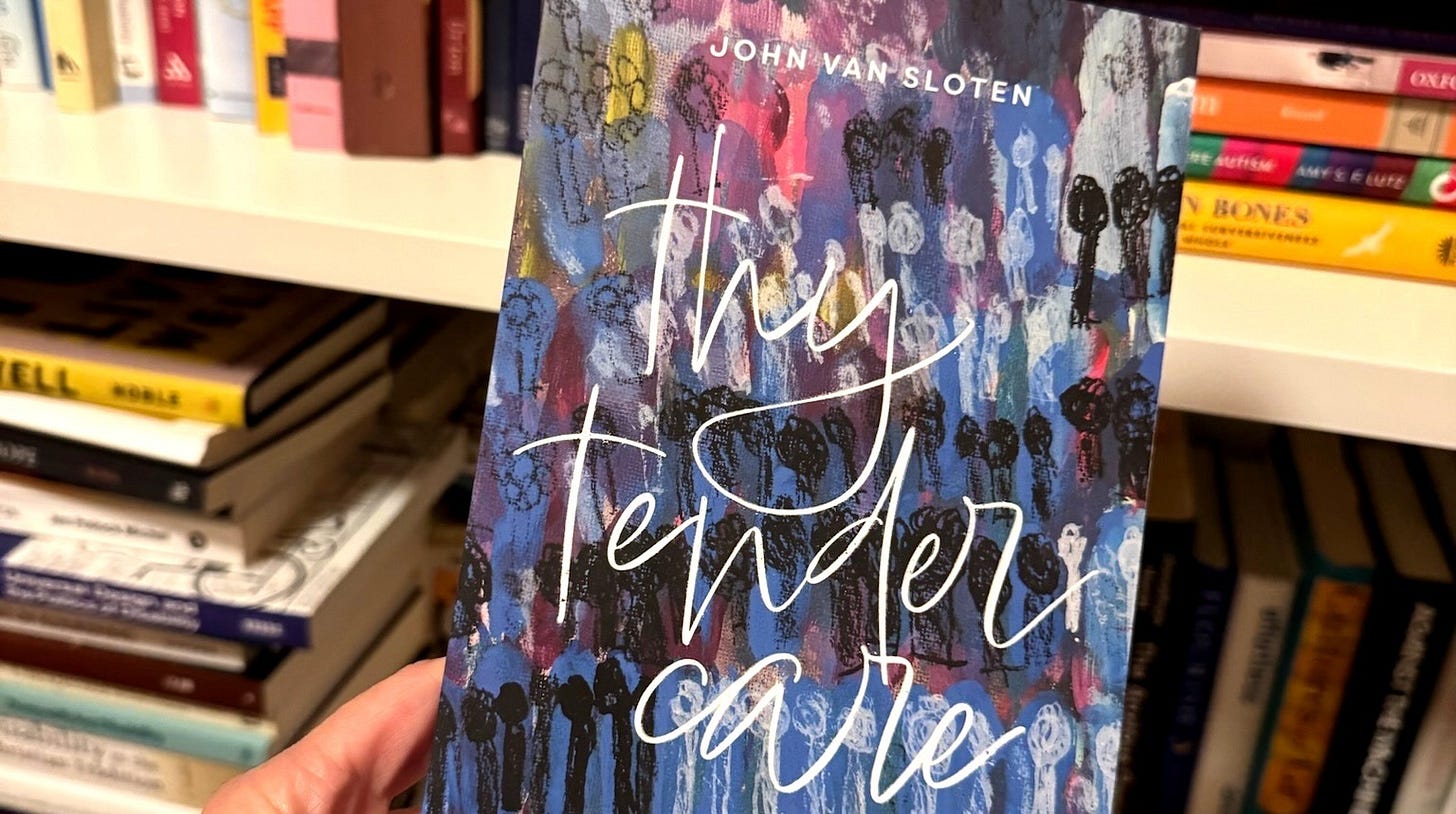
John Van Sloten’s new book, Thy Tender Care, about his relationship with his son Edward
For middle-grade readers, I appreciated A Storm of Strawberries and Unbound. Finally, as some of you may remember from a previous Substack, I also highly recommend Special byNancy Goodfellow.
I hope you’ll enjoy learning a little more about Down syndrome through these stories and memoirs. If you do, I suspect you’ll find—as we have—that Down syndrome is both a very particular way of being in the world and also a rather ordinary one!
SUBSCRIBE to my Substack newsletter: amyjuliabecker.substack.com
JOIN the conversation on Instagram: @amyjuliabecker
LISTEN to my podcasts: amyjuliabecker.com/shows/
CONNECT on YouTube: Amy Julia Becker on YouTube
Amy Julia Becker desires to challenge assumptions about the good life, proclaim the inherent belovedness of every human being, and help us envision and build a world of belonging where everyone matters. Amy Julia invites people to reimagine the good life through her writing and speaking on disability, faith, and culture. She is the author of several books, including To Be Made Well, White Picket Fences, Small Talk, and A Good and Perfect Gift. She is a guest opinion writer for national publications and hosts two podcasts: Take the Next Step and Reimagining the Good Life. Becker is a graduate of Princeton University and Princeton Theological Seminary (MDiv). She is a member of the Disability Ministry Network and the Alliance for Disability Justice and Ethics in Reproductive Genetics. She lives with her husband and their three children in western Connecticut.
The post Books About Down Syndrome for Readers of All Ages appeared first on Amy Julia Becker.
https://amyjuliabecker.com/books-about-down-syndrome-all-ages/?utm_source=rss&utm_medium=rss&utm_campaign=books-about-down-syndrome-all-ages
#goodlife #amyjulia #perfectgift #readers #ages #juliabecker #marthabeck #tendercare #thytender #adamheather
#rss #feeds #linksharing #qwibbit
#goodlife
#amyjulia
#perfectgift
#readers
#ages
Amy Julia Becker (Unofficial)1d
The Time Tax: Do We Have to Prove We Deserve Help? • Annie Lowrey
REIMAGINING THE GOOD LIFE PODCAST
The Time Tax: Do We Have to Prove We Deserve Help? • Annie Lowrey
What does government bureaucracy have to say about who matters in our society? Why does it take so long and feel so impossible to apply for some benefits and supports when other government programs seem to just show up without any effort at all? And what does any of this have to do with living a flourishing life?
Journalist Annie Lowrey, author of The Time Tax, joins Amy Julia Becker to talk about what our systems reveal about whose time, dignity, and lives we value—and how we might build a society where getting help doesn’t mean fighting to prove you deserve it.
Annie Lowrey Photo Credit: Sharon Lehm
Season 11 Episode 1
October 28, 2026
Listen to Reimagining the Good Life on your favorite platform:
Apple
YouTube
Spotify
More!
Annie Lowrey
Annie Lowrey is a staff writer at The Atlantic. She is the author of Give People Money, which was short-listed for the Financial Times and McKinsey Business Book of the Year Award. Prior to joining The Atlantic, she was a staff writer for The New York Times and New York magazine, as well as the Moneybox columnist for Slate. She lives in Brooklyn with her husband and their two children.
MENTIONED IN THIS EPISODE
00:00 Introduction to the concept of the time tax
06:05 Real-Life Examples of Time Tax
10:29 What Government Programs Communicate
19:01 Racial and Economic Disparities in Government Interaction
24:08 Universal Programs and Their Effectiveness
30:57 Reimagining the Role of Government in Society
36:47 Political Perspectives on Healthcare and Support
42:45 Fraud and Honesty in Social Programs
48:23 Administrative Burdens and Health Costs
MENTIONED IN S11 E1:
The Time Tax by Annie Lowrey
Amy Julia’s Substack essay about the cost of special education
_
SUBSCRIBE to Amy Julia’s weekly Substack newsletter: amyjuliabecker.substack.com
WATCH this conversation on YouTube: Amy Julia Becker on YouTube
JOIN the conversation on Instagram: @amyjuliabecker
LISTEN to more episodes: amyjuliabecker.com/shows/
TRANSCRIPT
Note: This transcript is autogenerated and does contain errors. Please check the corresponding audio before quoting in print.
Amy Julia Becker: 00:05
What does government bureaucracy have to say about who matters in our society? Why does it take so long and feel so impossible to apply for some benefits and supports when other government programs seem to just show up without any effort at all? And what does any of this have to do with living a flourishing life? I’m Amy Julia Becker, and this is Reimagining the Good Life, a podcast about challenging the assumptions about what makes life good, proclaiming the inherent belovedness of every human being, and envisioning a world of belonging where everyone matters. Today I’m talking with journalist Annie Lowrey. She’s a staff writer at The Atlantic and author of The Time Tax. And so we’re talking about what our systems reveal, about whose time, dignity, and lives we value, how we might build a society where getting help doesn’t mean fighting to prove that you deserve it. Here’s my conversation with Annie Lowrey. I am sitting here with Annie Lowrey, and I’m so happy to be here. Thank you for joining us. I am thrilled to be here, AJ.
Annie Lowrey: 01:08
Thank you so much for having me.
Amy Julia Becker: 01:10
Well, I saw your book when it came out right in August, um, so not that long ago. And I’m just gonna read the title. It’s called The Time Tax, How the Government Wastes Our Time and How to Fix It. And I just thought we’d dive right into what is the time tax for people who are like, I don’t know what you mean, and why does it matter enough to write a book and devote a lot of time and energy to uh making sure that we understand this topic?
Annie Lowrey: 01:34
Yeah. So many times when I was working on the book, I was like, I have time taxed myself. I have destroyed my own calendar, my own sanity, you know, my own sense of ever getting anything. I’m just now that the book is out in the process of going and cleaning closets, which is feeling really good, but also a little bit embarrassing. Just like literally put off for years, which I think probably a lot of your viewers, listeners will know what that feels like. Yeah. But yeah, so you know, the time tax in academic literature, these would be called administrative burdens. So what is administrative burden? It is the weight of bureaucracy, the time you have to spend, the money you might have to spend, the emotional, uh, the emotions you might need to feel, the logistics you might need to do to be the end user of a bureaucratic process. So this is true for, you know, government processes. So that time that you’re spending in line at the DMV that counts. And we can also think it’s true in consumer relationships or a relationship with a nonprofit. And so I really think of time taxes as being slightly different because um very often these are purposeful and they are meant to kind of extract a cost from somebody who’s getting a government benefit or even exercising a right, like the right to vote. Um, and because I think that we can add them up, there’s tons of little time taxes, just like you might have tons of little tax liabilities, but then you get this kind of big bill at the end. And it was this thought process of mine where I’m like, the time you spend waiting in line to vote at the DMV, figuring out Medicaid, helping a parent who’s going into long-term care, um uh dealing with an insurer, um, you know, maybe, you know, figuring out your snap benefits or seeing what you can use with WIC, all of those, they seem like individual problems, but to me, I’m like, that’s all one big problem, I think. Even like getting a building permit if you’re trying to like put a patio behind your house.
Amy Julia Becker: 03:26
Yeah. So, and why, like my husband today went to like get um something done on the car and he got there and he waited for an hour, and then they came out and they’re like, Oh, do you have the adapter for the blah, blah, blah? And he’s like, I don’t even know what you’re talking about. And they’re like, Oh, yeah, sorry, we can’t do it. So this has nothing to do with the government. It’s just like the car dealer or what car repair people didn’t tell him what he needed. And so why is what you’re talking about different than that in the sense of like, yeah, it’s just life. Some things like take longer and it’s annoying and it’s like part of being human.
Annie Lowrey: 03:56
Yeah. And I do think that, you know, there are, if you’re enrolling something, they’re in enrolling in something, yeah, there’s gonna be some process of enrollment, right? So is what I’m talking about just kind of fact of life. And here I really like to think in terms of, well, how many things do we have to enroll in? In the United States, we have to enroll in a lot of things. We have to do a lot of work. We do not have the same universal benefits and universal services that a lot of other countries do. So, one example of that is, you know, the government, you might be going to a great public college or a community college, but if you’re taking out a loan instead of getting free tuition, right, there’s a whole process around that. Another example of this that I like to point to, because I think it clicks for people, is that in many of our peer countries, families without complicated tax situations. I’m not talking about like Elon Musk, I’m talking about just your average family. Maybe you have a salary and then some other income from something, it’s pretty straightforward. In most of our other peer countries, you don’t do your own taxes. You might not have to do anything. So if you are a resident of Japan and you’ve, again, pretty simple tax situation, literally nothing. Nothing. You’ll get a document summarizing. You can change things, you can object, you can say, oh, hey, I was actually supposed to do this. The IRS could, again, nine and ten of us are using the standard deduction. We are not like running multiple shell corporations. The IRS could 100% send you a document with all of your tax information already filled out. It’s called a pre-filled form. It’s used in many other countries. You can do your own taxes if you want. You can object. You can say, hey, you got this wrong, whatever else it is. But for a lot of us, man, to even just have the IRS do 90% of the work, which again, they already have the information. That’s what I mean by time tax, right? Yeah. Yeah. We don’t actually have to be doing our own taxes. It’s just the law that says that we have to.
Amy Julia Becker: 05:53
Well, and so that’s where I wrote down when you said like it extracts a cost, and in some, at least to some degree, it extracts a cost that doesn’t have to be paid. Like exactly. And I think that’s kind of what you’re getting at. You gave some like egregious but really significant examples of this in the book. And I just wanted to ask you to like share one. Again, you’ve done this a little bit by giving us the positive example of these countries where you don’t even have to like take the time to figure out your taxes. But I’m thinking about either like the Michigan form or the woman who got bumped off uh, I can’t even remember what benefit, but like dozens of times. But will you just give us at least one of those examples of the time tax in real people’s lives? Absolutely.
Annie Lowrey: 06:34
So I’ll give you a couple of where I see this is excessive at this point, right? Like we don’t, we don’t need this, or just the government is not thinking like a citizen, is not putting itself in the shoes of the people who are accessing these programs. So one of those kind of emotional um, right, like what are you asking when you’re asking this comes from a form um that they had in Michigan. This was the main form for um assistance. So if you needed food assistance, you know, or Medicaid coverage, you would fill out this one form. And the form was 18,000 words long and it consisted of more than 1,000 questions. It was impossible to read, right? It was like, you know, the manual that you get with your washer dryer. Like that was what it was like. And it had all this scary stuff up front about fraud. You are a low-income Michigander, you are at risk, you want food assistance because you got kids and you need to keep them fed. So this form it is 18,000 words. It is a thousand pages or sorry, a thousand questions, like 50 pages, I think was the total. Right. Again, it just looks like a like, you know, it’s it’s just impossibly dense, it’s hard to read. There’s all of this information at the outset about fraud, right? Treating you like you’re a fraud risk. And there’s this question if you are an unmarried parent and you are pregnant, um, the place and the date of conception of your child, this is a horrifying thing for the government to ask. And there’s a reason, which has to do with um child support and paternity determination issues. But not that many people who are applying for food aid are going to end up in that little subset of people where there might be that question. So why is that question on the form that everybody is using that you’re going through? And you might be like, wait, but the place and date of conception? What? And so what message is the state sending to you? Is that is the state standing in your shoes and saying, I’m at risk and I’m doing this thing that might feel a little humiliating for me for asking for help for food stamps for my kids. And instead of showing any, not even compassion, but just neutrality, this is the state I think antagonized it. It’s bullying in some ways. And I don’t think that was intentional, but this is right, like how functionally the state was treating people. So that’s just one example. And then yeah, you know, um, I do think that lower income, sicker, um, less stable for whatever reason Americans interact with the state more often, people with criminal justice involvement in their past, they end up just interacting with tons and tons of these forms. So the woman that you were referencing, mom of three named Marcella, and she lives in Salt Lake City. She’s a manicurist, she’s always been very low income. She’s a great mom and really committed to making her life better for herself and her for her children. And she um was labeled as a fraud risk because she had screwed something up on her taxes a while ago. She’s never been tried or convicted of a crime. She has never had any interactions with the police, right? There was no lawsuit about this. She fixed the tax issues, she still got labeled as a fraud risk. So instead of applying for a benefit every six months or 12 months, she has to apply every month or two. And so she has been kicked off of SNAP or Medicaid and reenrolled in the same program more than 120 times. And I’m like, whose interests are being served here? Right. I don’t know.
Amy Julia Becker: 10:04
Totally. And I think also that she’s like a poster child for what you, you know, she’s working hard, she is stable, she is caring for her family. And if there’s anyone you want, I would think, to support, it would be Marcella, you know, instead of being like, and now spend another however many hours, and just the demoralizing aspect of having to figure out how to, you know, try to get back on that aid. Yeah, it just those again are some of the more egregious examples in the book, but I do think they’re indicative. And I don’t know, I guess I read what you had to say, and I felt like at least some of these programs did have some design elements that were trying to communicate we don’t really want you to get these benefits, or we think that you are not deserving of them. Like I guess what what idea of what it means to be human is being communicated in the way that we are legislating or like making people fill out forms, uh, you know, exerting the time text.
Annie Lowrey: 11:09
Yeah. You know, it’s such a good point. And one thing that I think about a lot is um whether we can have a place of neutrality to the existence of families with low incomes, right? I think oftentimes people on the left, and this is not everybody, but sometimes people on the left, right, they’re like pitying, right? Okay. Oh, it’s sad, right? That’s unfortunate, right? It can be condescending, right? Like I will, I will, you know, from a place of grace deemed to help you, person who needs help. And I think sometimes on the right, it’s well, what’d you do to get poor? Right. Right. Maybe you need to fix it. Maybe you need to get your act together. Maybe the government can help you do that, because we’re not gonna come from this place of neutrality saying if you’re low income, let’s just pull the income up, but from this place of fixing. And it’s true sort of on both sides. And again, I don’t want to paint with too broad a brush here. Um, but I think as a general point, in a lot of government programs, if you’re getting a home mortgage interest deduction, there isn’t like an emotional weight to that from the state vis-a-vis you. You just have a mortgage and qualify for the deduction. There’s perfect neutrality, like there’s no emotional content. But I often think that for some programs, for immigrants, for low-income individuals, uh, for people with criminal justice involvement, for people with disabilities who aren’t able to work, there is this moralism, and it kind of can sometimes come from both sides. And I know we don’t want to always both sides. And again, I want to really note that this is not the attitude that other people have. But I do like this, you know, I wish that perhaps one of the ways of thinking about this is like, do we have actually too much emotional content from the state vis-a-vis us?
Amy Julia Becker: 12:54
Hmm. Well, and I think about I remember when I first learned that, um, and I might I might get these numbers wrong, you might be able to correct me, but that like Section 8 housing um costs less than the home mortgage deduction. Yes. And so smaller budget by half. Okay, so there you go. You know this better than I do. And I just remember
https://amyjuliabecker.com/time-tax-government-bureaucracy-disability-benefits-annie-lowrey/?utm_source=rss&utm_medium=rss&utm_campaign=time-tax-government-bureaucracy-disability-benefits-annie-lowrey
#timetax #annielowrey #amyjulia #juliabecker #government #prove #goodlife #programs #yorktimes #journalistannie
#rss #feeds #linksharing #qwibbit
College Transition Programs for Young Adults with Disabilities Should Be the Model, Not the Exception
I want to start today by saying thank you for your concern and support when I mentioned last week that Penny might have one year fewer than we expected in her current college transition program. As it turns out, the email I had received with this news was a clerical error/miscommunication, so we are back on track. And yet—as I reflect on friends with young adults in other school districts, and as I hear from so many of you—I’m aware all over again that our particular circumstances, where things seem to work out well for our child with a disability, are not the norm. And circumstances like ours are in danger of becoming increasingly rare.
Penny has multiple teachers and staff members who help her pursue academic interests, grow in social skills, learn at a work placement, and develop emotional maturity. Most young adults in transition programs like Penny’s do not have the quality of instruction or depth and breadth of community she has.
Ready for the Homecoming game
Penny and her friends go to school from 8am-2pm, five days a week. They FaceTime with each other and hang out outside of school. She’s had a boyfriend from this program for a year now. Her friend Lexi came over last weekend so they could get ready for the Homecoming game and attend it together. Many of Penny’s peers across the country only participate in their transition programs for a few hours a week and spend most of their time alone at home.
Homecoming, dating, group projects and presentations, going to school—these are typical experiences for young adults, and yet few young adults with disabilities receive support that allows this type of friendship and learning and growth. But programs like the one Penny is a part of give us a vision—an imagination—for what is possible for more and more students if we have the willingness to make it happen.
Programs like Penny’s should be a model, and yet they are in danger of erasure. I’ve spoken with Vanderbilt professor Meghan Burke a few times on my podcast (here and here), so I was especially interested in what she had to say to Education Week about the effect of recent Justice Department decisions on special education for young adults in the transition age of 18-22.
The first thing to know is that while the Americans with Disabilities Act itself has not changed, the U.S. Justice Department has changed the way they plan to enact this legislation. They will no longer follow the Olmstead v L.C. ruling from 1999 that required states to “eliminate unnecessary segregation of people with disabilities and ensure they receive services ‘in the most integrated setting appropriate to their needs.”
So what would that mean for 18-22 year olds in transition programs? Meghan Burke explains:
“The Individuals with Disabilities Education Act … requires transition planning that is designed to start thinking about what supports are needed so that a student can have better post-school outcomes after leaving the special education system.
“In the transition plan, there have to be goals related to postsecondary education or training …, employment, and …, if appropriate, … independent living… What the DOJ is suggesting is that maybe it is no longer the goal for youth with disabilities to live in the community…If that’s no longer necessarily the goal, then you could see schools saying, ‘Well, we don’t really need to work on those skills.’”
I am incredibly grateful that we have participated in school districts for years that see the value not only in educating people with disabilities but also in preparing them for an integrated life within our local community. The irony is that this type of preparation not only works well for people with disabilities, but it also benefits the students who learn together, the families who receive support and connection, and even the taxpayers who no longer fund institutions that segregate adults with disabilities. Local school districts can continue to be places where people with disabilities thrive, but we can’t depend on the federal government to lead the way.
Which brings me back to our experience and the role of both individuals within our community and local institutions in making it possible for people like Penny to learn and grow and contribute. We are the ones who can take a vision of inclusion and connection and mutual benefit for people with disabilities and their typical peers and make it happen rather than relegating it to a historical footnote.
Penny walked out the door today with a new necklace—a gift from her boyfriend—and an oversized pink sweatshirt that she was returning to her friend Lexi, who had provided it so they could dress as twins for the Homecoming game. She will return this afternoon and tell me about art class, where she’s working on a landscape painting. I might hear about some social drama. She gets to be a young adult in society, with support and love and friendship, with hopes and dreams for a good future. That’s exactly what each of our kids—with and without disabilities—deserve.
SUBSCRIBE to my Substack newsletter: amyjuliabecker.substack.com
JOIN the conversation on Instagram: @amyjuliabecker
LISTEN to my podcasts: amyjuliabecker.com/shows/
CONNECT on YouTube: Amy Julia Becker on YouTube
Amy Julia Becker desires to challenge assumptions about the good life, proclaim the inherent belovedness of every human being, and help us envision and build a world of belonging where everyone matters. Amy Julia invites people to reimagine the good life through her writing and speaking on disability, faith, and culture. She is the author of several books, including To Be Made Well, White Picket Fences, Small Talk, and A Good and Perfect Gift. She is a guest opinion writer for national publications and hosts two podcasts: Take the Next Step and Reimagining the Good Life. Becker is a graduate of Princeton University and Princeton Theological Seminary (MDiv). She is a member of the Disability Ministry Network and the Alliance for Disability Justice and Ethics in Reproductive Genetics. She lives with her husband and their three children in western Connecticut.
The post College Transition Programs for Young Adults with Disabilities Should Be the Model, Not the Exception appeared first on Amy Julia Becker.
https://amyjuliabecker.com/college-transition-programs-young-adults-with-disabilities/?utm_source=rss&utm_medium=rss&utm_campaign=college-transition-programs-young-adults-with-disabilities
#youngadults #transitionprograms #penny #collegetransition #model #exception #justicedepartment #meghanburke #education
#rss #feeds #linksharing #qwibbit
Communication Skills for a Stronger Marriage While Parenting a Child with a Disability
“So, someday do you think you might take out the trash?” I remember my husband pointing out that I was a passive-aggressive communicator when I said things like this early in our marriage, and I honestly didn’t know what he meant. I thought I was just asking a question! But what I was really trying to say was, “You said you would take out the trash. It’s full. It’s time. You need to do it.” I just wasn’t clearly saying it that way.
We all have patterns of communication that we fall into, especially when we’re tired, frustrated, or under stress. And when we’re living with the ongoing demands of parenting a child with a disability, it can be even harder to communicate with the people we love in ways that help us stay connected.
This week on Take the Next Step, Katie and Steve Gohde shared practical ways to communicate more clearly and kindly in marriage.
1. Recognize the patterns we fall into under stress.
When we feel overwhelmed or frustrated, we often return to familiar ways of communicating—passive, aggressive, or passive-aggressive—even when those patterns keep us from connecting with the people we love.
__
2. Practice clear and kind communication.
Assertiveness isn’t the same as aggression; it’s about communicating honestly and clearly while holding the other person in high regard, even when the conversation is difficult.
__
3. Pause to consider what matters most.
Instead of reacting out of frustration or avoiding discomfort, ask, “Do I want to be right, or do I want to be in relationship?” or “What is the most important thing to communicate right now? Am I being honest? Kind? Can I make eye contact?”
__
4. Circle back when we get it wrong.
We won’t always communicate well in the middle of stress and chaos, but we can return to the conversation later, take responsibility for our words, apologize, and share what we wish we’d said differently.
“‘Practice makes perfect’ is not a real thing, but practice does make progress.”
“What’s the most important thing that you want to be able to get your spouse to understand? …And how can you say it in a way that doesn’t hurt them?”
“Do you want to be right or do you want to be in a relationship?”
Hear more from Katie and Steve:
Communication Skills Every Marriage Needs: Disability + Parenting
SUBSCRIBE to my Substack newsletter: amyjuliabecker.substack.com
JOIN the conversation on Instagram: @amyjuliabecker
LISTEN to my podcasts: amyjuliabecker.com/shows/
CONNECT on YouTube: Amy Julia Becker on YouTube
Amy Julia Becker desires to challenge assumptions about the good life, proclaim the inherent belovedness of every human being, and help us envision and build a world of belonging where everyone matters. Amy Julia invites people to reimagine the good life through her writing and speaking on disability, faith, and culture. She is the author of several books, including To Be Made Well, White Picket Fences, Small Talk, and A Good and Perfect Gift. She is a guest opinion writer for national publications and hosts two podcasts: Take the Next Step and Reimagining the Good Life. Becker is a graduate of Princeton University and Princeton Theological Seminary (MDiv). She is a member of the Disability Ministry Network and the Alliance for Disability Justice and Ethics in Reproductive Genetics. She lives with her husband and their three children in western Connecticut.
The post Communication Skills for a Stronger Marriage While Parenting a Child with a Disability appeared first on Amy Julia Becker.
https://amyjuliabecker.com/marriage-communication-skills-disability-parenting/?utm_source=rss&utm_medium=rss&utm_campaign=marriage-communication-skills-disability-parenting
#strongermarriage #communicationskills #disability #parenting #amyjulia #juliabecker #take #everymarriage #practice
#rss #feeds #linksharing #qwibbit
What I’m Reading, Watching, and Listening To: October 2026
Books, essays, podcast episodes, and more that I think are worth your time, plus recent cultural news that I’m paying attention to in the month of October…
{Get my favorites delivered to your inbox each week. Subscribe here.}
The Permanent Questions: “Should We Ban AI for Kids?‘“
This whole conversation between Jonathan Haidt and David Brooks was fascinating, but I was especially struck by the thought that one way AI degrades civilization and humanity is by taking care of our needs. In Haidt’s words:
“One of the most profound effects that I think [AI’s] going to have, it’s already having, is that we don’t need each other as much. And if you have a civilization where people don’t need each other, lots of bad things are going to happen. To the extent that people need each other, that you get really high social capital, trust, interaction, people build institutions together.”
As I’ve said over and over again, it is a positive feature, not a bug, of our humanity that we need one another.
Participation and Hope in the Midterms
We are entering the midterm election cycle, so politics is front and center and hard to avoid. If you are looking for some ideas and conversations that rise above the fray of this particular political moment while reminding us of the significance of our participation in the political cycle and even offer some hope for it—these episodes of Reimagining the Good Life are worth your time:
The Myth of a Colorblind, Meritocratic Society with David M. Bailey
How to Be Christian During Election Season with Corey Widmer
When Your Church and Political Group Turn on You with Nancy French
Healing the Harm of White Evangelicalism with Kristin Du Mez
American Politics, Power, and Human Flourishing with Andy Crouch
The Lucky Few: What to Really Be Aware of This Down Syndrome Awareness Month
I’m really appreciating The Lucky Few podcast in the midst of Down Syndrome Awareness month. This episode was a great conversation about why the accomplishments of people with Down syndrome needed to be celebrated and highlighted as a part of early advocacy efforts, and why that emphasis on accomplishment can turn problematic in the end.
The Atlantic: What If AI Is the End of the World?
I hope and pray that our age of AI opens up new things—for us as humans to imagine new possibilities and new ways of loving and caring for one another in our physical bodies and in real (not artificial) ways. Peter Wehner has much of significance to say about AI and humanity in this essay, and I love that he also brings up Christian hope here:
“Revelation is hardly a favorite book of mine except for this: In the 21st chapter, we read that “there will be no more death or mourning or crying or pain, for the old order of things has passed away.” And God promises, “Behold, I make all things new.”
I have cited those words to others, and to myself, more times than I can count. It is not a promise that the current world won’t end—after all, many New Testament writers believed that they were living in the end times—but rather that the world will then be renewed. The old order will give way to a new one, where creation is healed and justice is restored and God will ultimately reconcile every creature to himself.
Skeptics of Christianity will say this is wishful thinking, and perhaps it is. But wanting something to be true doesn’t make it false. Wishful thinking, tethered to reality, is another name for hope. Sometimes hope is all we have, and sometimes hope is enough.”
New York Times: “We Implemented Canada’s Assisted Dying Law. We’re Concerned.”
People will choose to die when they are suffering if given the option. But what about the suffering that comes as a result of our social environment and the meaning we make of our lives? These physicians support medical assistance in dying, and they are still gravely concerned about how that law is being implemented:
“We’ve seen how beneficial it is to pause and reflect with our own patients. One of them, a woman in her 70s, was the matriarch of her family, the one who made Sunday dinners. She sought and received approval for assisted dying after she lost the ability to cook. She felt she had lost her value to her family. Through counseling, she came to understand that her family valued who she was, not what she did for them. She decided not to go through with ending her life, at least for now. That Christmas, her family gathered and she sat proudly at the table, while others did the cooking and serving.”
Episode 417: Helping Families with Disabilities Experience Their Capability
I was so grateful to talk with Sissy Goff and David Thomas on the Raising Boys and Girls podcast. Measuring kids against developmental milestones often makes children with disabilities look incapable. I describe how to let love “wrap around” fear and help kids feel wanted, valued, and needed. (Plus I share how we turned 12-year-old Penny’s dream of living with friends in Chicago into “Mondays, Penny does her own laundry.”)
The Ezra Klein Show: “Is the World Getting Uglier?”
I’ve had a number of conversations lately about beauty, and this episode of Ezra Klein’s podcast does a great job of articulating why beauty matters. I hadn’t ever thought about the distinction between beauty and ugliness and vulgarity or about the ways efficiency can diminish beauty, so I was grateful to be given ways to see and think about the visual world.
Aleteia: “When 6 altar servers with Down syndrome take on a papal Mass”
There are lots of reasons to distrust the church—whether Catholic or Protestant. And then there are also lots of reasons to celebrate everything about a place that recognizes not only the inherent belovedness and dignity of every human but also the contributions everyone can make to the community. I love this story of six young men with Down syndrome who served mass FOR THE POPE in Paris recently.
“The six young men around the altar did not need to prove that worth by being useful, of course, but their presence offered another reminder of what respecting human dignity can look like in practice. It is not simply a matter of making room for somebody; it is also noticing their talents, trusting them and sometimes allowing them to be the person who knows what to do.”
Middle-School Fiction: Special by Nancy Goodfellow
I’ve been on the search for a middle-grade book that portrays a young girl with Down syndrome as a fully realized character for many years. I wrote about this struggle for TIME (Where are all the children’s books featuring kids with Down syndrome?), and I would like to add a postscript to that essay. I’ve finally found the book I’ve been looking for: Special, by Nancy Goodfellow. {Keep reading}
New York Times: “I’m Exhausted. You’re Demoralized. We Weren’t Built for a World Like This.”
Bill McKibben wrote a final line in an essay recently that caught my attention:
“We’re creating a world that’s only fit for something artificial.”
He summed up something I’ve been thinking about—the fast pace of our world, the impending sense of doom over AI and politics and the climate, and the disconnections we feel. It all begs us to turn our attention—which is to say our time, our energy, our love—toward the human. Toward ourselves in our embodied, needy, beautiful humanity. Toward the humans all around us in their messy, imperfect, goodness. Toward slowing down and showing up.
The Happiness Lab: “Why Smaller Goals Can Lead to Bigger Changes with Eric Zimmer”
This conversation made me think about the idea of just taking “the next step.” Rather than setting big (aka unachievable goals), Eric Zimmer talks with Dr. Laurie Santos about the way small changes and small steps can make a big difference in changing our everyday lives.
Radiolab: “Why Isn’t the Sky Blue?”
Okay, this is really wild. Apparently, ancient civilizations didn’t see the color blue. I’m still trying to understand what I even mean when I write that sentence, and also what it means for us in terms of how we perceive reality, but if you’re interested in learning with me, here’s the episode of Radiolab that got me thinking about it.
TV Series: Ted Lasso
And while I don’t think it’s as great as the other seasons, we’re still enjoying season four of Ted Lasso. Penny says it is the best season ever, so there’s that.
Get my favorites delivered to your inbox each week.
Subscribe here.
More Favorites and AJB Recommends
If you use a link from here to purchase something I recommend, it sometimes earns me a small commission, which enables me to continue the work I do here. So thank you! (As an Amazon Associate, I earn from qualifying purchases.)
SUBSCRIBE to my Substack newsletter: amyjuliabecker.substack.com
JOIN the conversation on Instagram: @amyjuliabecker
LISTEN to my podcasts: amyjuliabecker.com/shows/
CONNECT on YouTube: Amy Julia Becker on YouTube
Amy Julia Becker desires to challenge assumptions about the good life, proclaim the inherent belovedness of every human being, and help us envision and build a world of belonging where everyone matters. Amy Julia invites people to reimagine the good life through her writing and speaking on disability, faith, and culture. She is the author of several books, including To Be Made Well, White Picket Fences, Small Talk, and A Good and Perfect Gift. She is a guest opinion writer for national publications and hosts two podcasts: Take the Next Step and Reimagining the Good Life. Becker is a graduate of Princeton University and Princeton Theological Seminary (MDiv). She is a member of the Disability Ministry Network and the Alliance for Disability Justice and Ethics in Reproductive Genetics. She lives with her husband and their three children in western Connecticut.
The post What I’m Reading, Watching, and Listening To: October 2026 appeared first on Amy Julia Becker.
https://amyjuliabecker.com/october-recommendations-books-podcasts-essays/?utm_source=rss&utm_medium=rss&utm_campaign=october-recommendations-books-podcasts-essays
#october #syndromeawareness #luckyfew #awarenessmonth #jonathanhaidt #permanentquestions #hope #davidbrooks #political
#rss #feeds #linksharing #qwibbit
Communication Skills Every Marriage Needs: Disability + Parenting • Katie Gohde, LPC, and Steve Gohde
TAKE THE NEXT STEP PODCAST
Communication Skills Every Marriage Needs: Disability + Parenting • Katie Gohde, LPC, and Steve Gohde
E34—Do your conversations end in silence, defensiveness, or words you wish you could take back? Are unhealthy patterns undermining your marriage? How can you communicate with honesty, kindness, and self-control?
For parents of children with disabilities, communicating with each other in the midst of stress can be hard. Therapist Katie Gohde and her husband, Steve Gohde, join Amy Julia Becker to bring helpful skills to hard conversations. (And while this interview focuses on marriage, these communication tools are must-haves for every relationship.)
Episode 34
October 21, 2026
Listen on your favorite platform:
Apple
YouTube
Spotify
More!
Katie Gohde, LPC, and Steve Gohde
Katie Gohde is a licensed professional counselor who works with couples and families, and Steve spent 15 years in corporate America before starting his own firm. Together, they lead workshops on marriage, communication, conflict, boundaries, and what it takes to build strong families.
They’ve been married for 21 years and live in Atlanta with their two children and a growing collection of pets.
www.renewandrestore.com
Instagram @katie_gohde
Facebook – @RenewAndRestoreAtlanta
MENTIONED IN THIS EPISODE
00:00 Communication and Marriage
05:17 Four Communication Styles
10:00 Emotional Regulation and Communication
12:19 Practicing Assertiveness
14:10 Tools for Better Communication
18:03 Staying Calm in Chaos
19:22 Practicing and Repairing
23:07 Next Steps for Better Communication
25:01 Encouragement for Men
LINKS IN EPISODE 34:
Is Your Marriage Just Surviving? Disability, Chronic Stress, and Caregiving • Monica DiCristina, LPC {Episode 32}
TRANSCRIPT
Note: This transcript is autogenerated and does contain errors. Please check the corresponding audio before quoting in print.
Amy Julia Becker: 00:06
Do you and your spouse ever have conversations that end in silence, defensiveness, or words that you wish you could take back? I’m here today with Katie and Steve Gody. They are going to help me unpack communication patterns that can undermine a marriage, and they’re here to offer practical ways for parents like us, parents of children with disabilities, so that we can communicate with greater honesty, kindness, and self-control. I’m Amy Julia Becker, and this is Take the Next Step, a podcast for families experiencing disability. We’re part of the Hope Heals Network, bringing you weekly encouragement and practical next steps to help your family thrive. Your family matters, your child matters, and we need you among us. Before I give you Katie and Steve’s bio, I do want to say I know that not everyone listening to this podcast is married. And yet everyone who’s listening is affected by disability in your family. And we are all communicating with other family members in the context of our families affected by disability. And I do think that although we are talking specifically about married couples today, this episode should be helpful to anyone who wants to go from these more stressful patterns of communication into communication that involves clarity, kindness, and self-control. All right, here’s the bio. Katie Gohde is a licensed professional counselor who works with couples and families. Steve, her husband, spent 15 years in corporate America before starting his own firm. And together they lead workshops on marriage, communication, conflict boundaries, and what it takes to build strong families. They’ve been married for 21 years and they live in Atlanta with their two children and a growing collection of pets. And here is my conversation with Katie and Steve. Well, today I have a special treat because I’m here not with one person, but with two. I’m here with my friends, uh Katie and Steve Gohde, and I’m so grateful that you both were able to be here with us today. Thank you. Of course.
Steve Gohde: 02:09
Happy to be here. I’m just happy to be called the special treat. Oh, yes.
Amy Julia Becker: 02:15
Well, we like so many of actually my guests here on Take the Next Step, um, met first at Hope Heel’s camp where we got to serve as volunteers alongside each other. And the two of you offered a kind of a special workshop session for um families, for parents, for married couples in particular, um, because you were able to really share with all sorts of things, including how to communicate in marriage. And you were thinking in the context of Hope Heel’s camp specifically about families affected by disability, which might, you know, we have all the same issues that anyone who’s married has as far as communication, and sometimes just the additional pressures that come from being parents of children with disabilities. So I wanted to start just by asking you, Katie, if you could help us understand why communication is so important in marriage, um, especially in the context of being parents of kids with disabilities.
Katie Gohde: 03:08
Oh gosh, absolutely. Um, even though we are not raising children with disabilities, we have a really soft spot uh for those who are. And we have just loved being part of the Hope Heals family. Um, and I’m I’m a marriage therapist and um have been doing that for about 22 years. One of the things that I’ve noticed, because I do work mostly with um couples in crisis, couples who are under a tremendous amount of stress, sometimes chronic stress, um, like raising children with disabilities where there’s kind of no known finish line to the stress. Um, what I’ve found is honestly the practical stuff is what makes the real impact. I mean, couples want to know what I can apply today that’s accessible and that’s gonna make a difference. And so I really try to focus on that. Um, and uh, you know, research shows that couples, uh, connected couples, they are practicing certain skills, a few skills. And um, and those skills help them to stay close even when life turns up the heat. And so that’s kind of what I thought we’d talk about today is yeah um the skill, the art in, if you will, of of of healthy communication, you know, what works, what doesn’t work, and how we can improve, because we can all improve. So uh that’s that’s why it’s um so important.
Amy Julia Becker: 04:30
And that’s yeah, what we really want to be doing here at Take the Next Step is actually addressing those very practical realities um when we know that our circumstances are not necessarily going to change, and yet we can actually um experience a different reality within our circumstances with some of these tools that we can practice together. So thank you so much for being here to do that. Um, I’ll also mention now for anyone who’s listening that we did have an episode with Monica DiCristina, who’s another mutual friend and um also a partner with Katie in practice. Uh we had a conversation about chronic stress a couple of weeks ago. So if anyone kind of hears about that and wants to know more, that will be in the show notes and is also available. But Steve, I wanted to ask you to just kick it off with some conversation about how most people communicate if we aren’t necessarily practicing what we’ve learned from you here today. What are our what are our default go-to, you know, just the things we might have picked up along the way, ways to communicate?
Steve Gohde: 05:30
Yeah, absolutely. But before we even get into that, one of the things that I want to talk about really quickly is we’re a little bit of a um an experiment in our house. When Katie has these ideas or things that she is bringing home from her practice, she she tries them out on me as a guinea pig first. And if they’re not really easy to implement, I mean like easy enough for me to implement, then they don’t make it back into the real world. And so everything that we’re gonna talk about here, really, I mean, it we apply it in our own lives and and it’s and it’s very simple, easy tactical tools. But but when we talk about communication styles, really we think we’re complex people, but there’s really only four communication styles out there, and and they’re pretty darn consistent. Um passive, aggressive, passive, aggressive and assertive, right? Okay. Um and you know, we like to talk about these communication styles kind of like you’re playing a game of catch. And, you know, when when we were kids, we learned to play a game of catch. When we were kids, we also learned how to communicate. And we brought that forward. And when you play catch, think of that ball that you’re throwing back and forth like the message that you’re trying to send to someone. And you want to be able to send that in a way that a person can receive it. And when you’re doing one of these different communication styles, you’re gonna treat that ball a little bit differently. So the passive communicator.
Amy Julia Becker: 06:57
Yeah.
Steve Gohde: 06:57
What they’re gonna do is they’re gonna take that baseball and rather than sending it over to you in a way that you can receive it, they’re actually gonna take it, walk to the side of the field, put it down, and and hope that you walk past it, you know, and and maybe hope that you pick it up. And hope that you say, Hey, can you wanna play ball? Right? Um, but the reality is most of the time that that doesn’t happen. And sooner or later, that passive communicator, they just get frustrated and resentful and they say, Why doesn’t anybody ever want to play with me? Right. Um the aggressive communicator. Uh shocker, that is my default.
Katie Gohde: 07:39
Are you surprised with this looming voice? Yeah.
Steve Gohde: 07:43
Um we we tend to care more about getting the message across than whether or not the message gets received.
Amy Julia Becker: 07:53
Okay. Okay.
Steve Gohde: 07:54
Yeah. And so what I’m gonna do is I’m gonna take that ball and I’m gonna throw it as hard as I possibly can at you. And when it hits, it’s gonna, it’s gonna hurt. Yeah, you know, and I made sure I got that message across.
Amy Julia Becker: 08:06
Right.
Steve Gohde: 08:07
Um, it doesn’t build good relationships. Nobody wants to play ball with somebody that just keeps on pegging them with it, right? Right. Um that that third style, it’s that mixed martial arts of bad communication, passive aggression.
Amy Julia Becker: 08:24
That would be me, by the way. So yeah. Go ahead.
Steve Gohde: 08:27
Me too, me too again. Um you know, they’re the ones that are taking the ball, and they’re gonna sneak up behind you, put it right behind your foot. So when you step backward, you’re gonna trip on it, and you’re gonna find the message, and when you do find it, it’s gonna hurt, you know. Um and and all of those. There’s not a single one of those that’s that’s a constructive way to communicate. Um, but also it’s not a communication style that we’re doing out of animosity. I’m not I’m not communicating in an aggressive manner with Katie. I love her. Like I want, I want to speak in a way that that she can understand that she can hear these messages. But the reality is when I grew up, I only learned one way to play baseball. That was it. That was my default. And so I don’t do it out of animosity, I don’t do it out of anger. I do it, we all do it because that’s our default. That’s what we know. Yeah.
Amy Julia Becker: 09:27
And so do you feel like, I mean, all of us were able to like raise our hands and say, that’s me. At the same time, I know. I mean, I remember when I first started, my husband first started telling me that I was a passive aggressive communicator. And I literally was like, I don’t really know what you’re talking about. Like I it was what I learned. And I didn’t, I I mean, I kind of was like, well, maybe, and he also is started off in the aggressive stance. Oh, that’s interesting. Yeah. Yeah. And I would like hide under the table, at least in my mind, when he started talking. You know, it was like, I can’t, I can’t receive this exactly what you just described. But neither of us thought of ourselves as being in those postures. So I guess before we get to like what we can do instead, uh, do you have any thoughts on just how we even recognize here’s what I’m doing? Um, and here and then we’ll talk about what another way would be. But at least for me, I needed to recognize that when I was like, so someday do you think you might take out the trash? Was like not actually like a way of saying, hey, you said you would take out the trash. It’s full. Like it’s time, you gotta do it, you know? Right. That was a big one for us for a long time. Anyway, for sure.
Katie Gohde: 10:36
A lot of couples, the trash, the dishes, these are like very common things, the driving. Um, so you know, the thought is not that profound, but what I would say is all of these ineffective styles are typically birthed from a place of emotional dysregulation. So, what I mean by that is we’re triggered by some kind of discomfort or some kind of frustration. And so we’re we’re you’re we’re utilizing what we’ve either been modeled or what we’ve just been in the habit of practicing. So we kind of default to, you know, what we’re the most familiar with when we’re frustrated, triggered, emotionally dysregulated, right?
Amy Julia Becker: 11:11
Okay.
Katie Gohde: 11:12
Um, and so all of us, if you think about it, all of us are capable. We’re gonna talk about the assertive style in a minute. All of us are capable of communicating in a healthy way at times, or we’d never have friends, lose our jobs. You know, we’re we’re capable, but when we’re emotionally triggered, we’re less able to access that decision making, that like, you know, self-control. Now we can, again, we can practice it, but it’s really, you know, my silly answer to your very simple question is when we’re emotionally dysregulated, this is why we do these things, because we’re the most used to practicing these things.
Amy Julia Becker: 11:45
But so also, like in the context of this conversation, if we are in a home environment that does experience chronic stress, this is probably an even more important conversation, but also an even more challenging one to start practicing. Again, it’s like we need it more. Yes, and maybe we are gonna have a hard time, harder time accessing it.
Katie Gohde: 12:08
Absolutely. Um, and I have a lot of compassion for that. Yeah. I mean, is it a little easier to practice if there’s not a fire going on? Absolutely. Can we still do it? I really believe so. Um, and I’ve seen it in so many of my couples. So, really, you know, the so the style, the real style, the only effective style is is assertive. And I think there’s a lot of misunderstandings about that word. Actually, sometimes I think people uh misconstrue assertive with aggressive.
Amy Julia Becker: 12:33
I totally, when you first said it, I was like, wait, there’s a difference. And then I started thinking, and I’m like, oh, I’m there is, but I still think we need to like really spell that out.
Katie Gohde: 12:41
I do think there are misunderstandings about it. And I think some people think the word assertive is uh mean or whatever. And so what I I like to give the definition of assertive uh in in what I’ve seen with couples and what I try to teach them is that assertiveness is simply it’s clear, it’s it’s kind, you know, you’re holding your spouse or the other person in high regard as you’re speaking to them. But it’s again, as I mentioned, it’s emotionally regulated. So it’s we’re in a place where we can choose to hold that person in high regard and we can choose to um uh deliver a clear message. Um, and so, you know, if Steve and I want to have a successful game of catch, we have to be doing this. We have to be practicing this. I have to, you know, throw in a way that he can receive it, you know, their eye contact, clear message, a calm tone. I mean, these are all decisions, micro decisions, um, uh in order for the game to uh to be effective. Um now the good news is, and as you mentioned, Amy Julia, I mean, we’re all kind of aware of what we default to when we’re not in a good spot. But I want to say the good ne
https://amyjuliabecker.com/marriage-communication-parenting-child-with-disability/?utm_source=rss&utm_medium=rss&utm_campaign=marriage-communication-parenting-child-with-disability
#stevegohde #skillsevery #everymarriage #marriageneeds #communicationskills #lpc #katie #disability #parenting #juliabecker
#rss #feeds #linksharing #qwibbit
What Does It Mean to Live a Good Life? Introducing Season 11 of Reimagining the Good Life
REIMAGINING THE GOOD LIFE PODCAST
What Does It Mean to Live a Good Life? Introducing Season 11 of Reimagining the Good Life
Season 11 of Reimagining the Good Life begins October 28! This season, we’ll explore what it means to flourish through conversations about disability and belonging, the systems that shape our lives, and spiritual practices that help us slow down and live with intention. Together, we’ll reimagine the good life not as individual achievement, but as a shared life rooted in belovedness, love, and a world where everyone matters. Don’t miss an episode! Follow wherever you get your podcasts.
Season 11 Trailer
October 21, 2026
Listen to Reimagining the Good Life on your favorite platform:
Apple
YouTube
Spotify
More!
Host: Amy Julia Becker
Amy Julia Becker invites people to reimagine the good life through her writing and speaking on disability, faith, and culture. She is the author of To Be Made Well, White Picket Fences, Small Talk, and A Good and Perfect Gift. She is a guest opinion writer for national publications and hosts two podcasts: Take the Next Step and Reimagining the Good Life. Becker is a graduate of Princeton University and Princeton Theological Seminary (MDiv). She is a member of the Disability Ministry Network and the Alliance for Disability Justice and Ethics in Reproductive Genetics. She lives with her husband and their three children in western Connecticut.
MENTIONED IN THIS EPISODE
WATCH this conversation on YouTube: Amy Julia Becker on YouTube
SUBSCRIBE to Amy Julia’s Substack: amyjuliabecker.substack.com
JOIN the conversation on Instagram: @amyjuliabecker
LISTEN to more episodes: amyjuliabecker.com/shows/
TRANSCRIPT
Note: This transcript is autogenerated and does contain errors. Please check the corresponding audio before quoting in print.
Here at Reimagining the Good Life, we have conversations that challenge our assumptions about what makes life good, proclaim the inherent belovedness of every human being, and help us envision and build a world of belonging where everyone matters.
In the weeks ahead, you can look forward to some really wonderful conversations:
With journalist Annie Lowrey, we’ll talk about her book The Time Tax—not only what the time tax is, but what it reveals about who we are as human beings and who we want to be as a society. What would it look like to build a society—indeed, the wealthiest society the world has ever known—that provides enough financial and health stability for people to make choices that allow them to flourish?
With pastor Jay Kim, we’ll talk about why we need to slow down, strive for less, and cultivate loving relationships. What can this actually look like in our everyday lives, from pulling out our calendars and asking ourselves some important questions to practicing breath prayers and creating family rhythms.
With Amy Kenny, we’ll explore what it means for all human beings to be created in the image of God, without caveat; what it means to create a world of access and welcome for everyone; and who benefits from that kind of access. (Hint: It’s not only the person with a disability.)
With Rebekah Taussig, we’ll talk about her work as a screenwriter for the upcoming Being Heumann film from Apple which tells the story of pioneering disability rights activist Judy Heummann and we’ll talk about Rebekah’s own story of navigating contemporary life as a disabled woman.
With Micha Boyett, we’ll explore the invitation of Advent Unhurried and what it might mean to make space for God in a season that so easily becomes hurried and overfull.
And with Jen Pollock Michel, we’ll talk about the difference between a rule and a resolution—and how a rule cultivated in the presence of God’s loving voice, rather than our imagined version of God’s disappointed voice, can lead us toward the unexpected good life.
And that’s only half of what we have in store for you over the next few months.
So please make sure you’re following Reimagining the Good Life, beginning October 28. If you’re listening in real time, new episodes will begin showing up in your podcast feed one week from now.
If you know other people who would benefit from deep conversations about big questions related to faith, family, disability, and what it means to live a good life, please tell them about the show.
We’re so grateful you’re here, and we can’t wait to share these conversations with you.
Subscribe to Reimagining the Good Life
my weekly Substack letter
My newsletter delivered to your inbox that challenges assumptions about the good life, proclaims the inherent belovedness of every human being, and envisions a world of belonging where everyone matters
LET’S REIMAGINE THE GOOD LIFE TOGETHER. SUBSCRIBE TODAY!
The post What Does It Mean to Live a Good Life? Introducing Season 11 of Reimagining the Good Life appeared first on Amy Julia Becker.
https://amyjuliabecker.com/reimagining-the-good-life-new-season-11/?utm_source=rss&utm_medium=rss&utm_campaign=reimagining-the-good-life-new-season-11
#goodlife #season #introducingseason #amyjulia #juliabecker #mean #disability #talk #october #traileroctober
#rss #feeds #linksharing #qwibbit
Does This Church Welcome Families With Disabilities? 4 Things to Look For
When our family was looking for a church, we saw a statement on a church’s website about a commitment to families with disabilities and seeing them as a gift who need to be a part of the church. And we were like, We don’t see that every day. Here we go.
What does it actually look like for a church to welcome families experiencing disability? And how do families find faith communities where everyone can participate, contribute, worship, and belong? Nakoa Dantzler Merritt of With Ministries has practical advice for us!
1. Belonging begins with being considered.
Churches can ask families affected by disability what they need and invite them into the process of shaping ministries, so that inclusion is part of the plan from the beginning rather than an accommodation added later.
__
2. Inclusion requires flexibility.
A welcoming church makes room for children who need to move, eat a snack, or take a nap, and for people who worship with streamers or egg shakers rather than singing. The goal isn’t to make everyone participate in the same way, but to help everyone know they belong.
__
3. Start with conversation, not assumptions.
Parents and church leaders can work together to understand what helps a child participate and what might get in the way. Sometimes, a cup of coffee and a willingness to listen can accomplish more than a carefully designed program.
__
4. Come with grace, and look for a willingness to meet you halfway.
Parents can extend grace to well-meaning people who are still learning while also asking whether a church is willing to listen, learn, and change. Families shouldn’t have to carry the entire burden of making a community welcoming, especially when they’re already stretched thin.
“A worship service could look a little bit more colorful. It could look a little bit more rowdy… The life of the church is so much more robust with us all in the room.”
– Nakoa Dantzler Merritt
How to Find a Church That Welcomes Disability • Nakoa Dantzler Merritt
SUBSCRIBE to my Substack newsletter: amyjuliabecker.substack.com
JOIN the conversation on Instagram: @amyjuliabecker
LISTEN to my podcasts: amyjuliabecker.com/shows/
CONNECT on YouTube: Amy Julia Becker on YouTube
Amy Julia Becker desires to challenge assumptions about the good life, proclaim the inherent belovedness of every human being, and help us envision and build a world of belonging where everyone matters. Amy Julia invites people to reimagine the good life through her writing and speaking on disability, faith, and culture. She is the author of several books, including To Be Made Well, White Picket Fences, Small Talk, and A Good and Perfect Gift. She is a guest opinion writer for national publications and hosts two podcasts: Take the Next Step and Reimagining the Good Life. Becker is a graduate of Princeton University and Princeton Theological Seminary (MDiv). She is a member of the Disability Ministry Network and the Alliance for Disability Justice and Ethics in Reproductive Genetics. She lives with her husband and their three children in western Connecticut.
The post Does This Church Welcome Families With Disabilities? 4 Things to Look For appeared first on Amy Julia Becker.
https://amyjuliabecker.com/how-to-find-a-church-that-welcomes-disability/?utm_source=rss&utm_medium=rss&utm_campaign=how-to-find-a-church-that-welcomes-disability
#church #welcomefamilies #dantzlermerritt #nakoadantzler #amyjulia #disabilities #goodlife #juliabecker #welcomesdisability #listen
#rss #feeds #linksharing #qwibbit
Welcome to Amy Julia Becker (Unofficial) spacestr profile!
About Me
Unofficial automated RSS/Atom links to Amy Julia Becker's work on Recent first-person work addresses parenting a disabled child, disability inclusion, and caregiving everyday humanity/accessibility fit. Original work is credited at the source; follow the source links. Zaps support the independent feed operator, not the author.