spacestr

đź”” This profile hasn't been claimed yet. If this is your Nostr profile, you can claim it.

Edit
One Tube Radio (Unofficial)
Member since: 2026-10-16
One Tube Radio (Unofficial)
One Tube Radio (Unofficial) 5h

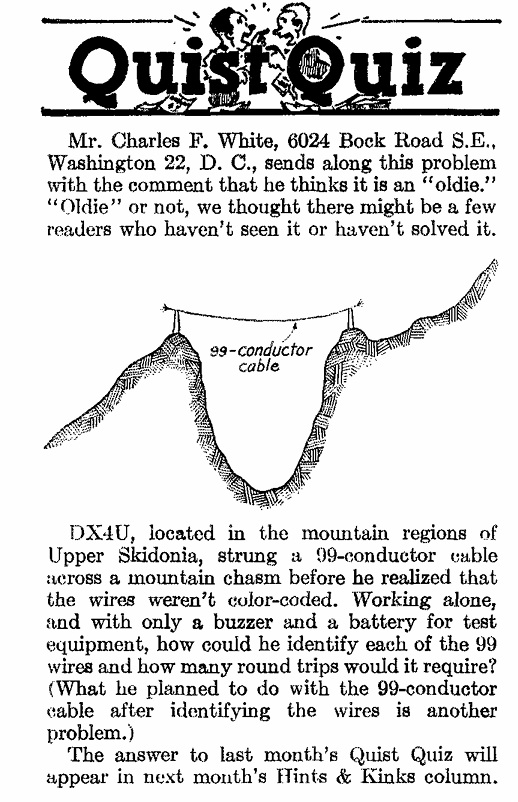
1956 Quist Quiz: Telephone Cable Problem Seventy years ago this month, the November 1956 issue of QST carried this quiz. You have a 99-conductor cable, unlabeled, and you need to mark the conductors. If you have only a buzzer and battery, how many round trips will you need to make? We’ll post the answer tomorrow. <> <> https://onetuberadio.com/2026/11/01/1956-quist-quiz-telephone-cable-problem/ #quiz #cable #november #qst #rss #feeds #linksharing #qwibbit

#quiz #cable #november #qst #rss
One Tube Radio (Unofficial)
One Tube Radio (Unofficial) 3d

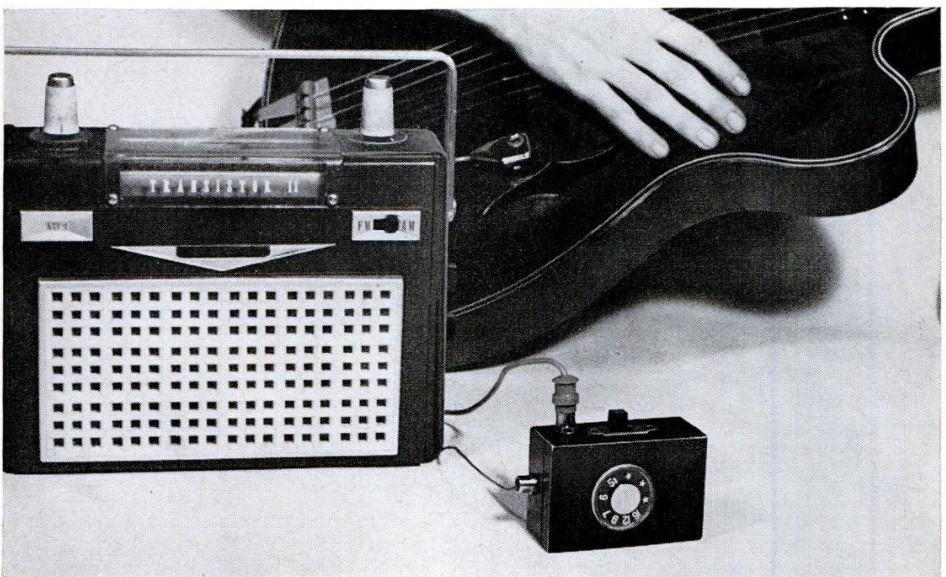
Pocket Sized Guitar Amp, 1966 Sixty years ago this month, the October 1966 issue of Popular Mechanics showed how to put together this pocket guitar amplifier. Of course, the entire amp didn’t fit in your pocket–what you built was a miniature transmitter, and the other half was any AM radio. If the radio was battery powered, then the entire setup could be used off grid. Or, if your venue had an AM radio, you could simply use that. <> <> https://onetuberadio.com/2026/10/29/pocket-sized-guitar-amp-1966/ #amp #popularmechanics #october #rss #feeds #linksharing #qwibbit

#amp #popularmechanics #october #rss #feeds
One Tube Radio (Unofficial)
One Tube Radio (Unofficial) 5d

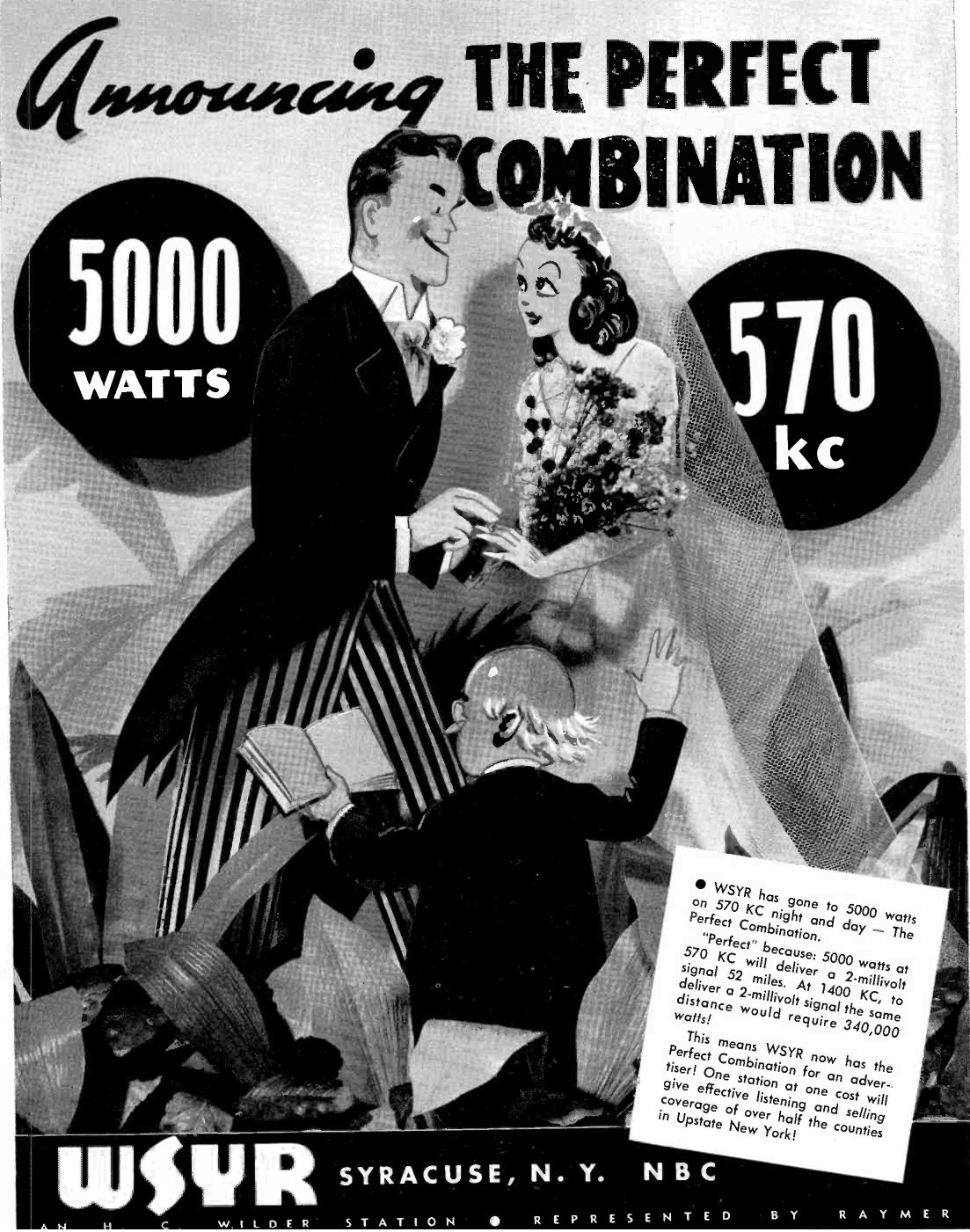
WSYR Syracuse, 1941 This ad for WYSR, Syracuse, NY, appeared in Broadcasting 85 years ago today, October 27, 1941. It announced that the station was now 5000 watts on 570 kHz. It was billed as the perfect combination, because a signal on that frequency has a much greater reach than a station on a higher frequency. In this case, the ad notes that a station on 1400 kHz would require 340,000 watts to have the same coverage area. Here in the Midwest, WNAX in Yankton, SD, has the same frequency and power, and it blankets four states with its signal. <> https://onetuberadio.com/2026/10/27/wsyr-syracuse-1941/ #syracuse #wsyr #october #khz #broadcasting #midwest #wnax #yankton #rss #feeds #linksharing #qwibbit

#syracuse #wsyr #october #khz #broadcasting
One Tube Radio (Unofficial)
One Tube Radio (Unofficial) 6d

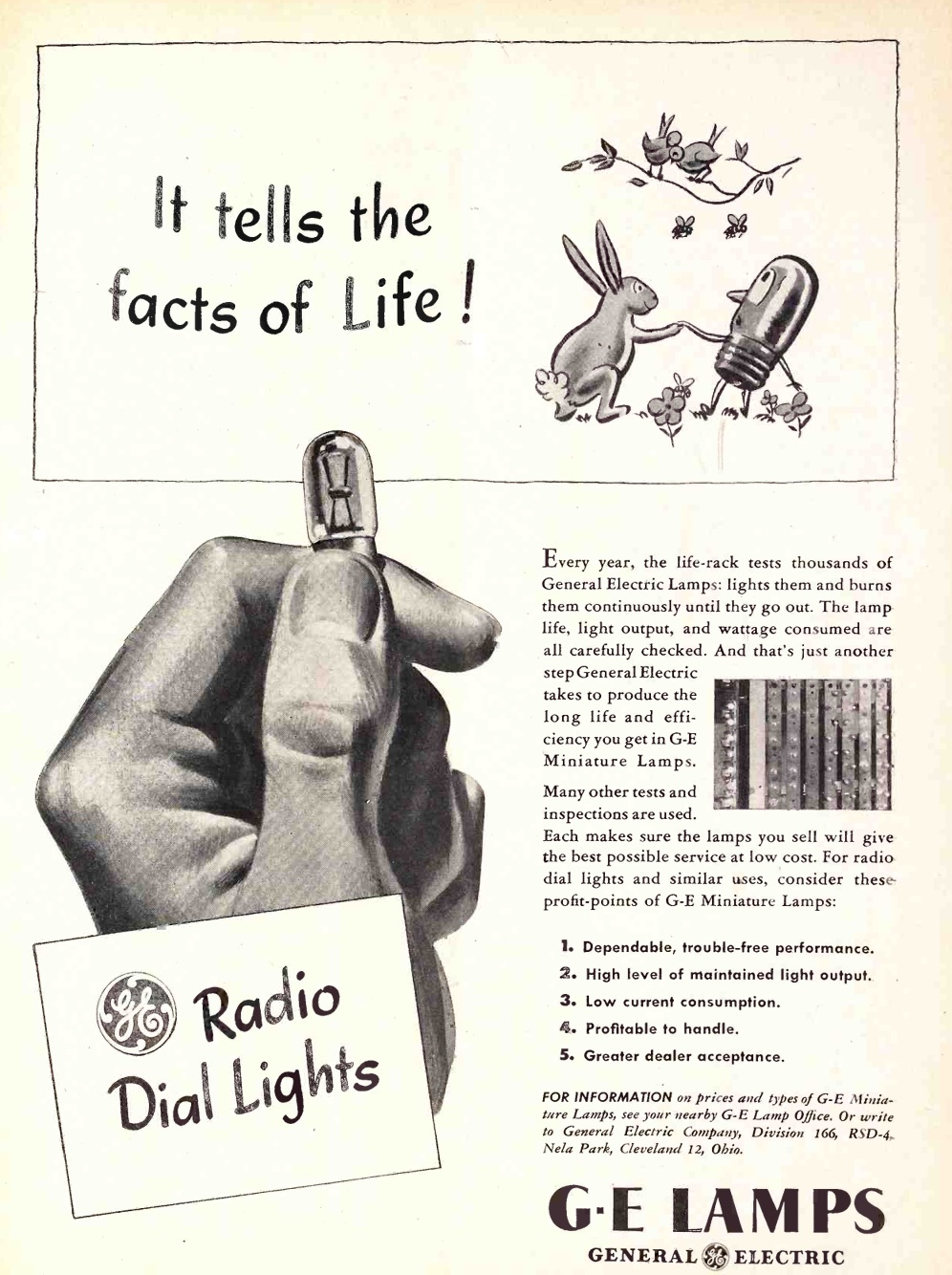
1946: Facts of Life About the Dial Lamp Eighty years ago this month, the October 1946 issue of Radio Service Dealer carried this ad from GE about the facts of life, namely, the importance of good replacement dial lamps for your radio. Of course, it wasn’t just a cosmetic issue. In an All American Five receiver, the dial lamp played an important role, and you would want to replace it as soon as possible if it ever burnt out. It was wired generally directly across a tapped heater section of the rectifier tube. In this spot, the bulb acted as a current-cushioning ballast that absorbed the dangerous power surges that occur when cold vacuum tubes first switch on. Running a radio with a dead dial light overloaded that rectifier filament, quickly destroying the expensive tube and disabling the entire set. <> <> https://onetuberadio.com/2026/10/26/1946-facts-of-life-about-the-dial-lamp/ #diallamp #life #facts #servicedealer #radioservice #americanfive #october #rss #feeds #linksharing #qwibbit

#diallamp #life #facts #servicedealer #radioservice
One Tube Radio (Unofficial)
One Tube Radio (Unofficial) 8d

National Radio Institute, 1946  Eighty-five years ago, this gentleman (Bill) and his wife Mary were experiencing a dilemma about their radio. It wasn’t working, and Mary suggested that because Bill was always fooling with radio, that perhaps he could fix it. Bill lacked confidence, but undertook the repair anyway, knowing that he would make a fool of himself. Fortunately, Bill’s friend Joe just happened to stop by and gave some pointers. Joe had started the National Radio Institute home study course, and was able to diagnose the problem for the free introductory lesson. Bill went on to a successful career in radio. The ad appeared in the October 1946 issue of Radio Craft. <> <> https://onetuberadio.com/2026/10/24/21081/ #radioinstitute #nationalradio #bill #mary #joe #craft #october #fortunately #rss #feeds #linksharing #qwibbit

#radioinstitute #nationalradio #bill #mary #joe
One Tube Radio (Unofficial)
One Tube Radio (Unofficial) 10d

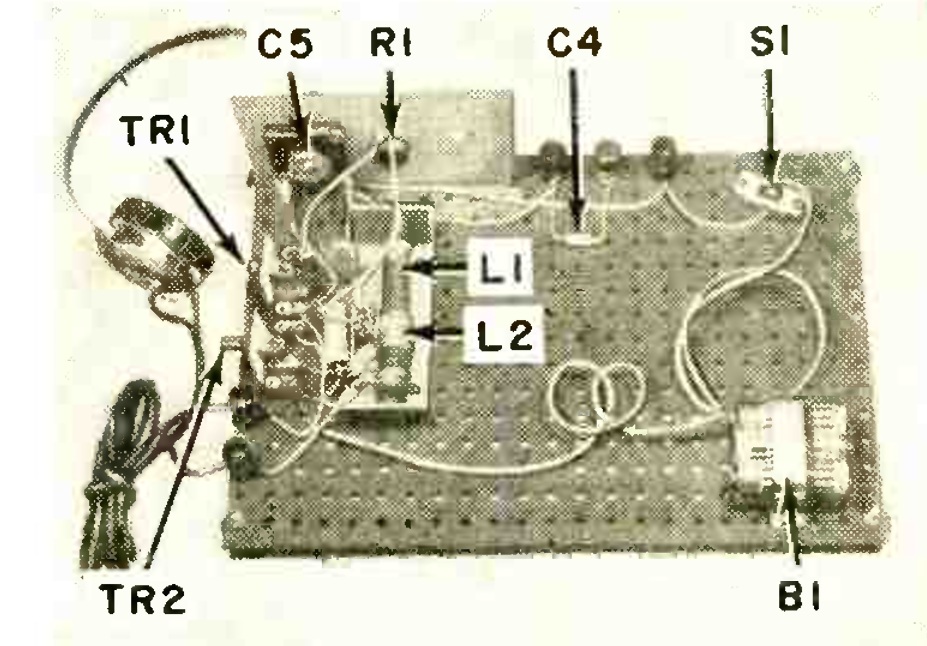
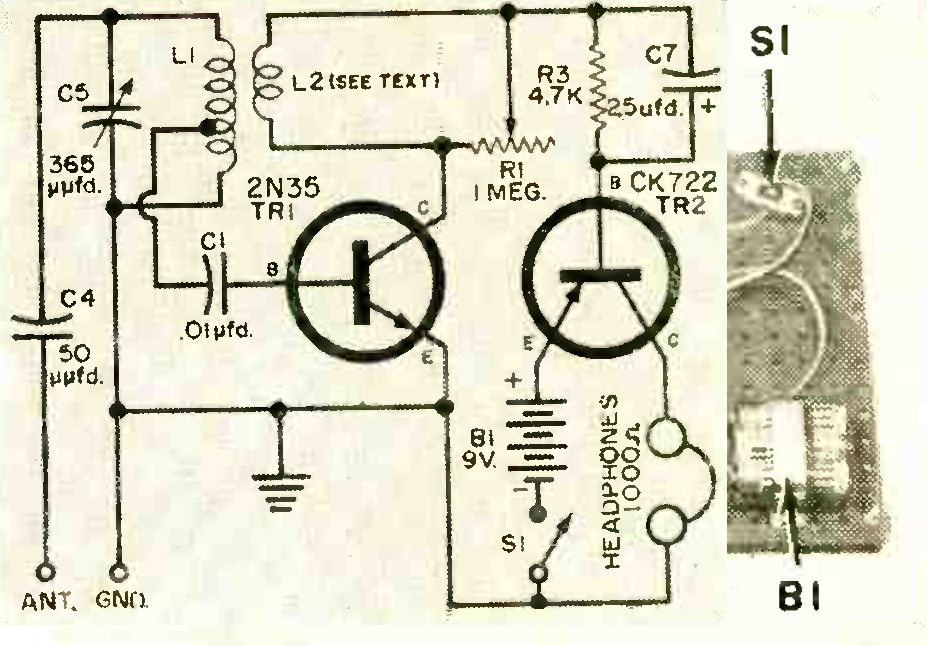
1956 Two Transistor Regen Seventy years ago, Popular Electronics had been running a series of simple projects designed to show off what transistors could do. And the October 1956 issue featured this simple two-transistor regenerative receiver. The magazine doesn’t mention the frequency range, but from the looks of the coil, it appears to be for the broadcast band. The circuit used a 2N35 NPN transistor for the regenerative detector, with a CK722 audio amplifier. <> <> https://onetuberadio.com/2026/10/22/1956-two-transistor-regen/ #two #popularelectronics #october #npn #rss #feeds #linksharing #qwibbit

#two #popularelectronics #october #npn #rss
One Tube Radio (Unofficial)
One Tube Radio (Unofficial) 11d

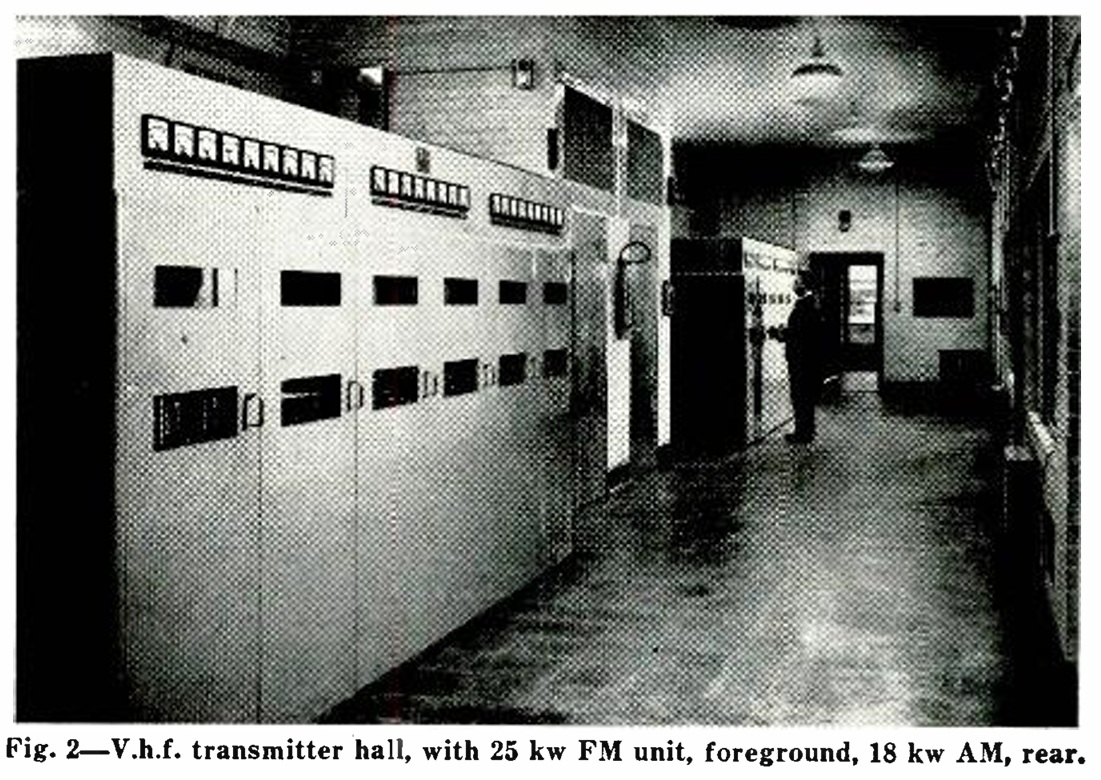
1951: AM or FM for British VHF? Seventy-five years ago, the BBC realized that it needed to start broadcasting on VHF. The reason was simple: The mediumwave band in Europe was too crowded. But unlike America, which had been using FM on the old 42-49 MHz band, and was about to move to 88-108, Britain hadn’t decided on whether to use AM or FM modulation on the VHF band. In order to decide, they ran a test in the London area. From the same antenna, two signals would be broadcast, both carrying the same program. The transmitters are shown above, from the October 1951 issue of Radio Electronics. Both transmitters used approximately equal power, with the AM signal going out over 93.8 MHz, with FM on 91.4. <> https://onetuberadio.com/2026/10/21/1951-am-or-fm-for-british-vhf/ #britishvhf #radioelectronics #both #bbc #mhz #america #october #rss #feeds #linksharing #qwibbit

#britishvhf #radioelectronics #both #bbc #mhz
One Tube Radio (Unofficial)
One Tube Radio (Unofficial) 12d

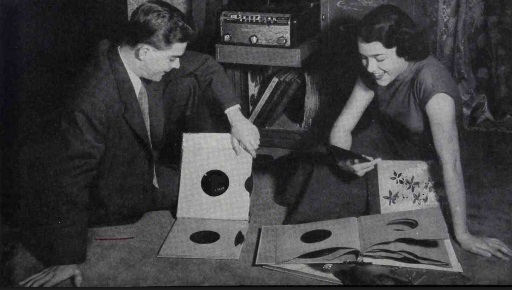
Direct Mail for Record Sales Seventy-five years ago, this couple were enjoying some new records, thanks to the foresight of their local dealer, who used direct mailing to drive record sales. They were pictured in the October 1951 issue of Radio Retailing, https://www.worldradiohistory.com/Archive-Radio-Retailing/50s/Radio-Retailing-1951-10.pdf which noted that direct mail was an inexpensive method to reach known phono record customers. The secret was to use mailings aimed at making people want to buy now. Ways to generate interest included free items (such as needles, record brushes, or 45 inserts) or even hosting gatherings where snacks were served. <> https://onetuberadio.com/2026/10/20/direct-mail-for-record-sales/ #recordsales #directmail #radioretailing #october #rss #feeds #linksharing #qwibbit

#recordsales #directmail #radioretailing #october #rss
One Tube Radio (Unofficial)
One Tube Radio (Unofficial) 15d

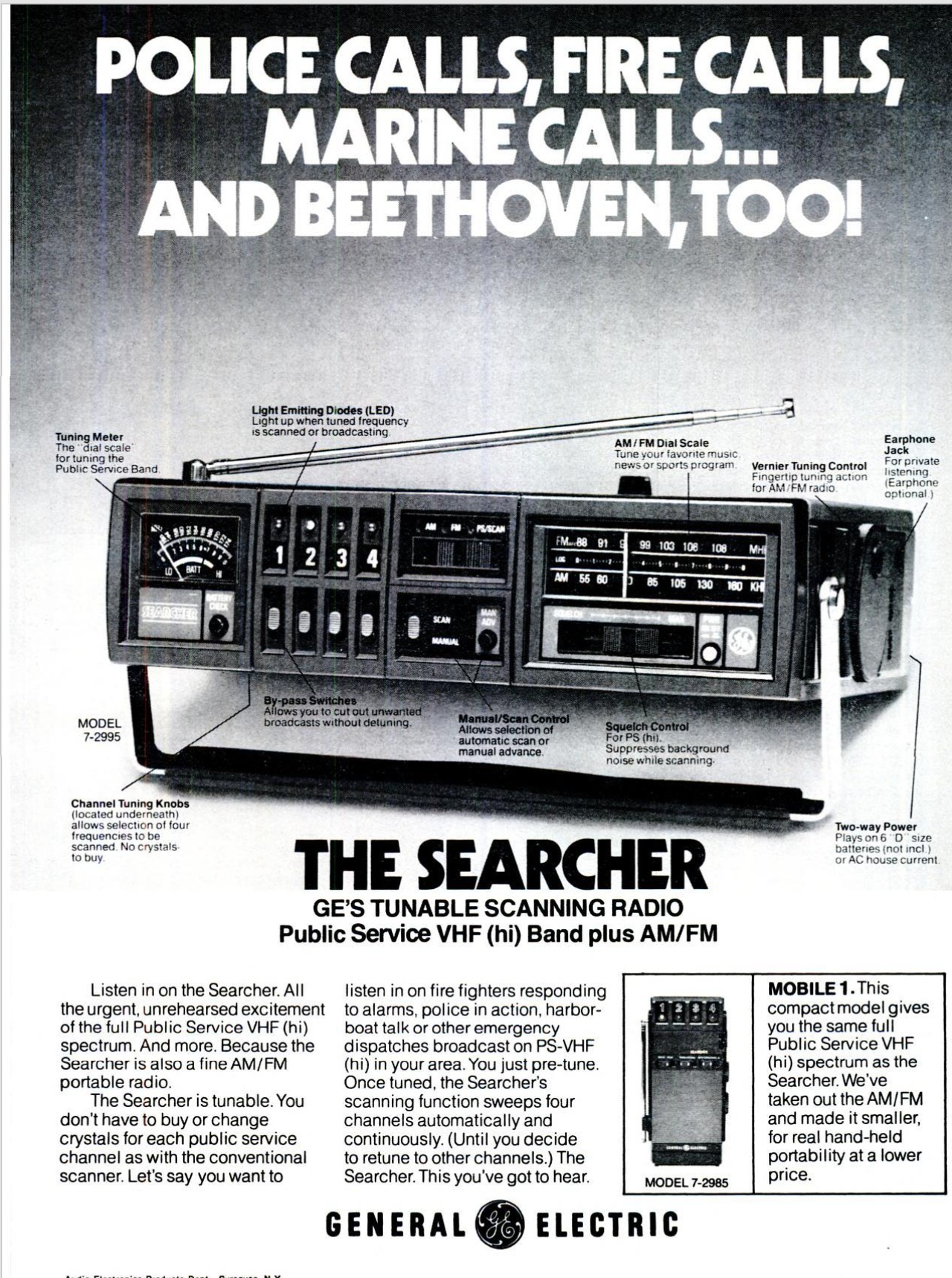
GE Model 7-2995 “The Searcher” 1976 Fifty years ago this month, the October 1976 issue of Field and Stream carried an ad for this interesting radio receiver, which undoubtedly appealed to the avid outdoorsman. The GE Model 7-2995 (or 7-2995A) was a portable AM-FM receiver powered by six D-cells, so the batteries were sure to last a long time. But it was also a scanner covering the VHF high band (150-174 MHz) for tuning in on action such as fire, police, and marine bands. It required no crystals, as the four channels could be preset. Undoubtedly, it was a slightly painstaking process getting them tuned in initially, but once they were set, there were no crystals to buy. If you didn’t need AM-FM, the scanner by itself was available as the model 7-2985. The picture of that set reveals that the tuning is accomplished by individual adjustments concealed by a small door. So no tools were needed to adjust the tuning, although a little patience was probably helpful. I don’t think I’ve ever seen one of these in person, but examples are available on eBay. <> https://onetuberadio.com/2026/10/17/21063/ #october #undoubtedly #vhf #rss #feeds #linksharing #qwibbit

#october #undoubtedly #vhf #rss #feeds
One Tube Radio (Unofficial)
One Tube Radio (Unofficial) 16d

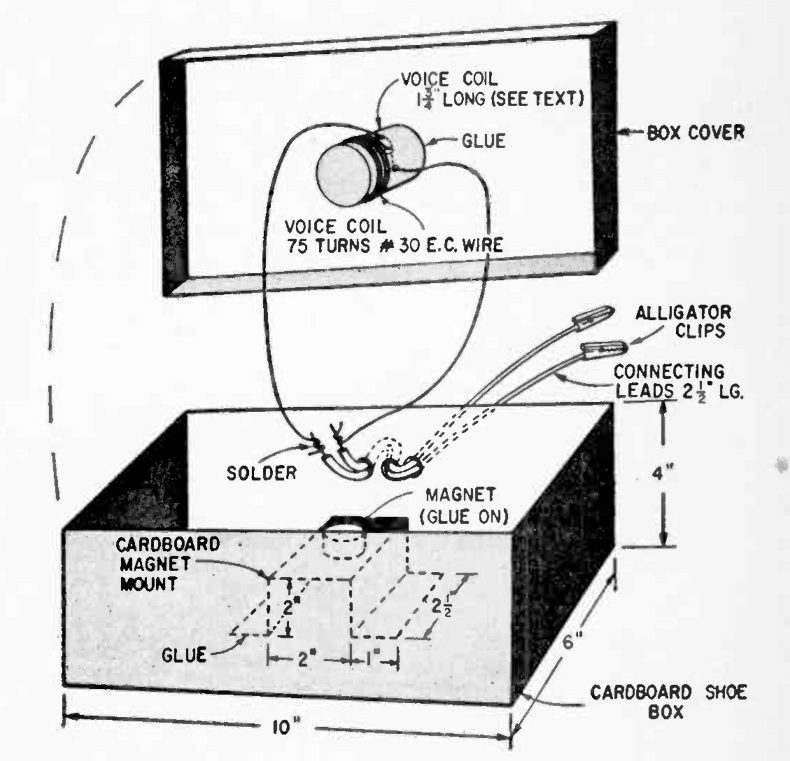
Science Fair Project: Homemade Speaker Sixty years ago this month, the October-November 1966 issue of Radio-TV Experimenter showed how to make this homemade speaker. It suggested that it would be an excellent science fair project, aimed at the 7th or 8th grade level. In addition to building the speaker, experiments can be done comparing it to a factory-made speaker. The article recommends that the youngster hook it up to the speaker output inside the family television set, with a gentle caution to be careful so as not to get electrocuted. These days, the required audio can be provided by the ubiquitous cell phone (giving Junior a good excuse to bring it to school) with the addition of an AUX cord with bare leads at one end. If phones are absolutely verbotten at school, it can also be used with the school-issued Chromebook. All that’s needed is a shoebox (the sturdier the lid the better), a toilet paper tube, and about 20 feet of #30 enamel wire. You will also need a magnet, which might come out of a defunct speaker, or purchased. <> https://onetuberadio.com/2026/10/12/science-fair-project-homemade-speaker/

Welcome to One Tube Radio (Unofficial) spacestr profile!

About Me

Unofficial automated RSS/Atom links from the source One Tube Radio, covering Recent posts combine radio history, postal collecting and a homemade-speaker science project distinctive hobby/DIY material. Original creators are credited at the source; follow original links. Zaps support the independent feed operator, not the source creators.

Interests

  • No interests listed.

Videos

Music

My store is coming soon!

Friends