Friday Debrief: Cable Charms, Carbon Tent Stakes, New Beeswax Bags, and More…
This week’s Debrief features a Schwinn documentary, snap-on cable charms, a new SON hub distributor, glow-in-the-dark carbon tent stakes, beeswax bags, fresh apparel, component inclusivity, an event to follow live, and much more. Find it all here…
The post Friday Debrief: Cable Charms, Carbon Tent Stakes, New Beeswax Bags, and More… appeared first on BIKEPACKING.com.
https://bikepacking.com/news/friday-debrief-245/
#carbontent #tentstakes #beeswaxbags #cablecharms #debrief #schwinn
#rss #feeds #linksharing #qwibbit
DyedBro Launches Neo, Its Strongest Printed Frame Protection Yet
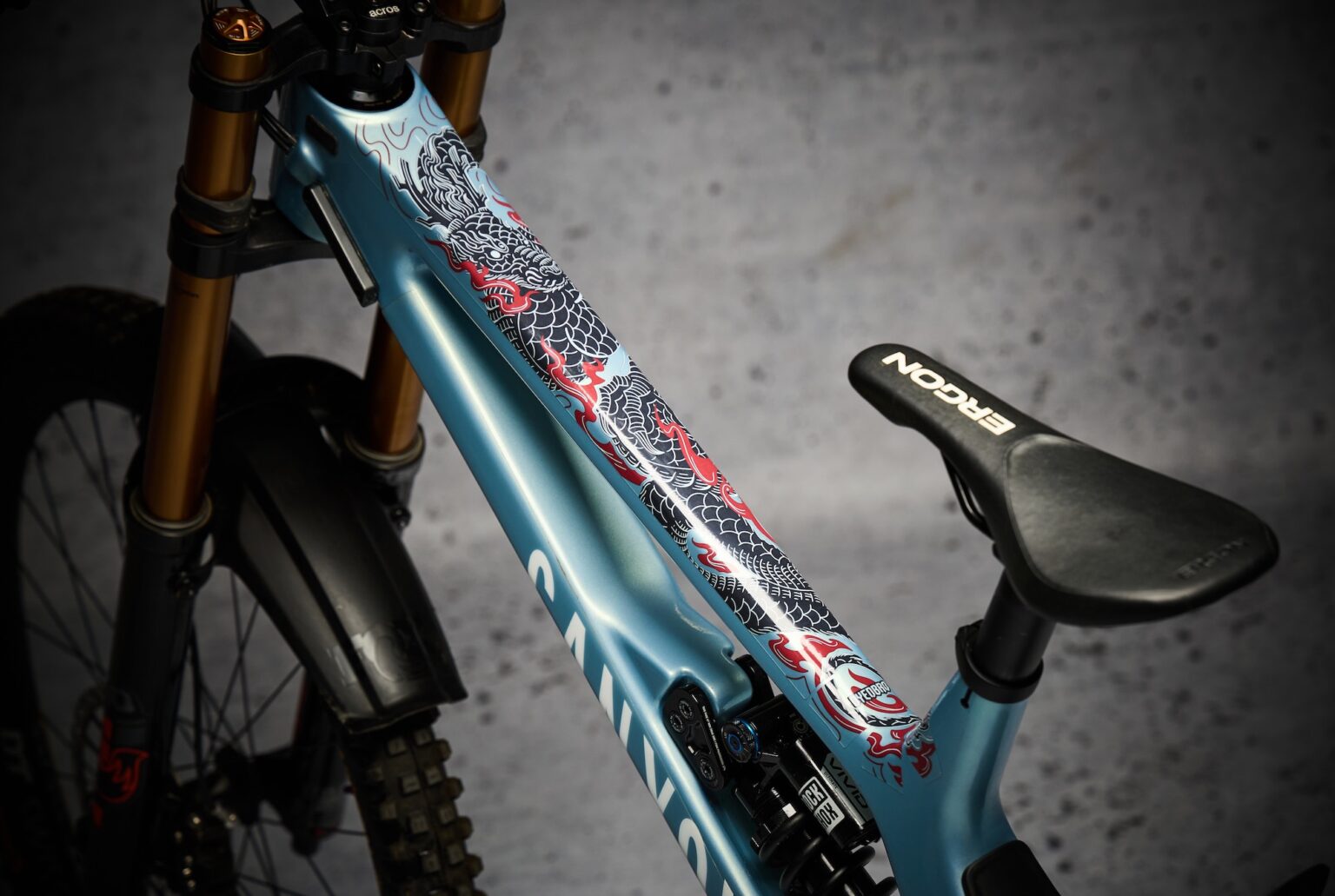
DyedBro has established itself as one of the leaders in frame protection, making a range of products to keep your mountain, gravel, and kids’ bikes looking fresh. Earlier this year, the brand launched its Evo series of clear frame protection to shield frames from damage without disrupting the original finish. For riders who prefer bolder designs, DyedBro just launched its new Neo series, which it calls “the evolution of printed frame protection.”
“We’ve re-engineered the material to give riders the ultimate balance between high-impact durability, sharp design, and a clean, custom-like fit.”
-DyedBro Team
DyedBro Neo Details
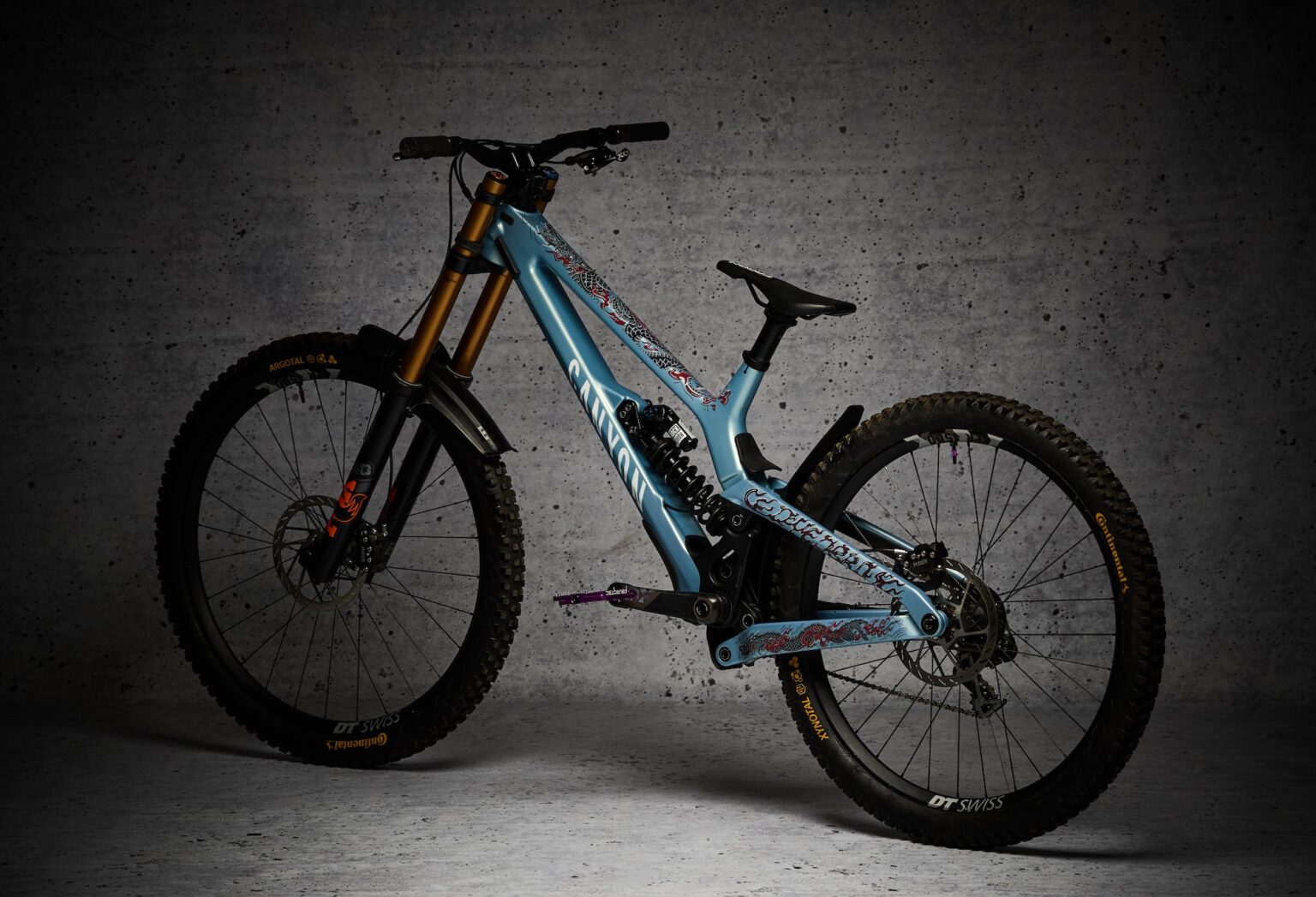
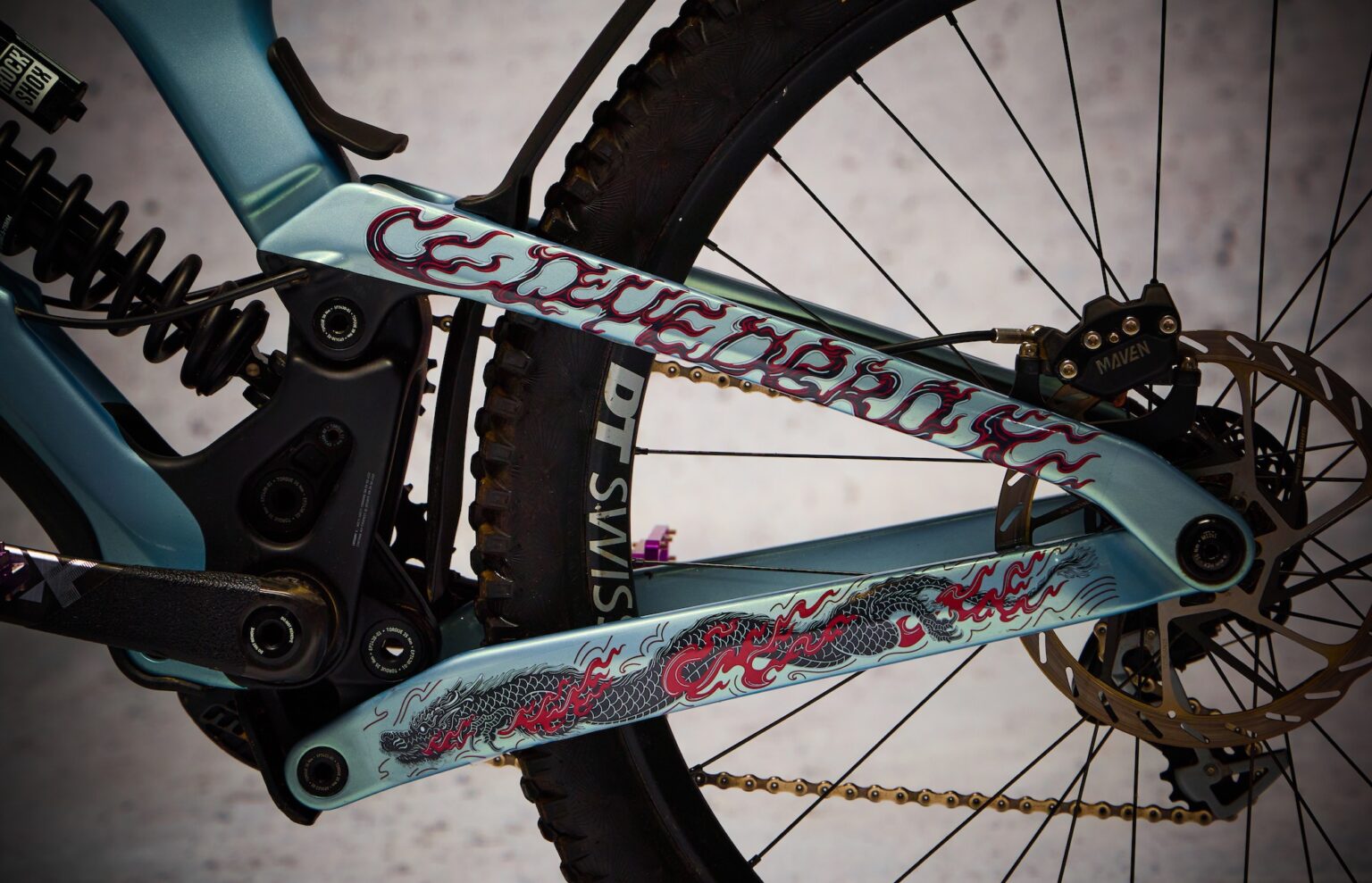
With the new Neo frame protection, DyedBro says it is building on its iconic heritage by “combining signature visual graphic styles with an ultra-thin, high-flexibility vinyl formulation designed to conform seamlessly to complex frame shapes when heat-applied.” According to the brand, the new 100-micron protective laminate not only bends effortlessly around intricate geometry, but delivers tough impact and scratch resistance against trail debris, gravel, and UV exposure.
All of the frame protection kits in the Neo series include graphics that range from subtle to bold and in-your-face. They use eco-friendly water-based inks to print the crisp, vibrant graphics, which are shielded by the laminate from wear. Additionally, DyedBro claims that Neo has been engineered to withstand harsh sunlight, mud, and frequent washing without yellowing, discoloring, or degrading.
DyedBro makes its Neo frame protection kits for both mountain/eMTB and gravel bikes. The gravel kits weigh 46 grams and have been “optimized for the narrower tubing and specific wear points of gravel bikes, offering lightweight but rugged protection against frame bags and high-frequency gravel spray.” The kit includes twelve pieces in total to protect the top tube, down tube, fork legs, seat stays, and chainstays. There are currently three graphic options in the Neo gravel lineup.
The Neo Gravel kits in Laurem (left) and Racing (right)
The mountain/eMTB kits are claimed to weigh just 48 grams and fit on most of today’s mountain bikes. According to DyedBro, they are “designed with extra coverage for the larger rear triangles of modern trail, enduro, and electric bikes. It provides a heavy-duty shield against rock strikes and high-speed debris.” Each MTB kit includes 8 pieces to protect the top tube, down tube, seat stays, and chainstays. There are currently 13 graphics to choose from, ranging from racing stripes and dragons to artist collabs.
The Neo MTB kits in Surf’s Up (left) and Naga Dragon (right)
Pricing and Availability
Nearly all of DyedBro’s new Neo Series frame protection kits retail for $70, with two of the gravel kits costing just a bit more at $73. They are available now directly from DyedBro at dyedbro.com
https://bikerumor.com/dyedbro-launches-neo-its-strongest-printed-frame-protection-yet/
#frameprotection #neo #printedframe #neoseries #gravel #neodetails #mtb #dyedbroteam
#rss #feeds #linksharing #qwibbit
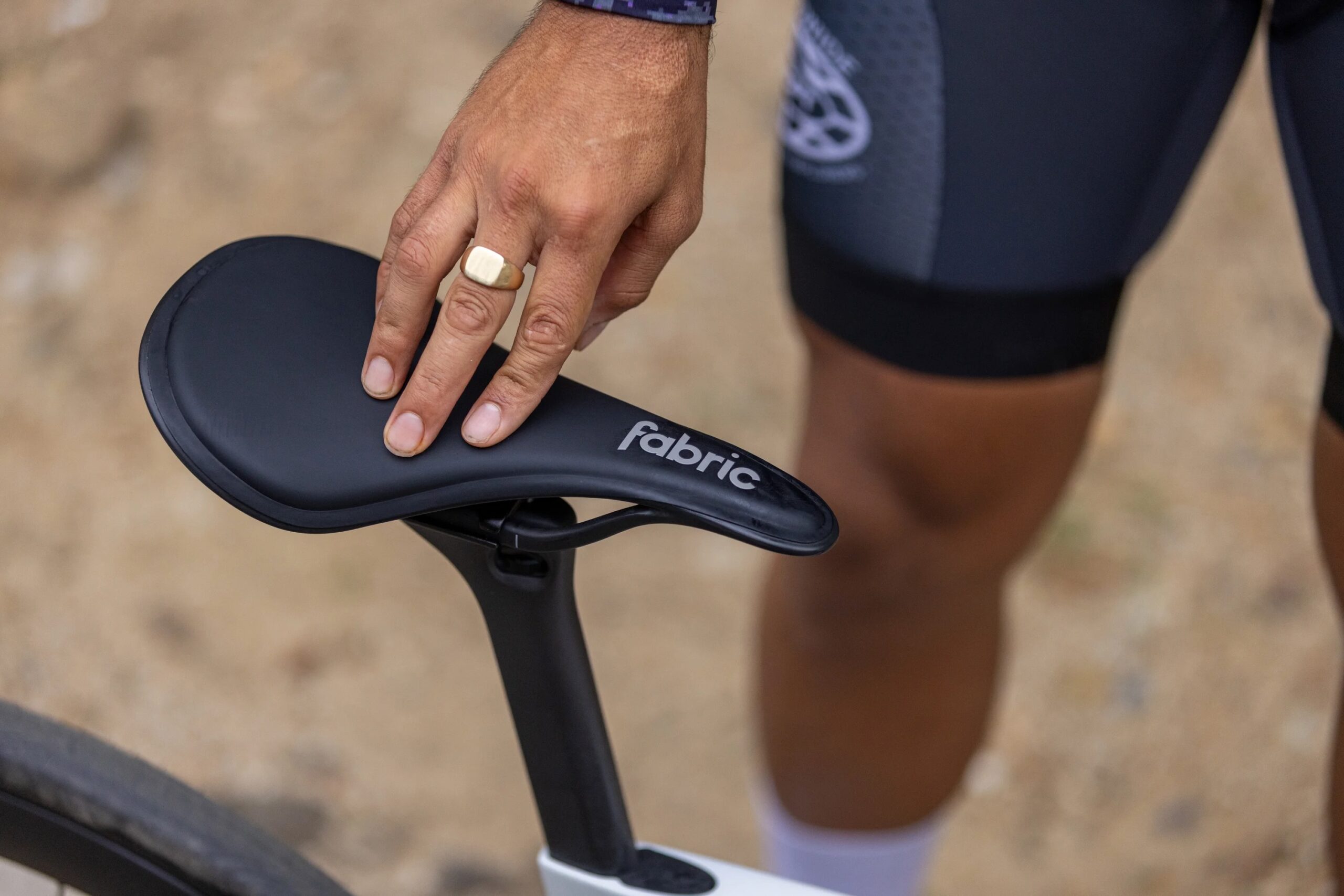
Fabric Continues Its Comeback with New 145-Gram ALM:HALO Saddles
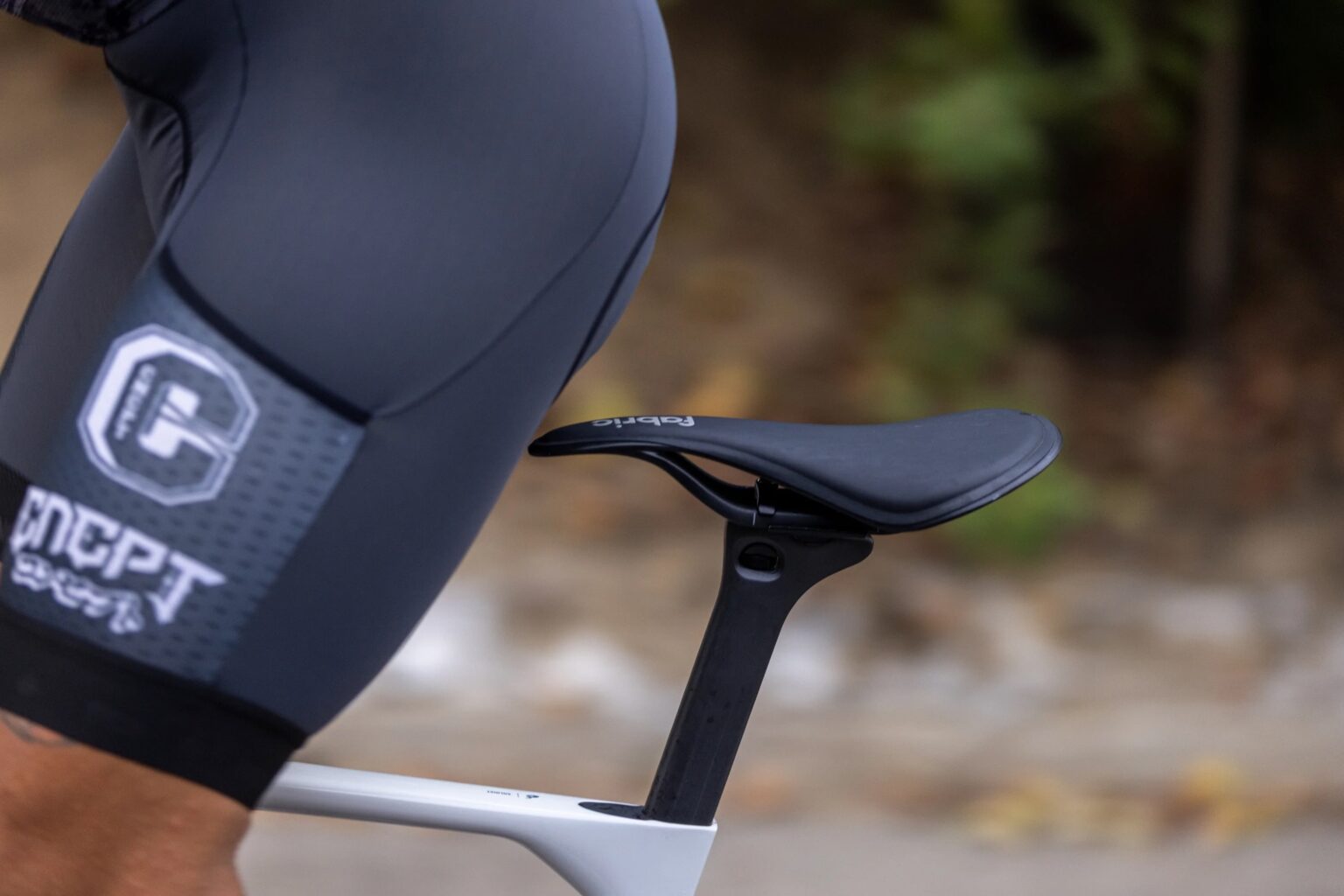
Every time we’ve written about Fabric in the past year or so, we’ve mentioned how the brand is poised to make a comeback. Well, it appears that comeback is continuing with the introduction of the new ALM:HALO saddle range. It builds on the forward-thinking design of the original, aerospace-inspired ALM saddle and evolves it with modern materials and construction to refine its performance and enhance its comfort while keeping weight to a minimum.
“The original ALM, released over a decade ago in 2013, set a benchmark by bringing 3D-printed titanium aerospace technology to cycling, so going into this project, we knew we had massive shoes to fill. While manufacturing techniques have shifted over the last decade, the fundamental design of the ALM remains timeless. The goal for the new ALM was never to replace an icon, but to evolve it. We asked ourselves the exact same question we did ten years ago: what can we learn from cutting-edge industries and apply to innovative saddle design?”
-Florian Bont, Brand Manager at Fabric
Fabric ALM:HALO Details
The original ALM saddle was conceived and designed alongside aerospace engineers at Airbus. To create the new ALM:HALO saddles, Fabric says that it brought together those same engineers, who now work at the National Composites Center (NCC). With the goal of improving upon the ALM platform, they identified what they consider to be two major ergonomic failures.
Hammocking: Occurs when the center of the saddle sags under load. While comfortable initially, it causes deep soft-tissue discomfort during aggressive pelvic rotation.
Pivot Effect: Occurs when the saddle wings flex downward under pedaling pressure, using the rail bonding points as a fulcrum to force the center of the saddle upward into the rider.
Fabric says the goal was to retain the leaf-spring comfort of the original ALM while eliminating both hammocking and the pivot effect. To figure out how, they and the NCC subjected the original ALM to load-to-failure testing to find its weak points and make improvements.
Fabric says that it “began iterating using Tailored Fiber Placement (TFP), a highly advanced technology derived from Formula 1 that is only available to a select few around the world.TFP allows for continuous fibers to be stitched exactly where needed, enabling the designers at Fabric to map out structural demands with complete flexibility, quickly prototyping and testing different configurations.”
Ultimately, Fabric says this led to what they dubbed their “HALO Design”. This includes the two rear rails connected to a continuous wrap-around structure of the unibody base, to create rigidity and neutralize upward pivot flex through the wings under power. Additionally, given the stiffer wings, they say they adjusted the wing geometry with a natural downward curve to preserve the leaf spring compliance at the rails while maintaining a solid base.
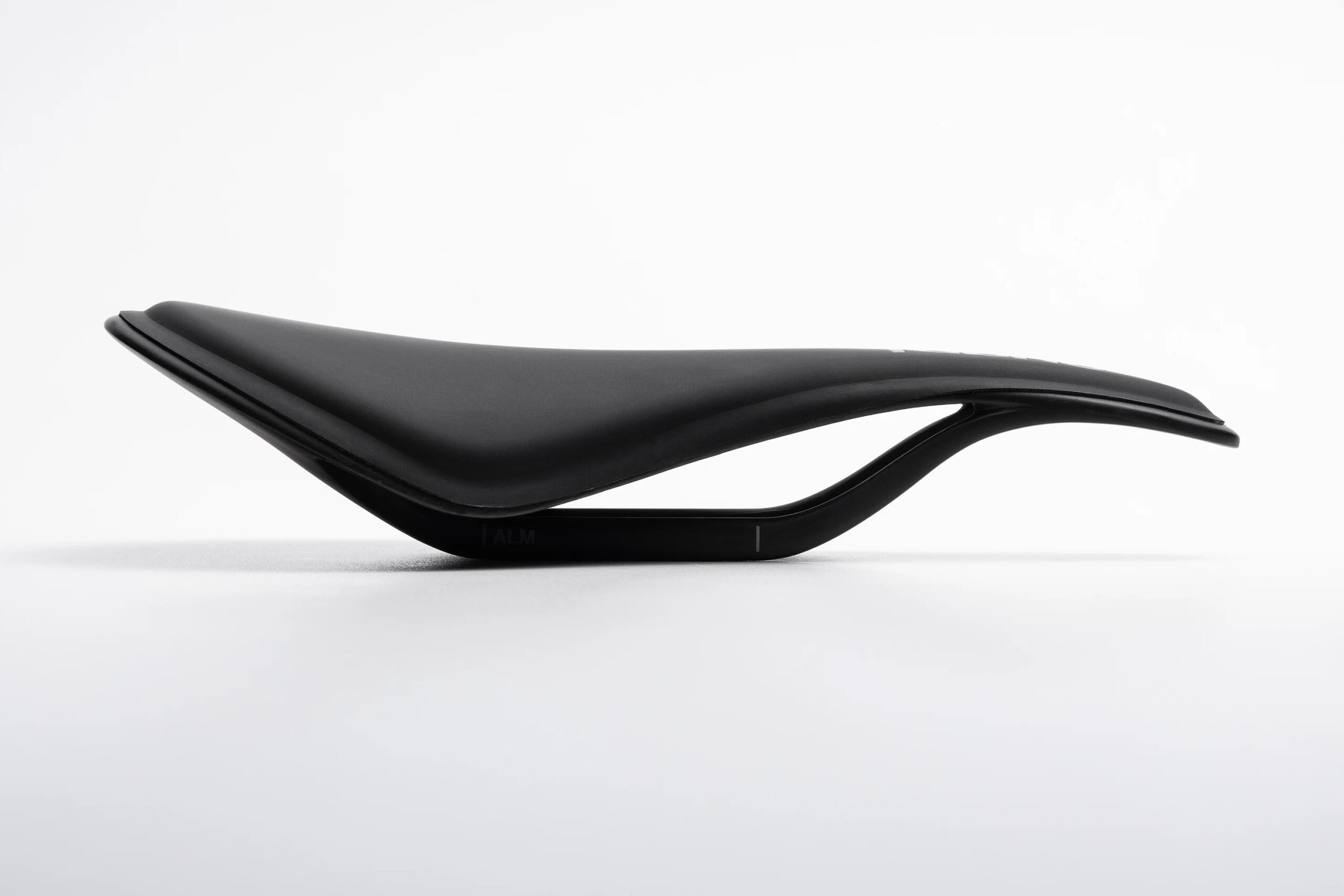
According to Fabric, the design was then translated into a refined, hand-laid carbon fiber thermoforming process with material placed only where necessary. Its carbon unibody construction with HALO unibody carbon rails results in an ultralight saddle that weighs just 145 grams. The ALM:HALO comes in a 142mm width and 265mm length.
It comes in a standard version, as well as an “Ergo” model with a pressure-relief channel. The Ergo version has an open cutout in the base designed to reduce pressure and numbness on the perineal tissues. The cutout is covered with lightweight foam padding to maintain a sleek look, and is differentiated from the standard version with an alternate logo placement.
The ALM:HALO Ergo has a cutout in the base and an alternate logo placement to set it apart. It comes in black only.
ALM:HALO Specs
Rails: Carbon, 7 x 10mm
Base: Carbon
Padding: Lightweight EVA
Cover: Microfibre
Weight: 145 g
Width: 142 mm
Length: 265 mm
Mid rail to saddle topper: 47mm
Rider weight limit: 100kg
The standard ALM:HALO saddle comes in white or black.
Pricing and Availability
The standard and Ergo versions of the Fabric ALM:HALO saddles retail for $329 / €329 / £299. They are available now. Head to the Fabric website to learn more, check availability in your region, or find a dealer near you.
fabric.cc
https://bikerumor.com/fabric-continues-its-comeback-with-new-145-gram-almhalo-saddles/
#alm #halosaddles #fabric #halodesign #center #ncc #pivot
#rss #feeds #linksharing #qwibbit
#alm
#halosaddles
#fabric
#halodesign
#center
BikeTrail10h
Litespeed Launches Four New Titanium eBikes for Road and Gravel
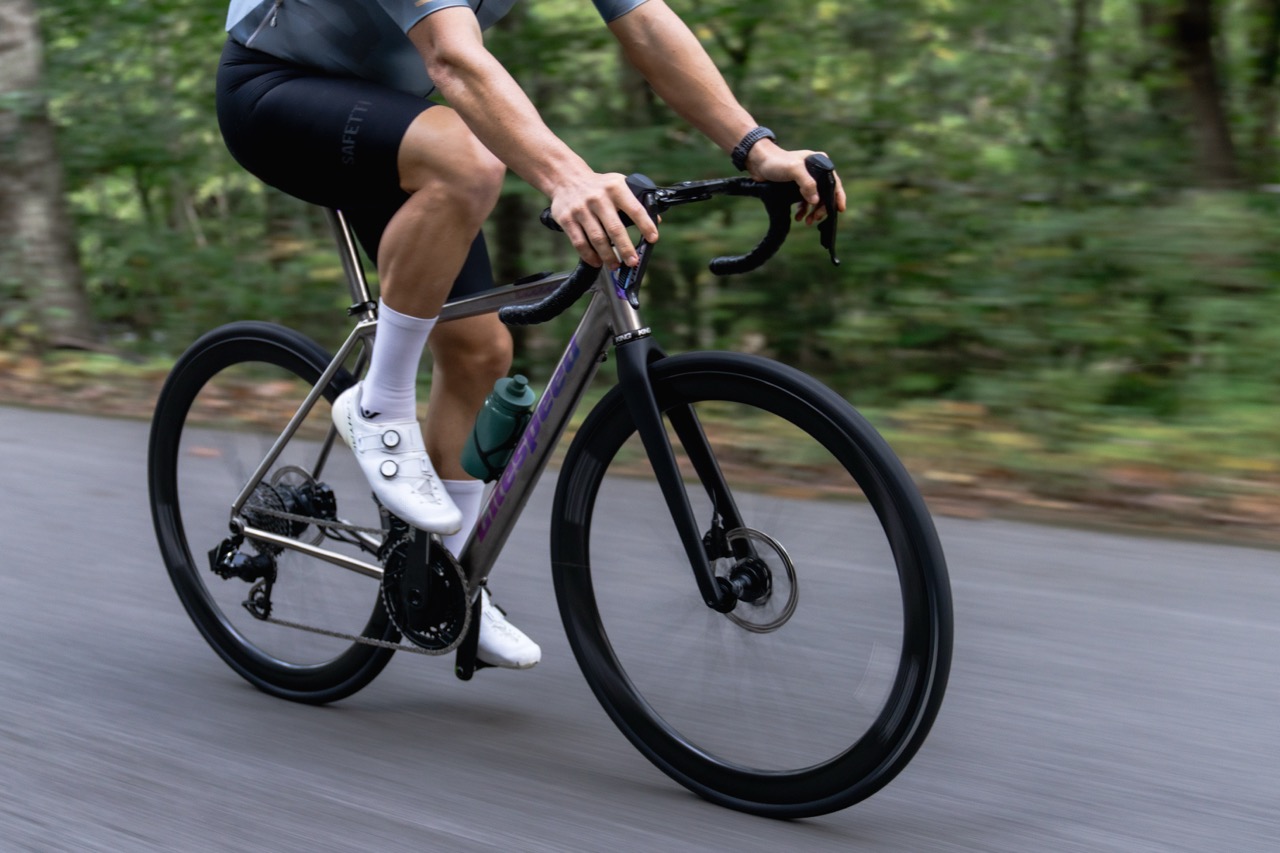
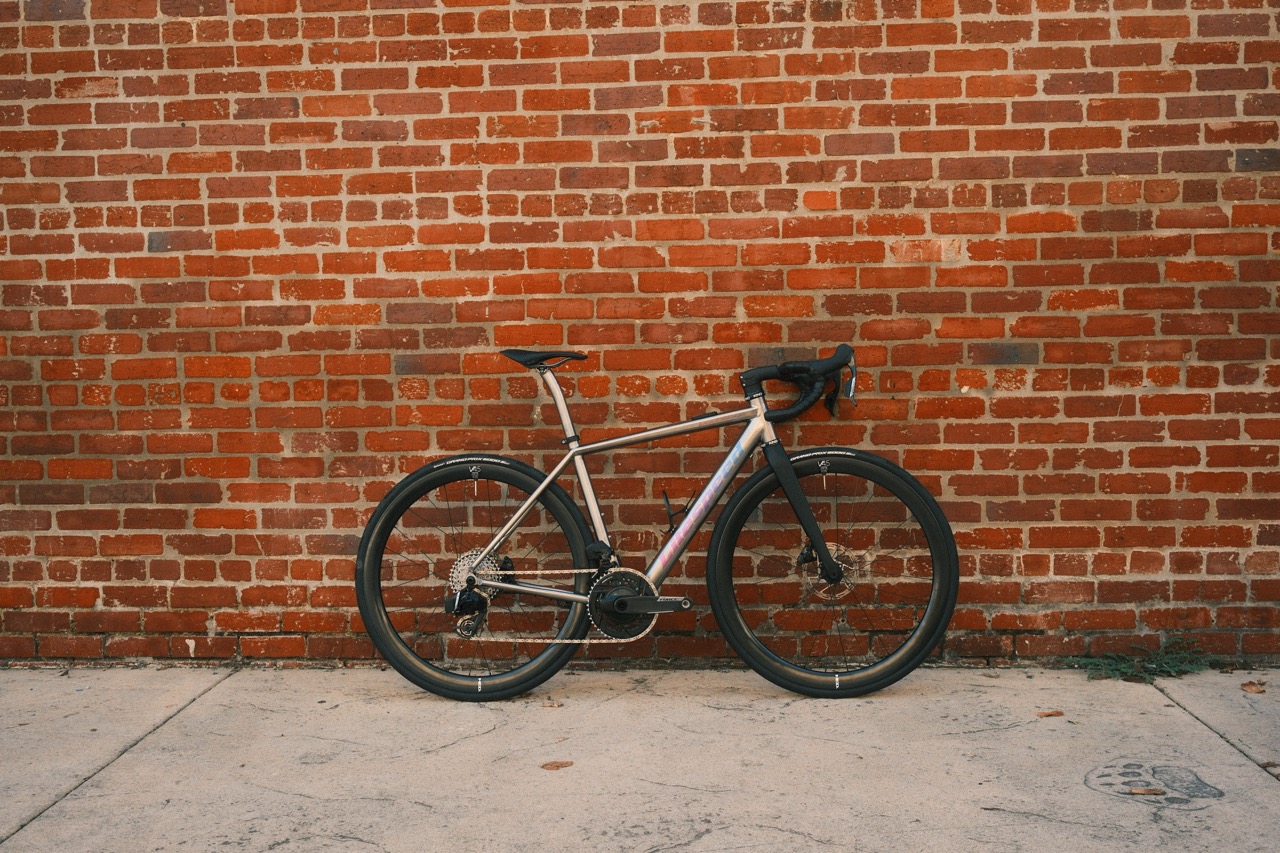
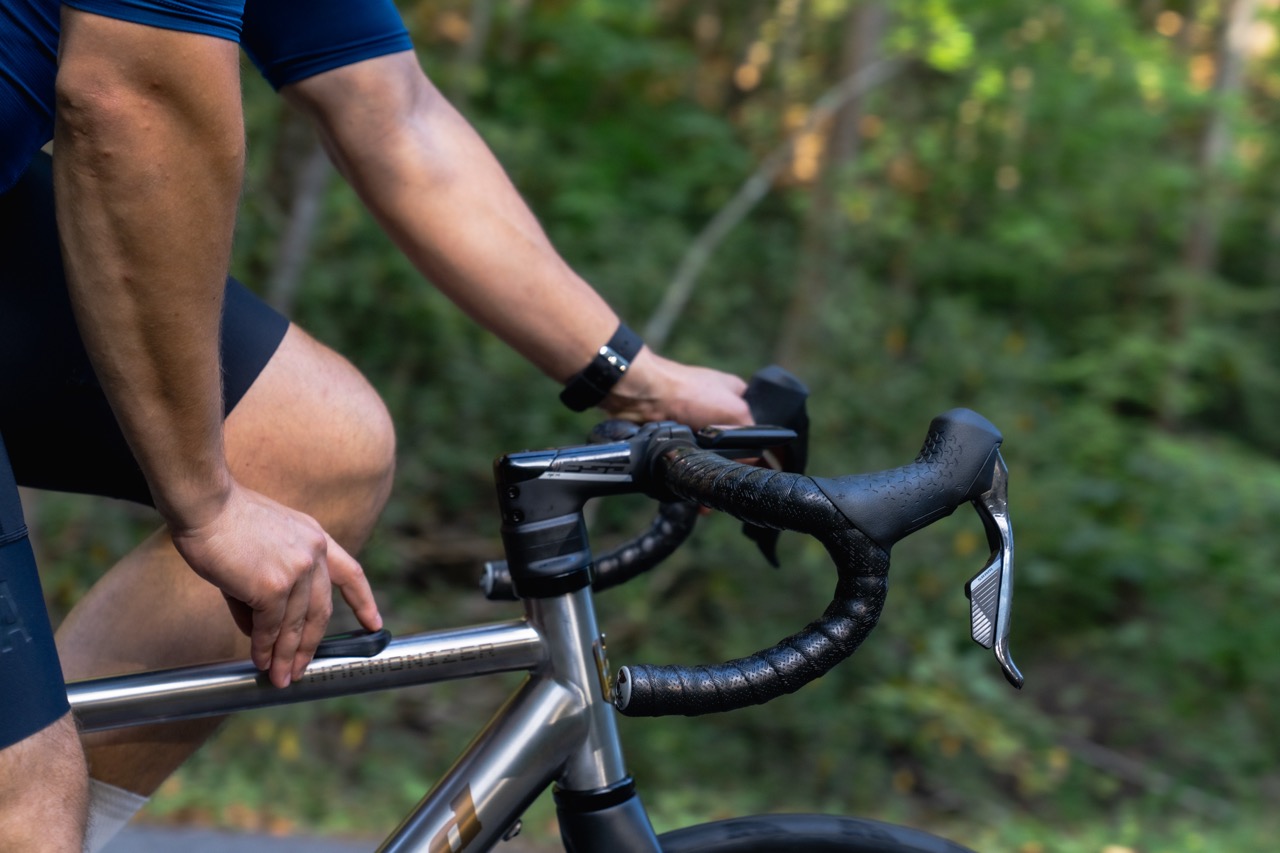
Today things get a bit electrified and amplified as Litespeed debuts four new bicycles you may never have expected. Meet Litespeed’s new lineup of titanium road and gravel E-bikes: the Sustain and Harmonizer for the road, and the Overdrive and Distortion for gravel.
(Photos / Litespeed)
These new eBikes are still hand-built in the same Tennessee factory that has produced other Litespeed frames. And they’re designed to bring the high-performance and legendary ride of Litespeed titanium to a larger cycling audience.
Look, you and I both know that Litespeed has spent pretty much its whole existence making light and refined titanium frames. Now the brand is putting that dedication into electric bikes, hoping that road and gravel riders who usually side-eye a motor might be ready to reconsider.
The Motor
The new lineup uses the Mahle X20 System, a lightweight assist setup designed for performance bikes. Litespeed says it delivers 275 watts of peak power and assistance up to 20 mph from a 250 Wh battery, with Eco, Sport, and Boost modes.
It’s a Class 1 system, so the motor only helps while you’re pedaling, and Litespeed claims the pedal feel stays natural. The motor sits in the rear hub, which is where HED enters the picture: each bike gets a HED hand-built road or gravel wheelset laced to the Mahle hub, with a choice of carbon or high-performance alloy rims.
What About the Frame?
The frames use new custom-formed Superform eSL6/4 and Pure eLW titanium tubesets. Litespeed says these tubes produce the lightest titanium E-bike frames possible. Buyers can pick from a wide range of high-end components, specs, and sizes, just like any other Litespeed.
CEO Chris Pascarella admits he was a skeptic. “I had bought into the stigma that riding an E-bike was a sign of surrender,” he said. He’s since changed his tune, arguing the bikes let you keep up with a fitter partner, enjoy that dream Col, or “commute to work without risk of hitting Zone 2.”
Motor & Battery Specs
Motor: MAHLE X20 rear hub
Power: 250 W
Torque: 65 Nm
Battery: 250 Wh
Extender: Optional eX1 available
Class: Class 1, assists up to 20 mph
System: 3.2 kg (7.05 lbs), including battery
OK, let’s check out the bikes!
Sustain eRoad Racing Bike
Retail: $12,599
“The Sustain is built on Litespeed’s racing pedigree. With signature Superform tube shaping and the innovative sheet-formed Superform eSL6/4 titanium top tube, it delivers incredible stiffness and sets the bar for low weight and high-speed performance. Complete with Shimano Ultegra Di2 groupset and HED V45 carbon wheelset.“
Frame Specs
Frame Material: Superform eSL 6/4 Titanium Tubeset (3AL/2.5V + 6AL/4V Top Tube)
Seatpost Diameter: 31.6mm
Derailleur Hanger: UDH
Front Derailleur Mount: 34.9mm Clamp-on
Cable Routing: Fully-Integrated
Front Spacing: 12 x 100 mm
Front Axle Spec: M12 x 1.5, 120- 125 mm
Rear Spacing: 12 x 142 mm
Rear Axle Spec: M12 x 1.0, 164- 167 mm
Max Chainring Size (2x – Shimano): 54/40t
MaxChainring Size (2x – SRAM): 56/43t
Chainring Size (1x): 46t Max
Rotor Size: Max 160mm front and rear
Tire size: 700x35mm max
Harmonizer eRoad Bike
Retail: $9,999
“The Harmonizer is built using Litespeed’s Pure eLW titanium tubeset, carefully shaped and constructed to deliver a smooth and comfortable ride, mile after mile. With 35mm of tire clearance paired with relaxed endurance geometry, the legendary Litespeed titanium ride just got better. Harmonizer starts at $9,995 outfitted with a Shimano 105 Di2 drivetrain and HED V45 carbon wheelset.“
Frame Specs
Frame Material: Pure eLW 3AL/2.5V Titanium Tubeset
Seatpost Diameter: 31.6mm
Derailleur Hanger: UDH
Front Derailleur Mount: 34.9mm Clamp-on
Cable Routing: Fully-Integrated
Front Spacing: 12 x 100 mm
Front Axle Spec: M12 x 1.5, 120- 125 mm
Rear Spacing: 12 x 142 mm
Rear Axle Spec: M12 x 1.0, 164- 167 mm
Fork Offset: 47mm
Rigid Fork Length: 381mm
Max Chainring Size (2x – Shimano): 54/40t
MaxChainring Size (2x – SRAM): 56/43t
Chainring Size (1x): 46t Max
Rotor Size: Max 160mm front and rear
Tire size: 700x35mm max
Overdrive eGravel Race Bike
Retail: $12,599
“Litespeed’s flagship gravel E-bike is built with race-inspired geometry, 50mm of tire clearance, and features Litespeed’s proprietary lightweight sheet-formed Superform eSL6/4 top tube. It comes complete with Shimano GRX 1X Di2 827 components and a HED Lancaster
carbon wheelset. The Overdrive delivers the direct feel and high-speed handling that has become synonymous with Litespeed race bikes.”
Frame Specs
Frame Material: Superform eSL 6/4 Titanium Tubeset (3AL/2.5V + 6AL/4V Top Tube)
Seatpost Diameter: 31.6mm
Derailleur Hanger: UDH
Front Derailleur Mount: 34.9mm Clamp-on
Cable Routing: Fully-Integrated
Front Spacing: 12 x 100 mm
Front Axle Spec: M12 x 1.5, 120- 125 mm
Rear Spacing: 12 x 142 mm
Rear Axle Spec: M12 x 1.0, 164- 167 mm
Fork Offset: 50mm
Rigid Fork Length: 420mm
Max Chainring Size (2X): 48/31t
Max Chainring Size (1X): 46t
Chainring Size (1x): 46t Max
Rotor Size: Max 180mm front and 160mm rear
Tire size: 700x50mm max
Distortion eGravel Bike
Retail: $9,999
“The Distortion is Litespeed’s all-rounder gravel rig, delivering classic lines and ride feel with Litespeed’s Pure eLW 3AL/2.5V titanium tubeset. 54mm of tire clearance and adventure-ready geometry give riders the confidence needed to tackle bigger rides and rougher roads. Outfitted with SRAM’s Rival AXS XPLR groupset and HED Lancaster carbon wheels.”
Frame Specs
Frame Material: Pure eLW 3AL/2.5V Titanium Tubeset
Seatpost Diameter: 31.6mm
Derailleur Hanger: UDH
Front Derailleur Mount: 34.9mm Clamp-on
Cable Routing: Fully-Integrated
Front Spacing: 12 x 100 mm
Front Axle Spec: M12 x 1.5, 120- 125 mm
Rear Spacing: 12 x 142 mm
Rear Axle Spec: M12 x 1.0, 164- 167 mm
Fork Offset: 50mm
Rigid Fork Length: 420mm
Max Chainring Size (2X): 48/31t
Max Chainring Size (1X): 42t
Chainring Size (1x): 46t Max
Rotor Size: Max 180mm front and 160mm rear
Tire size: 700x54mm max
Litespeed combines titanium and a quiet, light assist system. It seems like a smart pairing. Add the hand-built HED wheelset, and this could be one of the more interesting premium E-road and gravel options on the market currently. Hit the link below for more details.
Litespeed.com
https://bikerumor.com/litespeed-launches-four-new-titanium-ebikes-for-road-and-gravel/
#launchesfour #litespeedlaunches #fournew #titanium #motor #superform #battery #class #system #hed
#rss #feeds #linksharing #qwibbit
State Bikes and Liquid Death Team Up for a Special $666 Halloween Trick-or-Treat Drop
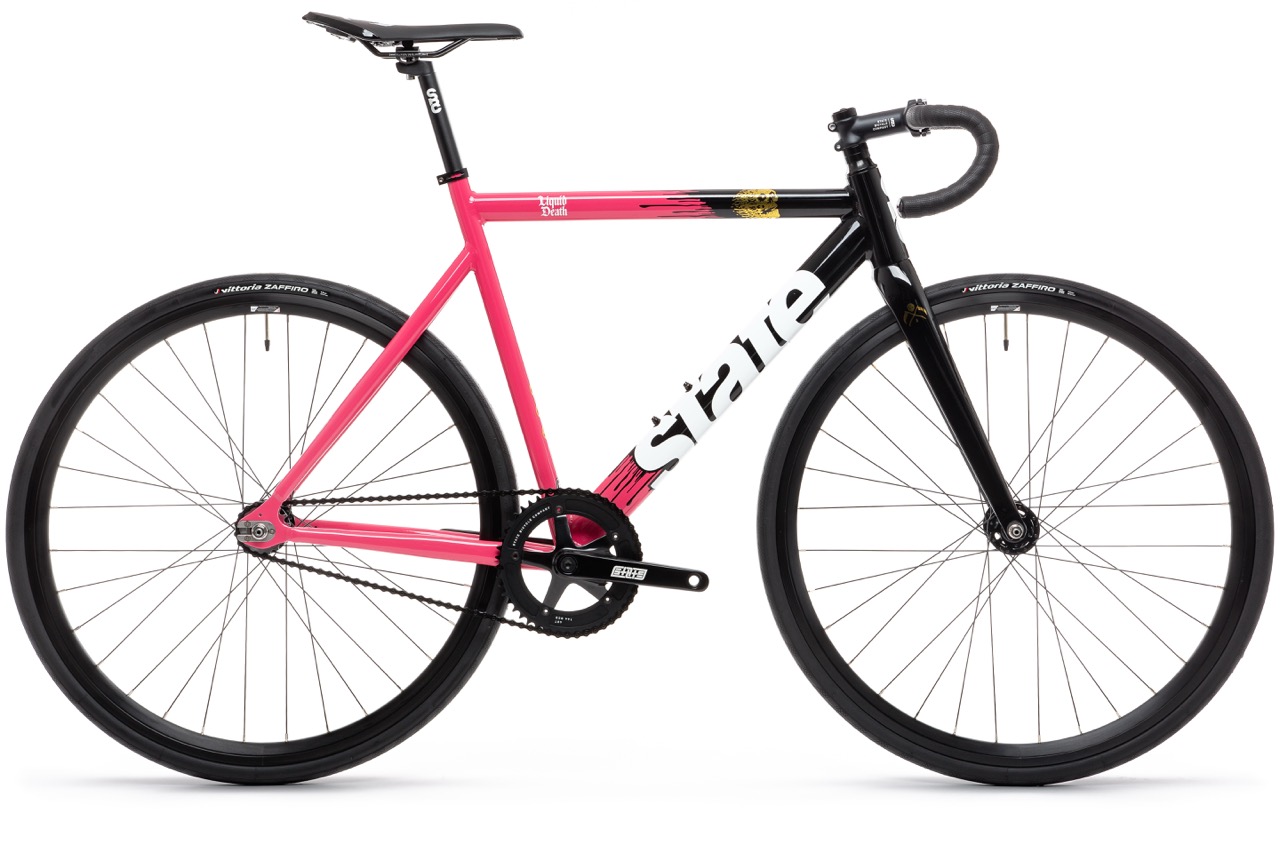
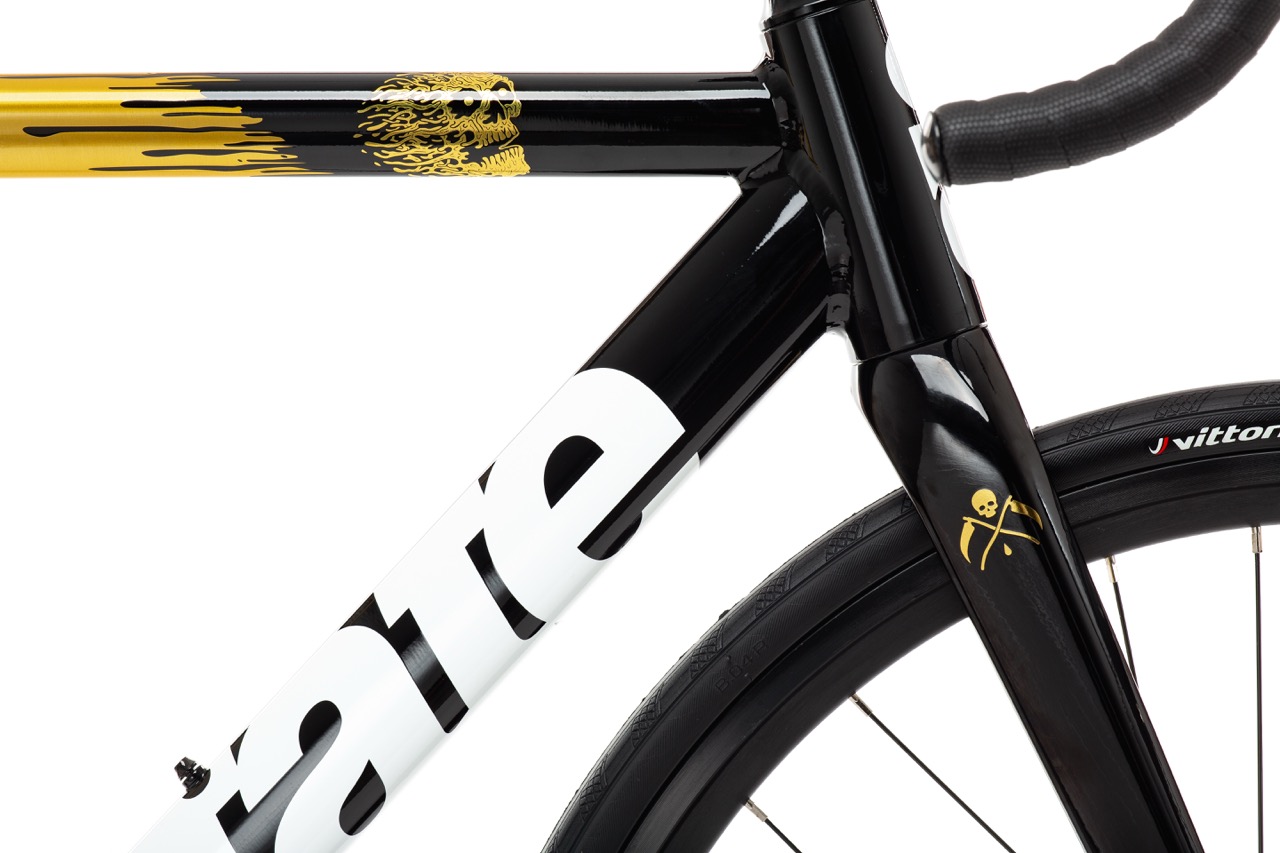
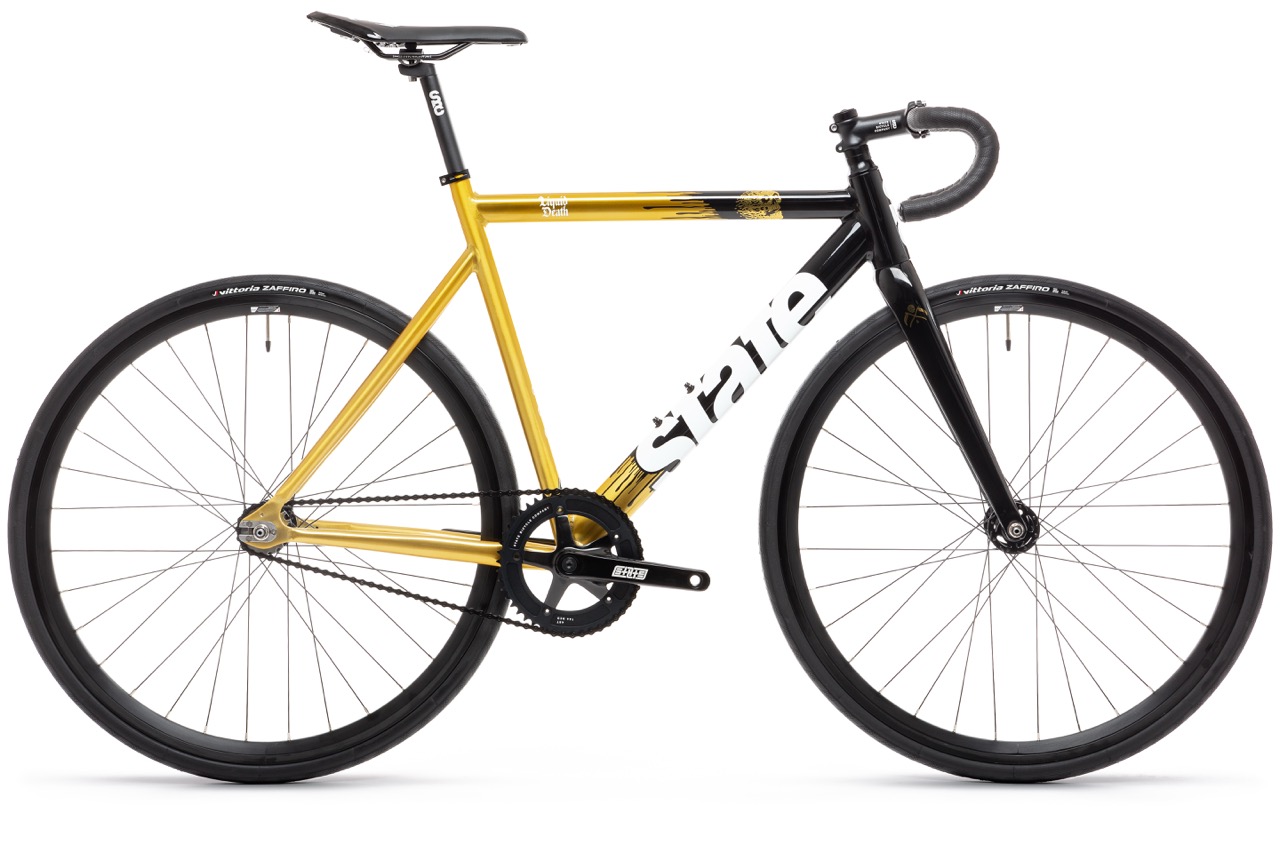
State Bikes has joined forces with Liquid Death on a limited-edition collection built around two of the brand’s sparkling water cans. It includes bespoke colorways, apparel, and à la carte components for adding a little death to your ride.
(Photos / State Bike Co.)
Let’s just jump right in.
Here’s the Trick…
The centerpiece of the release is the 6061 Black Label v3 Aluminum Single Speed. It comes in two colorways: Classic Black and Gold that matches the original Liquid Death Mountain Water…
And Vibrant Pink/Black that pairs with Scary Strawberry Sparkling Energy. Both are available as framesets or complete builds. It’s your call.
And, Here’s the Treat…
All of this happens on Halloween only, so make sure you get to the State Bicycle Co. site tomorrow (tonight at midnight). Starting 10/31 at 12:01 am PST, State is running a $666 “Trick or Treat” sale on the complete bike. You pick your size only and buy sight unseen. That sounds like you won’t know what color or spec you’ll end up with, but State promises you won’t be disappointed.
This is for one day only, then it’s gone. To help with your decision-making… regular pricing is $899.99 for the complete bike and $549.99 for the frameset, so the Halloween price is a real discount on the complete build.
State X Liquid Death Black Label Details
Frame: 6061 Black Label v3 aluminum
Drivetrain: Single speed
Colorways:
Classic Black and Gold (matches Liquid Death Mountain Water)
Pink/Black (pairs with Scary Strawberry Sparkling Energy)
Availability: Framesets or complete builds
Halloween-only price: $666 complete, size selection only, sold sight unseen
Regular MSRP: $899.99 complete, $549.99 frameset
Extras: Stem cap, saddle, jersey, and cap, plus à la carte components
The Rest of the Collection
The collection also includes a stem cap, saddle, jersey, and cap, so you can match your kit to your can.
Stem Cap
Retail: $9.99
Saddle
Retail: $35
Jersey
Retail: $69.99
Cap
Retail: $24.95
If you’ve been eyeing a simple, affordable single speed, this one has the paint job and the price to make the wait worthwhile. Just don’t sleep on it, because it’s here for one day.
The Link:
https://www.statebicycle.com/collections/state-bicycle-co-x-liquid-death
Reminder: this link is password-protected and won’t be live until tonight at 12:01 am PST.
https://bikerumor.com/state-bikes-and-liquid-death-team-up-for-a-special-666-halloween-trick-or-treat-drop/
#liquiddeath #deathteam #statebikes #blacklabel #classicblack #drop #special #cap #halloween #capretail
#rss #feeds #linksharing #qwibbit
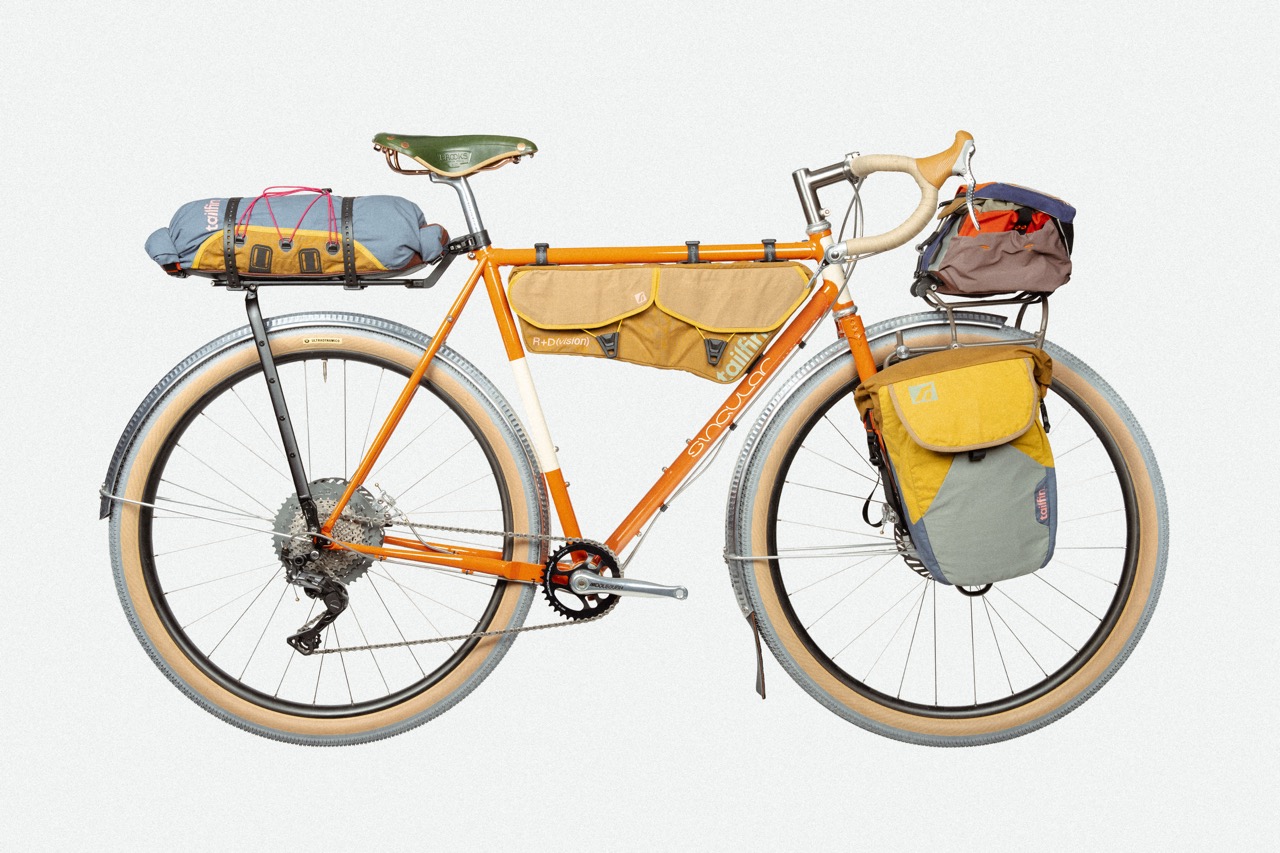
Tailfin Cooks Up “Slow Riding” Waxed Canvas Bikepacking Setup in its R&D Kitchen
Look, if you’re rocking a Tailfin bikepacking system on your steed, there’s a good chance you bikepack “fast” or “ultra”. Like, you need your bikepacking gear minimal and strapped high and tight on your bike. Well, recently, Tailfin teased us with some work they’ve been doing in their R&D Kitchen that’s for the bikepackers out there who aren’t in a hurry to get to where they’re going.
Now, this is a one-off, prototype bag setup. And as of right now, it will not be going into production. So try not to get too excited.
That fender line, though. Sexy AF!
Slowing Things Down…
Tailfin is best known for making bikepacking gear lighter, faster, and generally more aero than your average sleeping bag. So it’s kinda cool that its latest project is about slowing down, bringing a fishing rod, and not being in any hurry.
The project came out of Tailfin’s “R&D Kitchen,” a couple-times-a-year side gig for Tailfin’s prototyping department. The workshop sits next to the kitchen at HQ, so therefore “R&D Kitchen”.
The department’s day job is building prototypes for the R&D Division, which is the brand’s group of ultra athletes. The Kitchen projects have no commercial target. They’re about experimenting and having fun.
For this one, the team skipped the usual “lighter and faster” goal. Instead, they asked what they’d actually want to take on a trip built around the stops rather than the distance. Their answer was extra time and extra luxuries.
For the Love of Waxed Canvas…
The bags are the star here, as they should be. Product team member Theo designed a front bag designed around holding a film camera, complete with a pocket for a real paper map “for the romance of it.” So far, I love this…
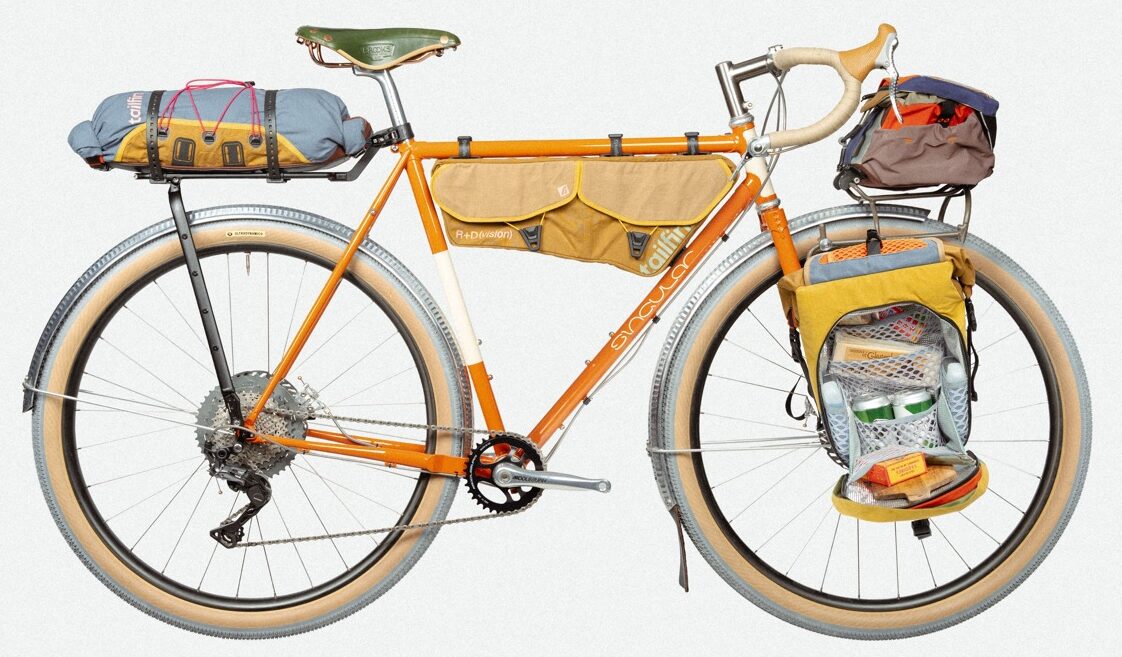
Molly turned one pannier into an insulated cool bag for cold beers and a refrigerated picnic. What? She also made a separate bag for a small espresso maker. This is turning out to be spectacular…
Soft Goods Prototyper Callum redesigned the frame bag with flip-top closures instead of zips. And it’s split vertically rather than horizontally, with access at the front so you can dig around in it while riding.
1960s Japanese Touring!
The inspiration came from Callum’s research into 1960s Japanese touring photos, which led back to the French constructeurs, who built bikes, racks, and bags as one integrated system. Japanese builders refined the idea over the following decades. “The bags aren’t an afterthought,” Callum said. The result is a British take on that tradition.
But what about the bike? The bags are built around the new Singular Peregrine Mk5, a lugged steel bike from Sam Alison’s Singular Cycles. Alison launched the Peregrine in 2008, and it was arguably a gravel bike before the category had a name.
Tailfin made its own versions of two touring classics for it: low front panniers and a randonneur handlebar bag. Both use British waxed canvas that weathers naturally, plus the same mounting hardware and stability engineering as Tailfin’s race gear. Bristol tailor David Darby Minns, a friend of the team, supplied fabric samples and vintage tailoring inspiration.
This bike and bag system hits me right in the feels so hard. The color, the aesthetics, the fenders… I am a sucker for a good-lookin’ randoneurring rig. But sadly, it’s not a product that’s in development. Boo!!!
(Photos / Tailfin)
However, the light at the end of the tunnel is that Tailfin expects ideas from the project to inform future work. So, hopefully we will see some more waxed canvas.
Where to See It?
Kendal Mountain Festival, 19–22 November 2026, Kendal, UK.
Velofollies, 22–24 January 2027, Kortrijk Xpo, Belgium
Hit the link below for Tailfin products that are in production and ready to go.
TailFin.cc
https://bikerumor.com/tailfin-cooks-up-slow-riding-waxed-canvas-bikepacking-setup-in-its-rd-kitchen/
#waxedcanvas #kitchen #riding #setup #callum #japanese #touring
#rss #feeds #linksharing #qwibbit
#waxedcanvas
#kitchen
#riding
#setup
#callum
BikeTrail1d
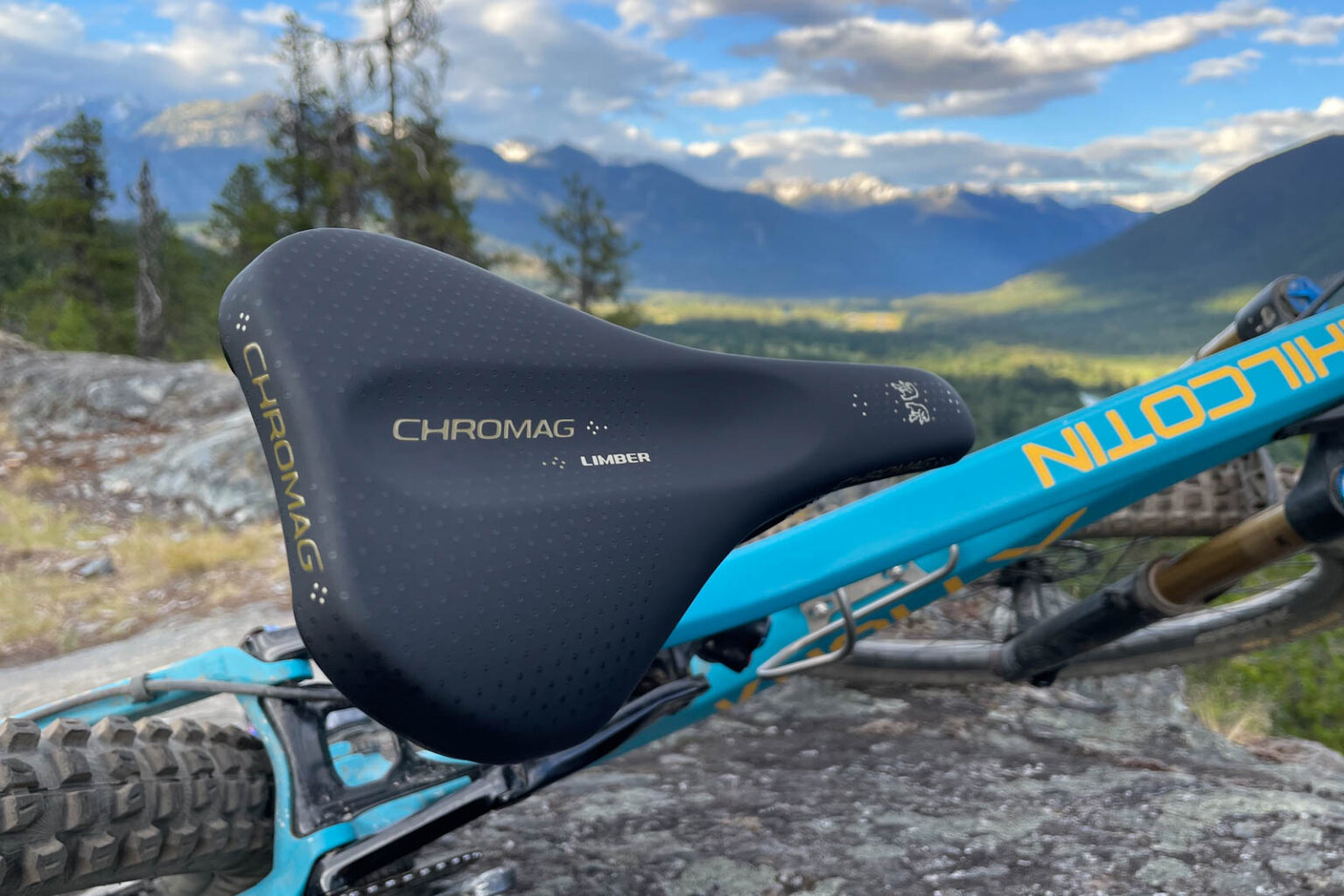
Chromag’s Limber MTB Saddle Provides Plenty of Support in a Trim Package
Chromag Bikes started building their brand on hardtail frames, but as components came along, they quickly became Whistler, B.C.’s unofficial handlebar of choice, then put out some very popular seats. Back in mid-June, Chromag Bikes announced their new Limber seat. This saddle was designed to be easy to move around when you’re standing up, but comfortable enough when you’re seated for long rides.
A few years ago I would have called Chromag’s Lynx DT saddle my current favourite, so I was stoked to try out the new Limber. I’ve been riding the Limber since its release, and despite facing a tough comparison to my favourite seat ever (Ergon’s SMC Core), I found it perfectly comfortable. The Limber is a nicely supportive saddle that maintains a sleek overall profile and a reasonable weight.
Chromag Limber Saddle – Construction Features:
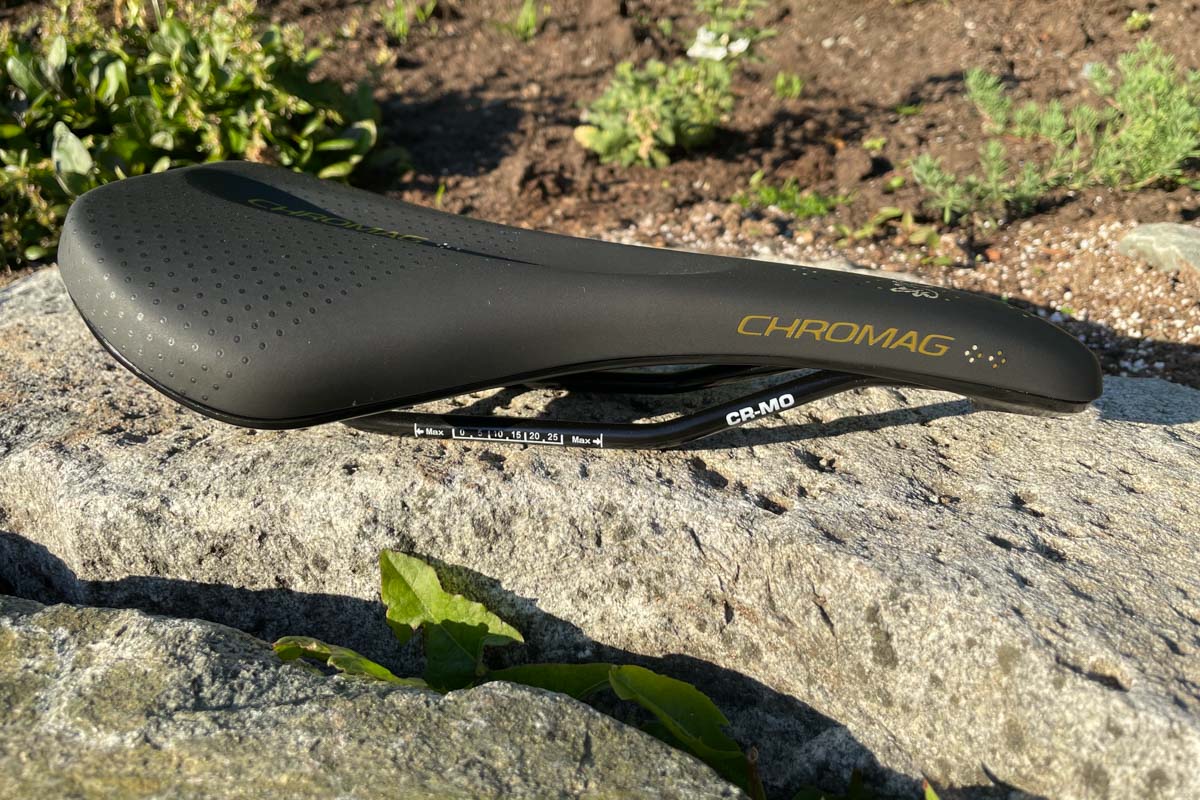
Chromag says the new Limber was based upon their Lift saddle, but refined with a shorter profile and a broader center relief channel. The Limber’s vacuum-formed construction enables a seamless finish and a consistent surface feel. It features a durable, weather-resistant synthetic cover, and its design leaves no exposed plastic or sharp edges. Chromag gave the Limber chromoly rails for strength and durability without excess weight.
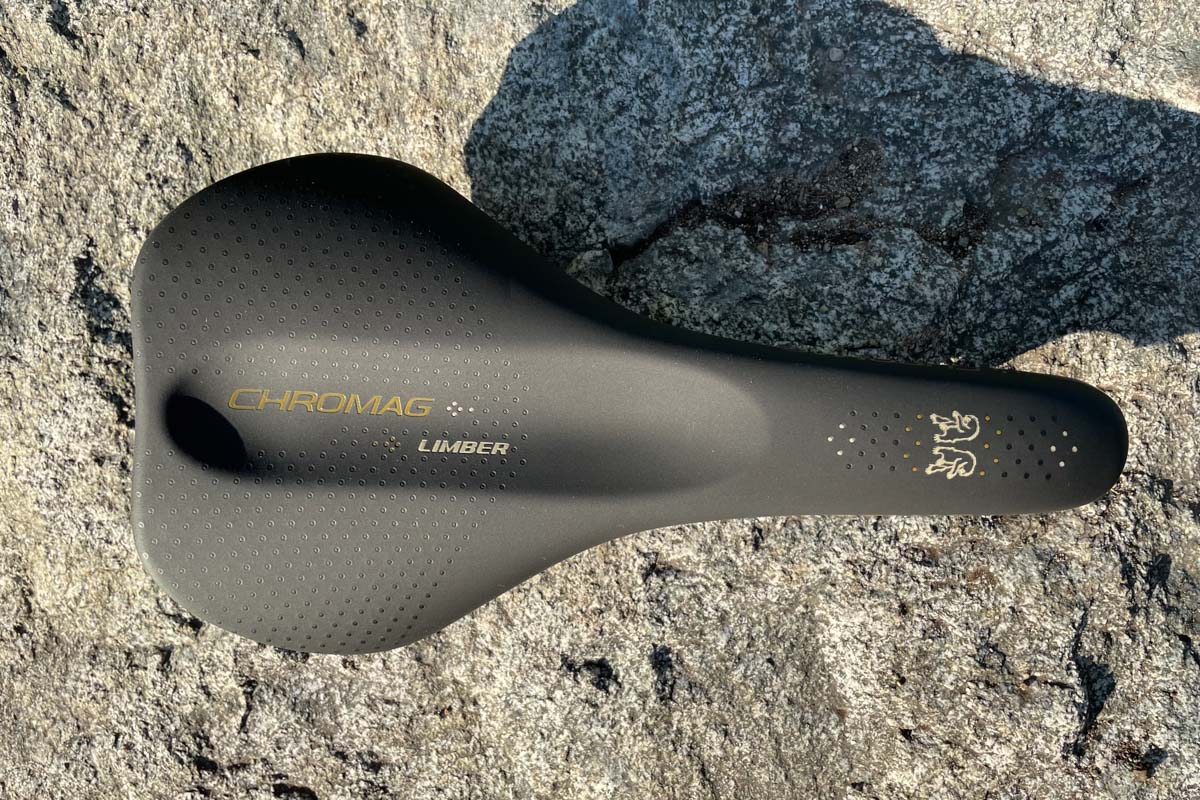
The Limber saddle offers a short 260mm length and movement-friendly shape to allow riders to shift around it easily, while a stable but not bulky 140mm platform width provides comfort when you are seated.
This saddle’s padding is on the thinner, firmer side, but the Limber’s design is all about proper support. Its platform was shaped to support the sit bones, where the bulk of your body weight hits the saddle. It also gets a widened center relief channel to keep pressure off sensitive areas and eliminate unnecessary discomfort.
The Limber’s cover features a semi-perforated texture on the rear part of the platform and on the nose for a little grip, and remains smooth everywhere else.
When I installed the Limber saddle on my bike, I noticed the rails offer about 5mm less forward/back adjustability vs. the Ergon SMC Core seat I was previously riding (which is a larger seat). To match the Ergon’s position, I had to run the Limber as far forward as its clamp range allows, but that put it exactly where I wanted.
Chromag lists the Limber saddle’s weight at 278g. I’d call that honest, as my scale showed it at 279g. That’s 14g lighter than my old Lynx DT, and shaves 65g off the Ergon SMC Core’s weight.
Ride Impressions: Comfort
My first ride with the Limber saddle was a 1:45 long lap, and I was wearing my well-padded 7mesh MK3 chamois. Even after switching from a very cushy saddle, the Limber was more comfortable than expected. I attribute this to its shape more than anything; The rear half of this seat is wide enough to support my sit bones really well. I should note, I’m a fairly slim guy, but the Limber’s width was easily adequate for me.
My next ride was with a slimmer chamois, and since I was still getting used to it, the Limber felt a bit firm initially. However, I quickly stopped thinking about it as I rode, and I remained comfortable throughout this hour and a half long ride.
Just my third ride with the Limber was over three hours long. After two hours of climbing, my descent, and a lengthy pedal home, my butt was just starting to get a bit tired of sitting. Given I was still getting used to the Limber, I was pretty happy to complete this longer lap with no discomfort or soreness afterwards.
At this point I have ridden countless loops with the Limber saddle, and I’ve gotten familiar with it. Honestly, the Limber’s lean padding simply won’t match up to my Ergon SMC Core, which is amazingly cushy and comfortable. But since the sit bone support is excellent with the Limber, I still find it very comfortable and have no complaints about it. Through all my test rides, I’ve never had any specific comfort-related issues with this seat. Also, I have luckily never had problems with this, but the Limber’s wide center channel definitely kept my sensitive bits happy with no numbness at all.
Shape:
As stated above, my favourite thing about the Limber’s shape is its supportive rear half. That said, the nose worked really well for me too. I don’t like saddles with wide noses, and the Limber’s is narrow enough that I found it perfectly comfortable to pedal with. If a seat’s nose is too wide, I will feel like it’s pushing my thighs apart, but this was not a problem with the Limber.
While the Limber’s nose is noticeably shorter than the seat I was riding, that doesn’t seem to come with any sacrifice in comfort. The shorter nose also proved pretty good at not snagging the crotch of any of my various shorts or MTB pants. I’ll attribute this to the shape, but also the synthetic cover material. It’s grippy enough to not feel slippery, so when you plant your butt on the seat it doesn’t shift around. Thankfully, the cover isn’t grabby enough that it hooks up on clothing.
Chromag wanted this seat to be easy to move around while you ride, and I’d agree it is. It’s just big enough to be supportive, and I never found it obtrusive or noticed my legs contacting it unexpectedly. The seat’s trim dimensions help it stay out of the way during stand-up pedalling sprints and on descents.
Durability:
Sorry, but I haven’t crashed hard or bounced my bike off a trail since installing the Limber saddle! After a few months of riding my seat shows no signs of damage, or excessive wear and tear. The rails are straight, the cover is fully intact, and I doubt anything would damage this seat except for a gnarly crash.
The Limber saddle retails for $110 USD. It is available in Black/Sand (as tested) or Chocolate colors. Chromag covers all their components with a two-year warranty.
chromagbikes.com
https://bikerumor.com/chromags-limber-mtb-saddle-provides-plenty-of-support-in-a-trim-package/
#trimpackage #limber #providesplenty #mtbsaddle #chromag #smccore #ergonsmc #support #bikes #features
#rss #feeds #linksharing #qwibbit
Yakima’s OnRamp LX Hitch Rack Isn’t the Simplest, but It’s Sturdy, Adaptable, and Hauls eBikes
After acquiring a vehicle that won’t fit a bike inside, I’ve become reliant on hitch racks to move my bikes around. This Spring, I got the offer to test the OnRamp LX 2-bike hitch rack from Yakima. This rack offers a 70 lbs. per bike capacity and a detachable ramp to roll heavier bikes (like ebikes) onto its trays. The rack uses stabilizers to hold your bikes’ frame or seatpost, so it can carry bikes with fenders.
While the OnRamp LX is slightly less user-friendly than other racks, its weight capacity, adaptability to different bikes, and stability on my vehicle all impressed me. Any of the rack’s inconveniences are pretty minor, and in my eyes forgivable in exchange for its trustworthy construction and reliable operation.
Yakima OnRamp LX – Key Specs:
The OnRamp LX carries two bikes, with a max. capacity of 70 lbs. per tray (or 80 lbs. for the 2” receiver model), so it’s a great option for moving ebikes or eMTBs. I tested the 1 ¼” model, and the rack itself weighs 53.5 lbs.
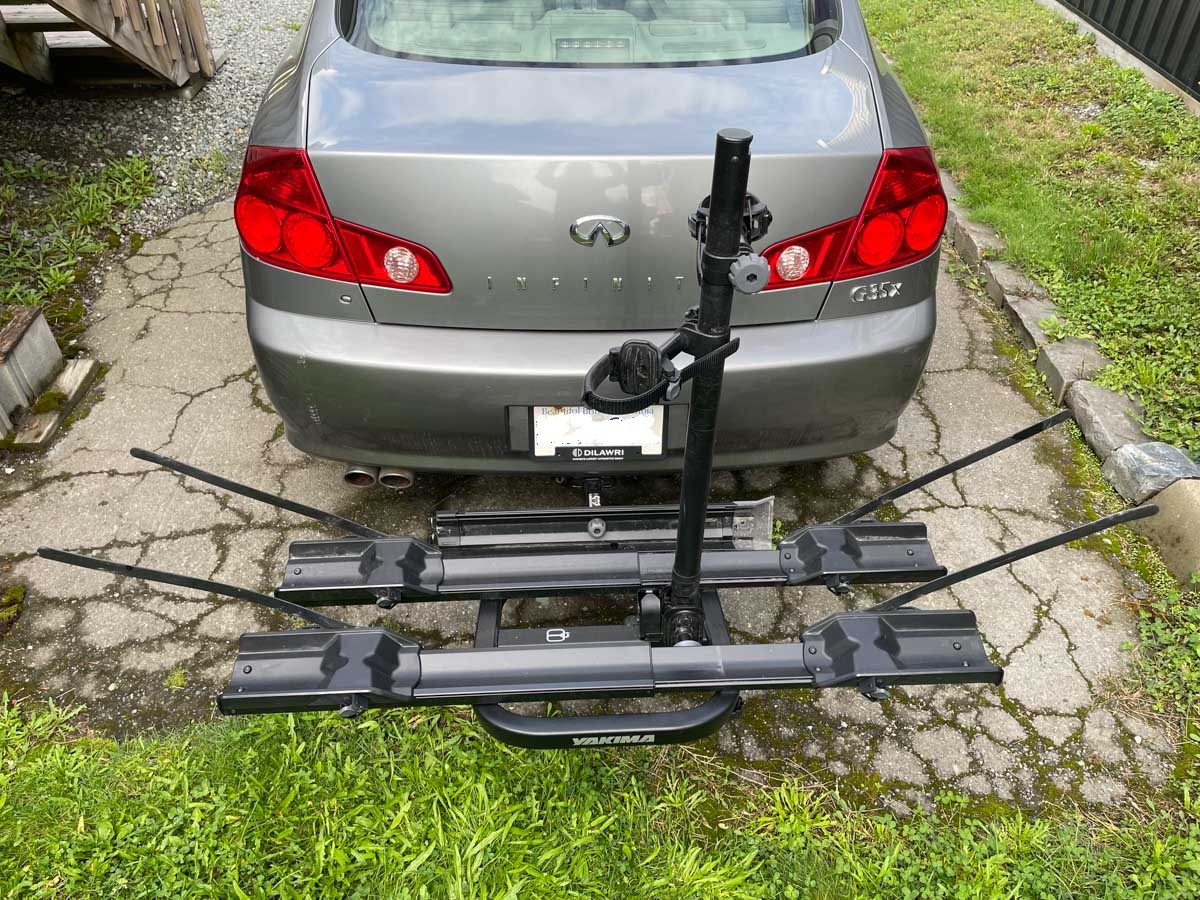
The rack’s trays accommodate tires up to 5” wide, wheels up to 32” diameter, and wheelbases up to 54”. The OnRamp LX’s stabilizers clamp to your bikes’ frame or seatpost, so fenders are no problem and the rack should accommodate nearly any bike.
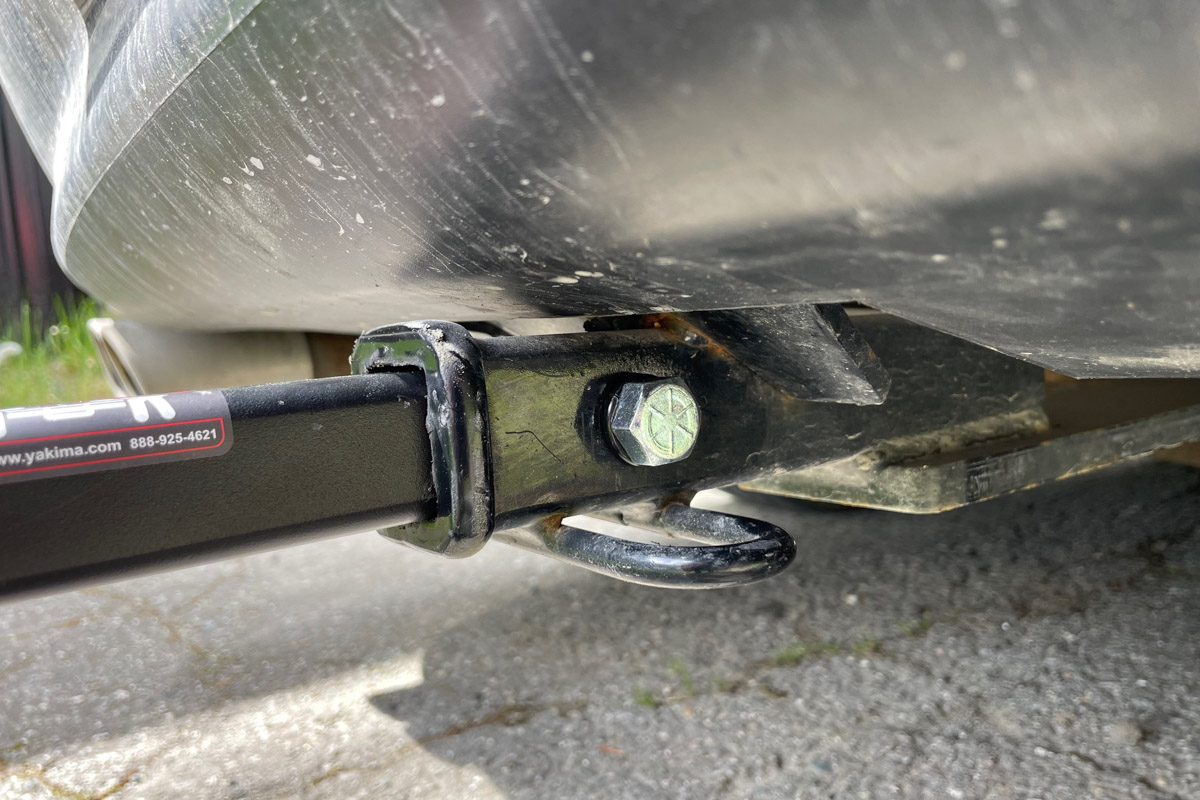
Yakima’s hitch pin comes with a lock so the rack can’t be removed from your vehicle. The OnRamp LX does not include a lock for your bikes, but any cable lock can be looped around the rack’s frame and your bikes. When not in use, the rack folds up vertically and takes up little space.
Assembly/Adjustments:
Assembling the OnRamp LX was an easy job. Once you’ve installed a single bolt that joins the tongue portion to the rest of the rack, the rack is fully assembled! Attaching the rack to your vehicle only requires you to slip the tongue into the receiver, screw in the hitch pin, and put the lock on the end of the pin.
The only thing I’ll note is the hitch pin must be installed tightly (100 Nm). Yakima supplies wrenches, but they’re thin and not easy on the hands. I used a socket wrench on the hitch pin, partly to ensure it was tight enough, but also because my vehicle and hitch don’t leave a lot of room around the pin. I used Yakima’s wrench to install the bolt that joins the rack to its tongue, but that bolt took a fair bit of torque, so a socket wrench would make that job easier too.
Now the rack is complete and attached to your vehicle, but there are a few adjustments you’ll have to make to ensure your bikes fit on it properly. First, you’ll want to adjust the length of the trays so your wheels fit securely against the chocks. You also need to make sure your bikes are centered on your vehicle.
Adjusting one end of the tray is easy and tool-free, but for the first bikes I loaded (my MTB and a commuter bike), I did have to move the bolted-in half of both trays to get the bikes centered. This requires the removal of one Allen bolt per tray, and only takes a few minutes.
From step one of assembly to having two bikes loaded with all the necessary adjustments made, it took me one hour and 15 minutes – and I was in no rush.
Once your trays are adjusted, you’re ready to load bikes. The namesake feature of the OnRamp LX is a detachable ramp that allows you to simply roll heavier bikes up and onto the tray. When not in use, the ramp attaches to the rack so it’s always there if needed. The only catch with the ramp is that you need to have the space to use it. I have a single-car driveway, so I’d have to pull my car out to attach and utilize the ramp. In parking lots, the vehicle next to you could be in the way.
Loading Bikes/Ease of Use:
Securing bikes is fairly easy, but there’s one awkward moment when you’re loading a bike onto the inner tray: You have to hold your bike upright with one hand while you raise the rack’s mast, get one of the stabilizers positioned to hold your frame or seatpost, and buckle its strap around your bike. This isn’t terribly tricky to do, but racks that hold the bike’s wheel(s) are easier to load. Loading bikes on the OnRamp LX’s outside tray is slightly easier since the mast will be raised already.
It’s up to you to decide where you want to put the stabilizer, but I had no trouble finding good places on the frames or seatposts to hold all the bikes I hauled. I’d recommend getting as close to the top tube/seat mast junction as possible, but I clamped my lighter commuter bike on the down tube for a short drive, and it was perfectly stable.
One thing I’ll mention is to be sure to tighten the stabilizers snugly on the mast; On my first load, I thought I had one tight, but it suddenly moved. It took a few more turns of the knob to get the stabilizer properly secured.
After this, it’s just a matter of strapping both your bike’s wheels down to the trays. The straps must be positioned at outward 45° angles, but the buckles are fixed in that position so you can’t go wrong. Finally, Yakima does supply a strap to put around your bikes for extra security (and they recommend using it every time). They simply instruct you to strap it around both frames and the rack’s mast. The strap is basically a fail-safe in case something breaks or a bike is loaded incorrectly – It could prevent bikes from falling right off the rack.
Removing bikes is mostly an easy job, but there’s another tricky moment when you’re taking the bike off the inner tray. When that bike comes off, you’ll want to drop the mast out of the way. This involves holding the bike up while unbuckling and loosening the stabilizer, then pulling a pin at the bottom of the mast and pushing the mast sideways. Thankfully, just a nudge on the mast is enough to disengage the clip that holds it upright.
When the mast goes down, you’ll also have to re-position the stabilizers so they don’t interfere with the trays. This means you can’t position a stabilizer to hold your bike and leave it there – It has to be repositioned every time the mast goes up and down.
Aside from loading and unloading bikes, the OnRamp LX isn’t the quickest or easiest rack to use in a few other ways. First off, it does require tools to remove it from your vehicle. If you regularly take your rack on and off, a tool-free mechanism like Thule’s Verse rack offers is a nicer option… however, some people might prefer the security of Yakima’s screw-in hitch pin. The Thule Verse also has the OnRamp LX beat in terms of adjusting to different wheelbases. Its simple sliding wheel chocks are quicker and easier than adjusting tray lengths.
Bike Compatibility:
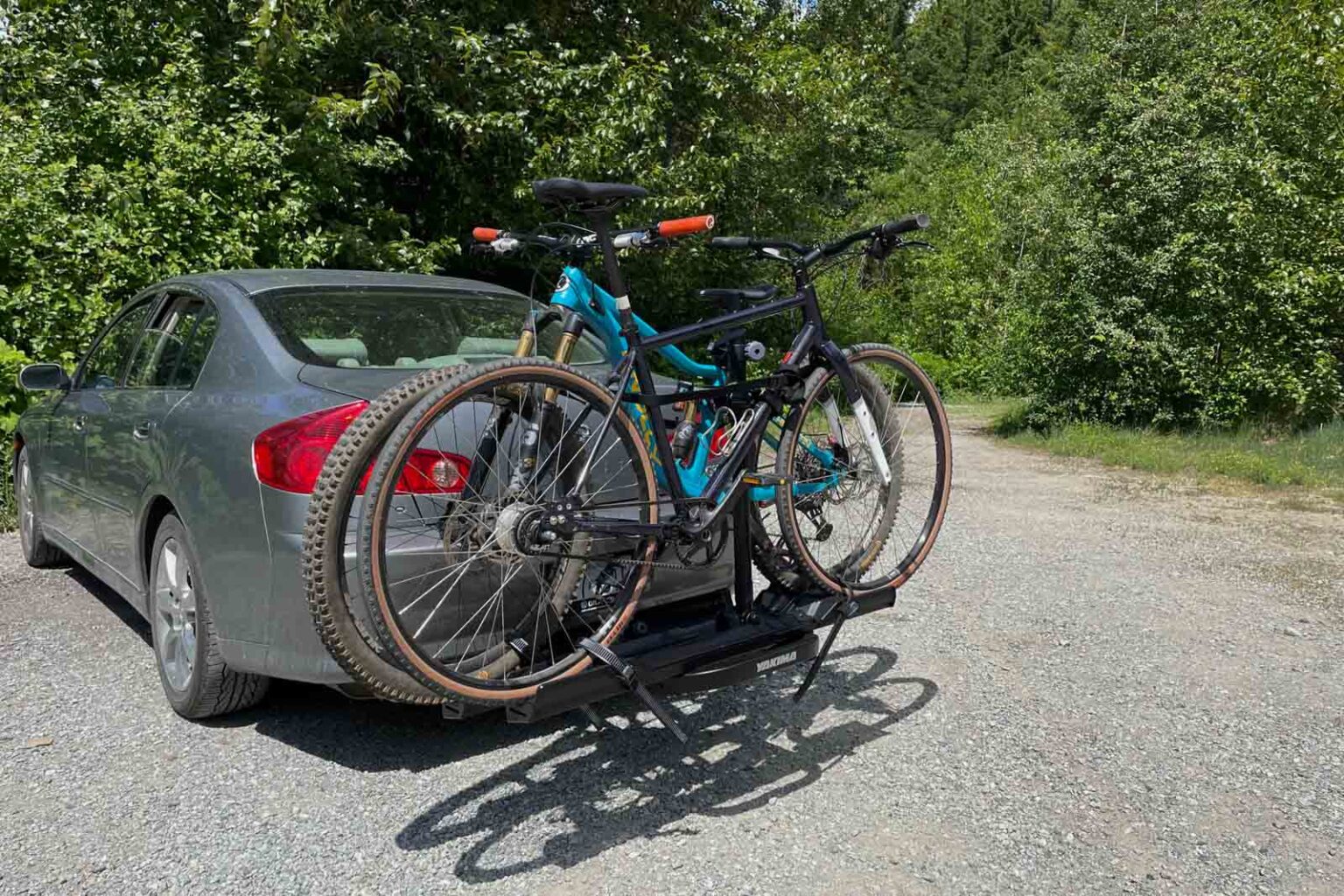
Throughout the summer, I carried at least five different bikes on the OnRamp LX, including a commuter bike, an e-commuter, multiple MTBs, and two eMTBs. The rack’s ‘Stadium Seating’ trays sit at staggered heights, so I had no problems loading any of these bikes securely, and only one minor interference between two of them. With my commuter bike and MTB on the rack, I had to move the seat on my commuter so it didn’t touch my MTB’s handlebars. Aside from that, all the bikes I hauled were safely separated on the OnRamp LX.
When I loaded up my Priority ebike, I did have to shorten the tray length for its wheelbase. Thankfully, the end of the tray you can adjust by hand-spinning a knob afforded enough adjustment, so it was a quick job with no tools required. Being able to carry bikes with fenders was great – Those stabilizers are a bit finicky to operate versus wheel holders, but their compatibility with bikes is excellent.
Driving:
Something I liked right away about the OnRamp LX is how little it sticks out when it’s folded up. The folded rack only protrudes about 8” from my car’s bumper, which is great when you’re parking in tighter spots. With my car, I can’t even see the top of the rack over my trunk, so it doesn’t impede visibility at all when folded up. The trunk of my car will easily open with the rack upright, and in most cases I could still open it with bikes on the rack. Folding the rack up and down is easy: There’s a spring-loaded pin on one side and a backup pin that pops in and out on the other.
The only potential issue with leaving the rack up depends on your vehicle…, but in my case the tray blocks my license plate! Thankfully, even when left down, the rack doesn’t stick out too far, so it’s totally reasonable to drive with it down and keep your plate visible. I was able to leave my car in several parking spots with the rack down, without going outside the lines.
As for rear visibility with bikes on the rack, the OnRamp LX holds bikes high enough that they do take up most of my rearward view. However, it’s not difficult to see what’s happening behind you even when you’re looking through two bikes.
I found another potential concern, but everything was OK in my case: The front wheel of the bike on the OnRamp LX’s inside tray sits close to my exhaust pipes. After one early drive, the rack felt a bit warm, so I kept an eye on this. Fortunately, after several longer drives, I never had a tire get warm, let alone hot.
Stability/Reliability:
I found the OnRamp LX to be a stable and very trustworthy rack. Immediately, I liked the square-framed design, which looks very sturdy. The threaded hitch pin holds the rack tightly to the receiver, and even if it loosens up, the pin lock should keep it from falling out.
Your bikes will do some side-to-side wiggling when driving bumpy roads, but the OnRamp LX resisted movement slightly better than the Thule rack I tested last year. I had no concerning wobbles travelling a few miles on a washboarded gravel road with my 53 lbs. ebike on the rack, or anytime I had two bikes loaded up.
I did notice the front wheel of my MTB was wiggling back and forth slightly while I drove – The wheel straps are not very flexible, and they don’t sit perfectly flat against my rim. The straps never loosened up, but they do allow some wheel wiggle in high winds.
After a whole summer on my car with regular use, I have no concerns about durability or reliability with the OnRamp LX. I’ve had no functional issues with the rack; there’s no excessive wear and tear to report, nothing has loosened up, and I trust it to carry my bikes safely.
The Yakima OnRamp LX hitch rack retails for $999.00.
yakima.com
https://bikerumor.com/yakimas-onramp-lx-hitch-rack-isnt-the-simplest-but-its-sturdy-adaptable-and-hauls-ebikes/
#rack #hitchrack #yakima #adaptable #simplest #sturdy
#rss #feeds #linksharing #qwibbit
#rack
#hitchrack
#yakima
#adaptable
#simplest
BikeTrail1d
New Zwift+ Tier Goes Premium w/ Real-World Videos & Zwift Coach to Offer Personalized Training Guidance
Once again, I found myself in the peculiar situation of being invited to a real-world bucket-list riding destination by a virtual cycling platform. This time, Zwift was hosting us out in Moab, UT. I didn’t know what to expect, other than we were told to bring road cycling gear.
(Photos/Zwift/Corie Spruill Photography)
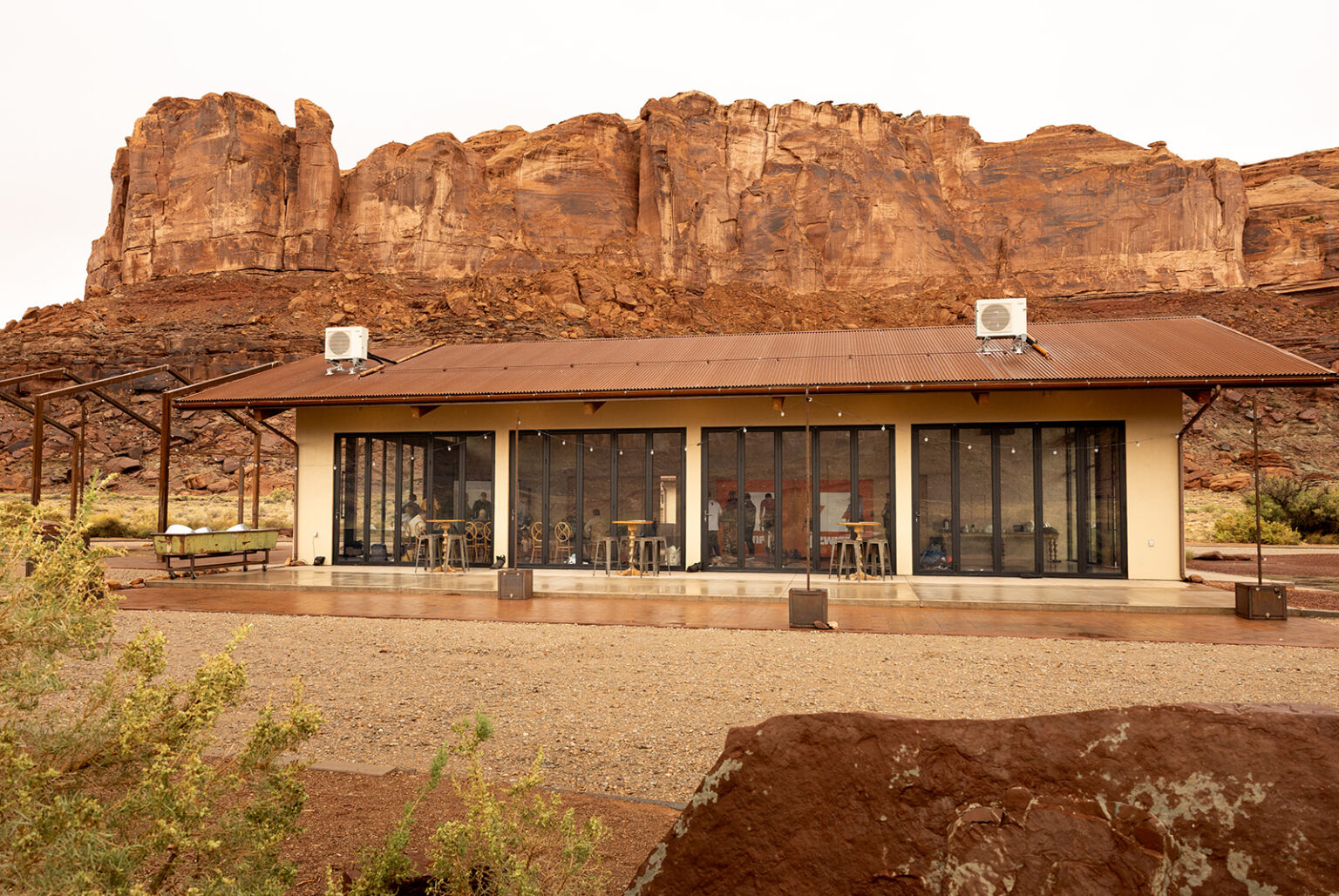
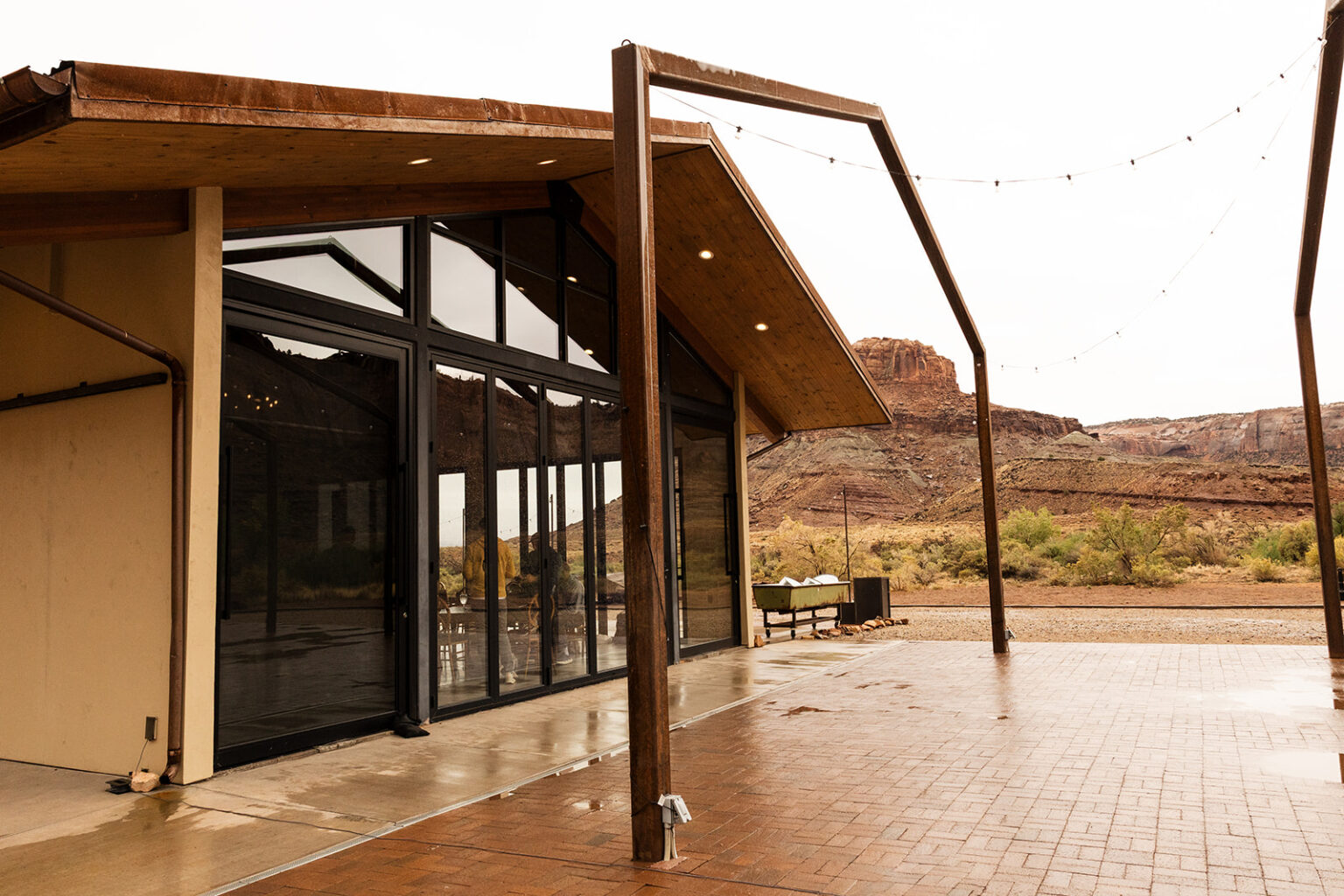
So I headed off to the desert, only to be met with a deluge of rain. The same storm system that forced the cancellation of the men’s Red Bull Rampage and the Moab 240 Trail Race was still dumping rain in and around Moab. No matter, this was for Zwift, right? The indoor virtual cycling program?
Yes. But there was a reason we were in Moab – to ride a new route, both virtually and in real life.
Zwift Video
You see, Zwift has an all-new premium tier they’re calling Zwift+. And one of the two main features of Zwift+ is Zwift Video. These are real-life videos of legendary rides turned into virtual riding courses. If you’re thinking this sounds an awful lot like Rouvy, you’d be right. That’s also one of the reasons Zwift recently bought Rouvy.
Don’t worry Rouvy fans. Zwift promises that the Rouvy platform isn’t going anywhere. They also claim that they had started the Zwift Video project as a hackathon project internally before even considering the acquisition. But through the development process, it just seemed to make sense, so now Rouvy is owned by Zwift but operates independently.
What’s interesting here is that according to Zwift, there is currently just a 2% overlap between Rouvy users and Zwift users. Because of that, they still don’t see a lot of crossover between the two platforms, and Zwift wanted to make their video platform unique.
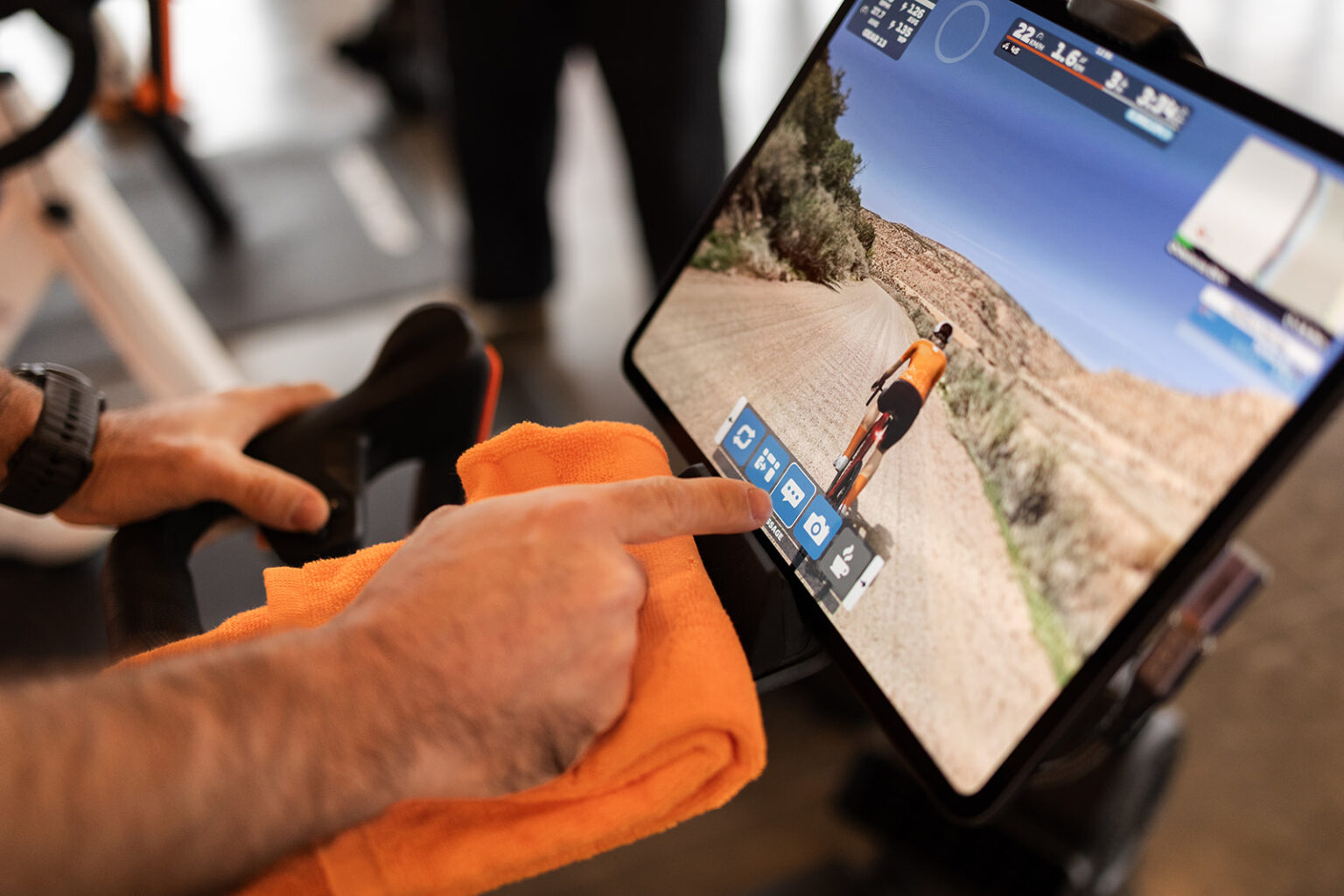
It still uses high-quality video of extraordinary rides to offer an immersive riding experience, but they added all of the Zwift features you expect out of the animated world for a workout that rides and plays like Zwift, but looks like Rouvy.
Zwifters are always asking for more tarmac (and gravel), so at launch, Zwift Video will deliver 21 new routes from six destinations. In total, there are 385km of new pavement, broken pavement, and gravel, in all season from sunrise to sunset. The routes range from short 6.2km bursts to 29km rides with 38-1055m elevation gains.
The complete list of Zwift Video destinations and routes available at launch:
The French Alps: Col du Galibier (Lautaret), Cime de la Bonette, Upper Bonette
Mallorca: Sa Calobra, Coll de Femenia
Tenerife: Teide Plateau
Western Cape: Chapmans Peak, Clarence Drive, Bain’s Kloof Pass, Du Toitskloof Pass
Lofoten Islands: The Midnight Sun Road, Eggum Coastal, Nappvang Glow
Southern Utah: The Hogsback, Arches National Park, Glen Canyon, Colorado River Sunrise
Colorado: Dolores Dirt
The Scottish Highlands: Glen Etive, Quinag Highlands, Glen Garry Wilds
Each video was filmed specifically for Zwift, and filmed in high definition, with a high frame rate, and vehicle speed to make it all look flawless at cycling speeds. When the Zwift team came to Utah in March, they drove thousands of kilometers to find the best roads, and settled on four routes. Lest you think it was as simple as just driving along and filming each route, one of Zwift’s employees even had to write an app to tell the driver how fast to drive in order to film at the best frame rate for cycling. They also had to contend with other vehicles and people on the routes, all while trying to film with the best lighting conditions. The results speak for themselves, but it’s clear that Zwift put a lot of effort into this.
It was a bummer not to get to ride the route in real life, but to be honest, weather like this is part of why Zwift was created in the first place. Also, riding Zwift Video routes through red rocks while looking outside at those same red rocks was pretty surreal. You can ride through Arches National Park (above, right) too, but it won’t look like this.
The purpose of this trip was to ride the Colorado River Sunrise route in Zwift, and then ride it in real life the next day. Unfortunately, the weather had other plans for us, so I’ll just have to go back to Moab sometime to check it off the list. Darn.
(Photos/Zwift/Corie Spruill Photography)
I can also ride that route at home, albeit a shorter 15.2-mile version of it one way. Once you get to the end of that route (or any Zwift Video route), you hit a transfer portal that takes you back to the start so you can lap it as many times as you want. Just like regular Zwift worlds, you can do any prescribed workouts in the Zwift Video routes. You’ll also be sharing the routes with anyone who happens to be on that route at the same time, just like the rest of Zwift. Organized rides and MeetUps won’t be available at launch, but will be introduced in the coming months.
New Roads and destinations will be added regularly, and if you’re up for the Globetrotter Challenge, riding 10 different routes between now and February will gain you the Globetrotter kit and bonus XP.
Want to ride Zwift Video routes? They will only be available to those who pay for the new premium Zwift+ tier.
Zwift Coach
The other thing you’ll get in that premium Zwift+ tier is access to the new Zwift Coach.
At this point, Zwift has mountains of indoor training data with 88 million indoor activities in just the past year. Zwift is apparently often people’s first interaction with cycling, and their fastest-growing category is beginner and recreational cyclists. Along those lines, cycling coaching can be intimidating – many riders think they’re not serious enough, can’t afford it, etc.
Zwift doesn’t see Zwift Coach replacing traditional cycling coaches, but sees it as another tool that cyclists can use along their journey with approachable training advice. After all, the most effective workout is the one you actually do – again, Zwift has the data to back it up. Riders on a Zwift plan gained roughly twice the FTP of riders with no plan, and those who ride at least twice per week are 2.8x fitter than those who ride once every two weeks. And Zwifters with a 12-week streak see 6-12% gains in FTP.
Clearly, structure pays off, but a lot of riders don’t know what that structure should be. That’s where Coach comes in. Stating that training should adapt to your life, not the other way around, you simply set a goal, and Coach does the rest. With all the hype around AI, you may be expecting this to just be Zwift-ified ChatGPT, but Zwift states that the program uses a science-based training model using their collection of indoor ride data (claimed to be the largest in the world) to build a mathematical training guide.
That’s not to say that Zwift Coach doesn’t use AI. Instead of using AI to build the plan, they use AI to take the mathematically built plan and then explain it to you and present it in a way that’s easy to understand.
To start using Coach, you’ll create a training plan on the Zwift Companion App and answer a number of questions to determine what you want to focus on, how long you want the plan to be (2 weeks – 6 months max), what days you can work out, and other details to personalize the training program. Once you create the plan, Zwift Coach will sit right on the home screen to give you daily guidance with today’s activities and your week ahead.
As soon as you finish a ride, you’ll be given post-ride feedback on how you performed, the duration, focus, and cumulative stress score, what comes next, and you’ll gain XP and Drops for the effort to help keep you motivated.
If you miss a day, decide it’s too hard, etc., the training program will adapt – though currently you have to physically press a button to tell it to Adapt Plan.
The plan will (soon) also take into account rides done outside and runs, though Zwift was quick to point out that this is not a running coach. We’ve been given early access to Zwift+ and Zwift Coach, but since we’re using it in a walled-off version of the Companion app in TestFlight and a downloaded offline version of Zwift, it didn’t get leaked early; it’s hard to say what functionality is lacking because of that or what’s just not ready yet. I have the option of adding outdoor workouts, but once added, it doesn’t seem to show up anywhere unless you schedule it for the future. Eventually, you should be able to add outdoor workouts that you completed in the past and have that impact your training program.
Along those lines, expect Coach to improve along with your cycling performance. Zwift is already planning to add alternative workouts, more personalization, and a Coach Chat feature that will allow you to ask what you need to do and why to do it.
Zwift gave two examples of external testers who used Zwift Coach, and their results were pretty impressive. One century rider was training for a specific event and used it for a 4.5-week Coach plan that saw their fitness (CTL) increase by 18%, while their FTP went up from 246W to 259W on event day, and continued up to 275W for the full plan. Another rider hoped to level up to group B with an FTP increase, and used a 15-week Coach plan to see their FTP increase from 178W to 210W, an increase of 18%.
Obviously, you have to put in the work. But Zwift Coach seems like a great way to turn your goal into actionable workouts. It’s important to note that Zwift has pledged to remain a fully open platform, even with Zwift Coach – all existing and new coaching products that integrate with Zwift will continue to do so.
Zwift+ / Zwift Pricing, and How to Access Video & Coach
There’s a lot that went into the development of Zwift Video and Zwift Coach. In fact, they had to create an entirely new team at Zwift to devote to Zwift+, now with 300 people working on various aspects of the program. So, to make it all work financially, you’ve gotta pay. Currently, Zwift Video and Zwift Coach are only available in the new Zwift+ premium tier. Zwift+ is $29.99 per month, and includes everything you get out of normal Zwift plus the Video and Coach features.
For those who aren’t interested in Video or Coach and still want to use Zwift, the standard Zwift tier will still be available for $19.99 per month. At launch, existing Zwift users can opt into a limited-time one-month free trial of Zwift+, while completely new users can get a 14-day free trial before having to purchase.
There are no plans for any dual Zwift/Rouvy memberships, mostly because it doesn’t sound like Zwift expects there to be demand. So if that’s something you’d be into, speak up.
Regular Zwift Updates
But wait, there’s more! In addition to Zwift+, the standard Zwift world is receiving a number of updates, including a refreshed home screen with a cleaner, simpler layout, a new progress widget, a Zwift Companion home screen update, Oura ring integration, deeper Whoop integration, and a Watt Lock feature to allow you to stick to a specific wattage during freeride mode.
For the route hunters, Zwift is adding another Watopia expansion with a three-island archipelago inspired by California’s coast and Catalina Island. The update adds about 17km of flat, fast roads with ocean views and new wildlife. Two of the islands are built with crit racing in mind, and the new roads provide a bypass around the Mayan Jungle to create a longer, flatter route. At launch, there will be 9 new cycling routes and 3 running routes, including Caldera Coaster, Seafoam Circuit, and Pacific Pursuit, all live from day one along with Stage 4 of The Tour of Watopia.
zwift.com
https://bikerumor.com/new-zwift-plus-tier-premium-video-coach/
#zwift #rouvy #offer #moab #coriespruill #spruillphotography #trailrace #bullrampage #redbull
#rss #feeds #linksharing #qwibbit
#zwift
#rouvy
#offer
#moab
#coriespruill
BikeTrail1d
Silca Titanium Clog Charms Bring Marginal Gains to Your Favorite Off-Bike Footwear
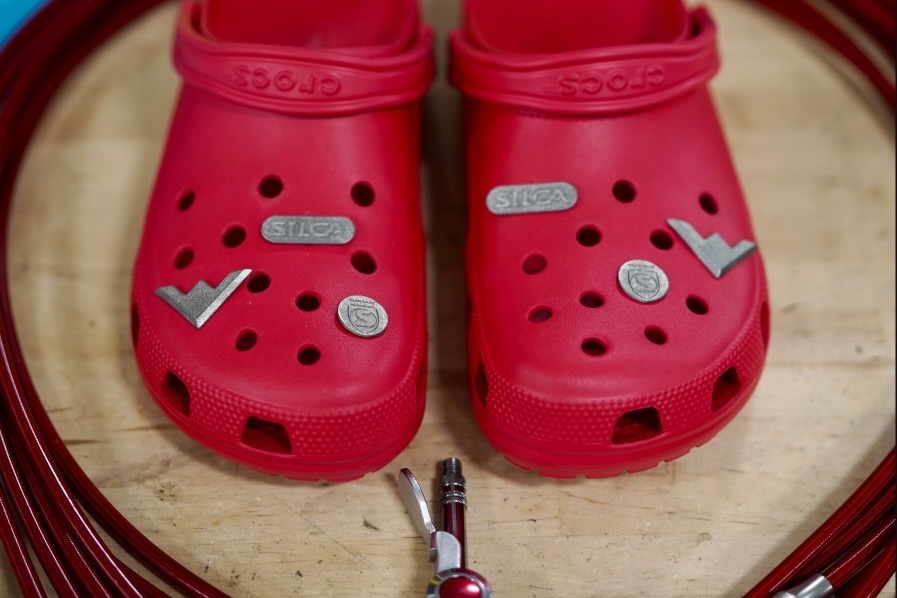
Today, Silca, the self-proclaimed “leader in marginal gains“, introduced what may be one of its most game-changing products yet: Titanium Clog Charms. You read that right. The brand takes marginal gains so seriously that they’ve finally applied that approach to your favorite foam slip-on footwear. After extensive research and testing, they’ve cracked the code, leveraging the watt-saving tech of their Aero Socks and utilizing in-house additive manufacturing to craft these titanium turbulators.
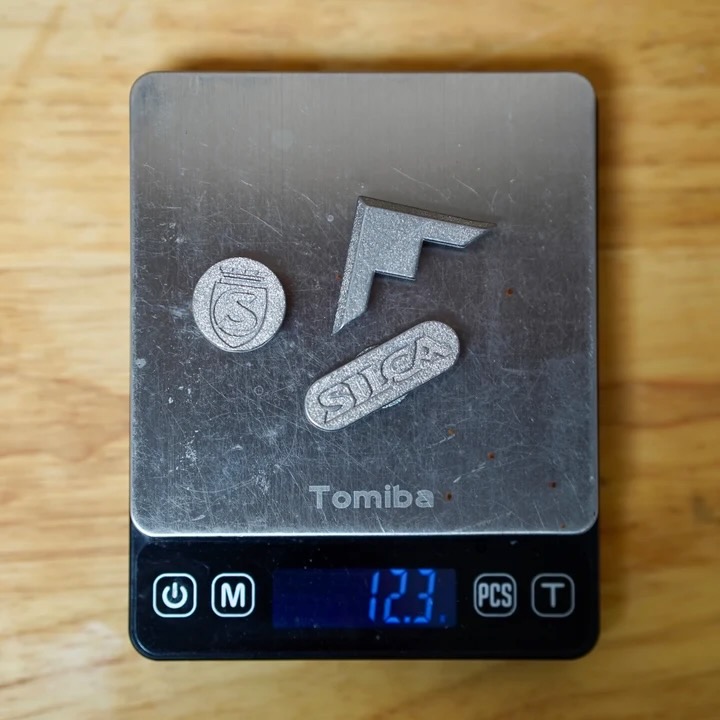
Whether you love or hate Croc footwear, you’re probably familiar with Croc charms, also known as Jibbitz. These little charms took the world by storm a few years back, allowing Croc-wearers to express themselves through personalization of their shoes. Now, Silca has a new way for hardcore cyclists to get in on the Croc charm action and save some precious watts in the process. At just 12.3 grams per set, these aero gains won’t weigh you down, either.
“At SILCA, we take marginal gains and performance seriously. After two years of relentless research, prototyping, and wind-tunnel testing, we have developed the most aerodynamic pair of foam slip-in clogs in the world… Designed to enhance foam clog performance, these small turbulators introduce small vortices in the boundary layer that energize the flow and promote flow attachment further around the foot. To celebrate this engineering achievement, we are offering a 3-pack of SILCA clog charms.”
Each set of three Titanium Clog Charms includes one turbolator, one Silca wordmark, and one Silca Shield logo. The Titanium Clog Charms are manufactured in-house at Silca HQ in Indianapolis, Indiana. They retail for $20 a set, which is surprisingly competitive in the Croc charms/Jibbitz market.
If you’re interested in picking up a set of Silca’s new Titanium Clog Charms, it’s worth mentioning that they come with a warning: they must be used in sport mode only. You don’t want your Crocs to fall off when you’re riding with all that newfound speed!
Head to the Silca website to learn more or pick up a set today.
silca.cc
https://bikerumor.com/silca-titanium-clog-charms-bring-marginal-gains-to-your-favorite-off-bike-footwear/
#titaniumclog #clogcharms #marginalgains #silca #footwear #croc #jibbitz #aerosocks
#rss #feeds #linksharing #qwibbit
Bike adventures, useful gear, and cycling stories. Unofficial automated fan feed. Content belongs to its respective owners; not affiliated with source publishers.