spacestr

🔔 This profile hasn't been claimed yet. If this is your Nostr profile, you can claim it.

Edit
OrchardNotes
Member since: 2026-10-15
OrchardNotes
OrchardNotes 2h

Mrs Baker’s 1661 Recipe for ‘Medicine for the Cough of the Lungs’ “Take three pints of running water, half a pound of Portugal Sugar, with nine figs, and halfe a spoonful of Anniseeds brused, a handfull of Raisons of the Sun clean washed and stoned, a penny worth of Maiden haire; let all these boile together, untill the one half and more be boyled away, then strain them thorow a fine cloath, and every morning drink two spoonfull of it luke-warme, and you shall find present remedy. Probatum.” William Lovell, The Duke’s Desk Newly Broken Up (1661) Autumn is finally here, and with a drop in temperatures and increase in stormy weather – here in our part of the U.K. at least – it would seem that common cold and ‘flu season is likely to be nigh. Fear not! Should a sniffle come upon you, or your nose begin to get a bit runny around the edges, or, even worse, should you contract a cough upon the lungs, then do I have the perfect, fruit-filled remedy for you!? Good question, let’s take a look-see. This seventeenth century remedy-recipe, credited to one Mrs Baker, can be found in a 15 page pamphlet with the full title – which I think would be a crying shame not to reproduce in all its glory – of: The Duke’s Desk Newly Broken Up, Wherein is Found Divers Rare Receipts both of Physick and Surgery, good for Men, Women, and Children. Together with severall Medicines, good to prevent and cure the most Pestlient Diseases of Cattell. I love the imagery there. The Duke is dead! Everyone rushes to his locked desk, and breaks it open to find
 what? Gold, jewels, land deeds? Nope, recipes. Ha! Quick ingredient checklist: three pints of running water, so not the stale stuff out of the well, dammit!; Portugal sugar, which was a premium grade, highly-refined version from Madeira or Brazil and thereby suitable for a Duke; nine figs, dried or fresh isn’t specified; half a spoonful of aniseeds, another quite pricey ingredient; Raisons of the Sun, or dried yellow raisins; and “Maiden haire”. Um. That might be seaweed. Although it’s more likely to be maidenhair fern, which was apparently a common ingredient in this sort of remedy. I think we might be in doctrine of signatures territory here; the idea that plants could help cure problems with a part of the body that they somewhat resemble. Might the inside of a fig, or the leaves of maidenhair fern, look a little
 lungy? Or how about the good old four humours? Could “Raisons of the Sun” and/or aniseed be linked in some way to the production of yellow bile, the supposedly hot and dry bodily substance thought to counteract the effects of the cold and wet phlegm so apparent during a common cold? Anyhow, once you’ve gathered your ingredients, chuck them in a suitable vessel and boil them all up until the concoction has reduced by half. Strain out the bits, and the result is a herbal cough remedy that , it’s claimed, will see you right, as long as you take the two prescribed spoonfuls every morning, luke-warm. By the by, “Probatum” means “conclusively proven”, which could suggest it was tried-and-tested by His Grace, or possibly just that the author of the pamphlet would like you to think it was. Thinking about it, this remedy doesn’t seem too different to the sort of thing you might find in a modern expectorant cough syrup. Sugar to make it pleasantly gloopy, aniseed for a medicinal tang, figs and raisins for sweetness, and perhaps to take the herbal edge off the fern leaf? Doesn’t sound at all bad to me. And you never know, it might just work
 What do you reckon? Are you tempted to boil up a batch of seventeenth century cough remedy? Do you have a preferred make-at-home, sovereign cure? Or will you be sticking to pharmacy brands? Do let me know, via the comments. https://orchardnotes.com/2026/10/31/mrs-bakers-1661-recipe-for-medicine-for-the-cough-of-the-lungs/ #mrsbaker #newlybroken #desknewly #duke #cough #portugalsugar #raisons #sun #good #take #rss #feeds #linksharing #qwibbit

#mrsbaker #newlybroken #desknewly #duke #cough
OrchardNotes
OrchardNotes 5d

Why Grow Perry Pears? Discover the Fruit Behind Traditional Pear Cider Discover what makes perry pears special, how they're harvested and transformed into traditional pear cider, and why growers are working to preserve these remarkable heritage trees. https://orchardpeople.com/why-grow-perry-pears/ #pearcider #perrypears #traditionalpear #rss #feeds #linksharing #qwibbit

#pearcider #perrypears #traditionalpear #rss #feeds
OrchardNotes
OrchardNotes 6d

Healed Z-Graft Unions on Apple Trees at 8, 18 and 30 Months I’ve been grafting new apple trees for around a decade now, and for the past three years I’ve been using, and teaching, the z-graft method. It’s easy to learn, easy to apply and gives good results. The majority of my newly-grafted new trees earlier this year were z-grafted, 34 of 46, and only 4 of them failed1, which in at least three cases was down to my not binding the scion and rootstock tightly enough, and in a couple more was probably down to the scions coming from a tree that I’ve been reliably informed is tricky to graft. I’ve also been writing articles, and posting a bit on BlueSky, on the subject z-grafting, and it might have been in a comment here on Orchard Notes2, or a response to a BlueSky post, in which someone suggested that they’d like to see a few more photos of healed z-graft unions – successful joins between rootstock and scion – in addition to the ones I put in my How To: Z-Graft New Apple Trees post. If the person who made that suggestion happens to be reading, then this one’s for you! Quick Refresher on Z-Grafting Please see my How To: Z-Graft New Apple Trees post for a more detailed description, demonstration videos, and further discussion in the comments, but for now here’s a very brief overview of the z-graft method. The scion and rootstock are both trimmed at an angle of approximately 45°. A flap of bark is cut in an approximately 1cm slice, down the longer side of the cut end of both scion and rootstock, to expose the cambium layer beneath the bark. The scion and rootstock are joined so that the exposed cambium is touching, and the two bark flaps loosely cover the diagonal tops of the stems, forming the ‘z’: The graft union should then be bound with parafilm, grafting tape, or whatever you prefer to use, and then waxed, or not, again depending on your preference. I tend to wrap and wax, the latter step because it will hopefully keep as much excess moisture – and therefore bacteria, fungal spores etc. – out of the graft union as possible. Healed Z-Graft Unions at 8 Months The trees below were all grafted in late February of this year, onto M9 rootstock. Example 1 In this first pic you can see that the union has formed nicely at the base of the scion and along the cambium join, forming a thick layer of callus tissue. Despite that gap at the top of the rootstock, the scion has both put on plenty of leaf and extended a new shoot, which shows that the union is a good one. In fact, the gap probably looks worse than it is, as you can see a thin layer of callus has formed to seal off the top of the rootstock. However, it is a potential point of weakness as the tree develops, so I might have to think twice about planting this particular tree into a final position next year. More likely I’ll let it grow on for another year in a pot, to see how it develops. Example 2 In this next example callus has formed well along all three cuts, with a particularly thick section on top of the rootstock. All looks well, that’s a good union. Example 3 This tree seems to have callused well, but look closer: note the crack along what should be the long cut edge of the rootstock, which could be a point of weakness in future. Also, the reddish-brown discolouration at the tip of the rootstock doesn’t look too promising. This is definitely another one that I’ll need to keep an eye on, in case apple canker is creeping in. There’s no point in planting out a tree with an infected rootstock, as I’ll most likely end up taking it out again in a year or two. Hopefully it’s not one of the rarer scions that I grafted. Healed Z-Graft Unions at 18 Months The trees in the next three photos were grafted in April 2025 and have been growing in their final positions since March this year. Example 4 In this first photo the graft union is still very distinct, and the callus tissue likewise, visible as a separate layer between scion and rootstock, and creating a distinct bulge around the union. Both stem sections are thickening nicely and the tree is growing well. Example 5 Another successful union here, with another distinct bulge, but a thinner layer of callus. Example 6 Here you can see a slight gap, or divot, on the right-hand side, where the bark flap on the scion didn’t form a good join with the rootstock. Callus tissue is present though and the rest of the union looks good and strong so hopefully that issue will resolve itself as the tree grows and its trunk thickens. Healed Z-Graft Unions at 30 Months The next three photos are of trees that were grafted in spring 2024, planted in late winter 2025 and so have been growing as cordons for around 18 months. Example 7 Another strong union, another bulge around it, as the callus tissue seems to be continuing to develop, perhaps in response to the added weight of the tree’s top-growth, or possibly gentle strain on the union as a result of wind-rock. Example 8 There’s an even more pronounced callus bulge here, you might even call it a swelling. Interesting to note that the top-growth appears to be thickening at a more rapid rate than the rootstock as well. Hopefully that won’t result in a poorly-balanced tree in future. Example 9 Finally, how’s this for a double-bulge? The graft union almost looks like it was made with a tongue-and-groove grafting tool, although that’s not the case. Another bulge has developed towards the top of the roostock, just beneath the graft union, which is probably an indication that the tree is responding to its increased top-growth weight by welling and strengthening its supporting tissues. All good stuff. Also interesting to note the blotchy patterning – the whitish dots that look a bit like rolled oats – on the rootstock extends into the section of callus tissue, suggesting that it’s the rootstock that’s doing the callusing work. Which makes sense, as the rootstock will be driving the growth and cell-division process post-grafting, whilst the scion will be geared towards extension growth of new shoots and leaves. A Few Whip/Tongue Comparisons Whip and Tongue (“Whip, or Tongue” in older orchard manuals) grafting is a very traditional method, the method I was first taught, and a method I still use when the scion and rootstock diameters are nicely matched, mainly to keep my hand in. Example 10 Here’s a tree that I w/t grafted 8 months ago. The classic ‘lightning bolt’ pattern of the w/t graft method is very clear, and there’s a nice, healthy layer of callus between the scion and rootstock. This new tree should do very nicely. Example 11 Another 8 month old graft union, this one perhaps not looking quite as solid. I’m still very happy that the union has taken well though, and the tree should be fine to plant out. Example 12 An older w/t graft here, this one was grafted 30 months ago. You can just about make out the classic zigzag if you peer closely. It’s a nice, smooth, strong union though, and I think in a couple more years will be all-but indistinguishable. Example 13 And finally, another 30 month grafted tree, another almost fully merged graft union, and another callus bulge at the base of the scion section, presumably helping to support the weight of the growing tree. As you can see from the photos, there’s not a huge difference in terms of callus patterning between the z-graft and the w/t method. Both result in a callus layer between rootstock and scion, and both are capable of producing bulges and swellings where required, which presumably will eventually be absorbed into the main trunk of the tree, leaving the graft union pretty much undetectable. Well, there we go. A bit niche, perhaps, but hopefully the grafters amongst you might have found it interesting. Do let me know if you’ve tried z-grafting yourself, what sort of results you’ve observed, and whether you’d recommend the method, via the comments. Footnotes 1 I had 3 other failures, all whip/tongue grafted. 2 Although if so, I haven’t been able to track it down
 https://orchardnotes.com/2026/10/25/healed-z-graft-unions-on-apple-trees-at-8-18-and-30-months/ #appletrees #newapple #months #unions #graft #rss #feeds #linksharing #qwibbit

#appletrees #newapple #months #unions #graft
OrchardNotes
OrchardNotes 7d

Robert May’s 1665 Recipe ‘To Butter Onions’ (and Apples) To butter Onions Being peeled, put them into boiling liquor, and when they are boild, drain them in a cullender, and butter them whole with some boild currans, butter, sugar, and beaten cinnamon serve them on fine sippets, scrape on sugar, and run them over with beaten butter. Otherwayes Take apples and onions, mince the onions and slice the apples, put them in a pot, but more apples then onions, and bake them with household bread, close up the pot with paste or paper ; when you use them, butter them with butter, sugar and boild currans, serve them on sippets, and scrape on sugar and cinamon. Robert May, The Accomplisht Cook (1665) I spotted this recipe on page 427 of May’s The Accomplisht Cook, second edition (1665), when I was checking out another one, “buttered quinces”: cook quinces, add butter, sugar, cinnamon
 that’s it, really not much to write home about. ‘Buttered Onions’ caught my eye instead because, whilst Onions aren’t a fruit (obviously) I reckon the ‘Otherwayes’ version, with the addition of apples to the dish, qualifies for a mention. Plus, I’ve been asked in the past whether I’ve come across any fruit recipes that modern palates would consider to be savoury rather than sweet. Let’s take a look and see if this one qualifies. Ingredients: minced – finely diced – onions, sliced apples, butter, sugar, currants, cinnamon
 I expect a few of you are already thinking this is pretty weird – sugared, spiced onions? seriously? – and to the modern palate this sort of thing probably will sound a bit odd. But back in the seventeenth century, when sugar was thought of and used as a spice rather than a sweetener it wouldn’t have seemed half so strange. And onions do have a natural sweetness to them already – which you’ll know if you’ve ever caramelised them – so enhancing that sweetness with a pinch of sugar, and a sprinkle of spice, maybe isn’t all that off the wall after all? If you’re still intrigued, then the method sounds like simplicity itself: fill a pot with onions and apple, seal it up, either with a pastry lid, or parchment paper, or foil and a lid. The idea seems to be to ensure that they steam in their own juices, so whatever creates a moisture-tight seal. For what, an hour or so? “Household bread” probably wouldn’t have taken that long, so maybe half an hour to forty minutes? You want them good and done, but not burning to the bottom of the dish. The serving suggestion here is to “butter them with butter”, which I think is neatly self-explanatory, on “sippets” – small pieces of toasted wheaten bread – with sugar and cinnamon scraped on top. So probably not as savoury as I thought they might be. Initially yes, but once cooked and served? No. If you didn’t fancy them on toast, you could treat these onions as a side-dish, to accompany something meaty that would be enhanced by a bit of sweetness. Sausages, perhaps? We often eat those with ketchup, chutney, or, in our house, crab apple jelly and/or balsamic baby onions. In which case, a dollop of spiced, sweetened onions probably wouldn’t be too horrendous? Hang on, I’ve just realised, I’m just talking about onion marmalade by another name, aren’t I? Well, sort of. I can’t believe it’s taken me the length of this write-up to make that connection though. How about you? Does the sound of buttery, spicy, sugary onions on toast get your taste-buds tingling? Or has your inner seventeenth century palate not yet awoken? Do let me know, via the comments. https://orchardnotes.com/2026/10/23/robert-mays-1665-recipe-to-butter-onions-and-apples/ #robertmay #butter #onions #apples #accomplishtcook #recipe #take #rss #feeds #linksharing #qwibbit

#robertmay #butter #onions #apples #accomplishtcook
OrchardNotes
OrchardNotes 7d

Arnold James Cooley’s 1845 Recipe for ‘Apple Sugar’ Prep. Express the juice, and add chalk until the whole of the acid is saturated ; pour off the clear liquor ; then clarify by boiling in a clean pan with some white of egg ; skim off the dirt ; and lastly evaporate by a gentle heat to a proper consistence. Remarks. 1 cwt. of apples yield about 84 lbs. of juice and 12 lbs. of crude sugar. Arnold James Cooley, A CyclopĂŠdia of Several Thousand Practical Receipts (1845) Now here’s a method for preserving apples, or rather apple juice, that I haven’t come across before. Admittedly there won’t be much of the original apple left at the end of the process, just the crystalised sugars, but dried apple sugar ought to last a good while, if it’s stored well. Let’s a closer look. The recipe starts with a simple instruction to “Express the juice” – extract the juice from the apples, with a juice press – and only at the very end do we find out that the author is assuming we’ll be starting with 1 cwt. of fruit. That’s a hundredweight; 112 pounds in old British Imperial, or 50.8kg metric. That’s a whole lot of apples – clearly this recipe is intended for farmers or householders with large orchards, who could easily have had that many spare apples left over after making plenty of cider and apple butter. For domestic purposes, let’s say we take that down to 5Kg of apples? According to Mr Cooley’s calculations, pressing those apples result in around 8lbs 7oz, or 3.8kg of juice, so let’s say roughly 4 litres. That’s still quite a lot, but it is going to be evaporated and reduced to a sugar. Agin, per Cooley we ought to end up with about 1lb 3oz, or half a kilo’s worth, which is a fir-sized Kilner jar-ful. Before we get to that stage though, we have to do Chemistry: “add chalk until the whole of the acid is saturated”. Right, I think what that means is that chalk, or some other type of calcium carbonate, presumably in powdered form, should be added to the juice. With its alkaline pH, it will neutralize the malic and other acids from the apples. I think we’ll need to add the chalk until it stops dissolving, and solids begin to build up at the bottom of our juice container? Hmmm. Perhaps someone better versed in either chemistry or brewing (or alchemy? sounds like alchemy) than me could drop a comment below to explain what’s actually going on and what we need to watch out for? Thank you in advance. Anyhow, once we’re done saturating, we need to pour off the clear liquor – the non-chalky juice – and add it to a pan, with “some white of egg” – perhaps just one egg-white for our 5l or so of juice? – and then boil it. The proteins in the egg white should coagulate and pick up any floating chalk and other impurities in the process. The scum, or “dirt”, will float on top of the juice and can be skimmed away. I believe the same method is used to make a good consommĂ©, although I’ve not tried it myself. The last part of the process sounds like the trickiest: evaporating the water from the juice to leave the apple sugars behind. No instructions are given, but I’d guess you’d want to use a shallow pan for maximum surface area, and a very low heat – decidedly “gentle”, as instructed – and then apply much stirring towards the end of the process, in order to prevent the apple sugar crystals from catching and burning as they formed? Either that or pour the juice onto trays and evaporate the liquids in an oven? That sounds potentially a lot messier. Again, I’m open to advice on that one. Well, colour me intrigued. I’m almost tempted to give this one a go on an even smaller scale, just to see what happens, and of course to find out what “apple sugar” tastes like once it has been reduced to the “proper consistence”. Without the acids it might be a bit bland, so perhaps it’s not intended as a flavouring per se, just a sweetener? How about you? Does this sound like your sort of chemistry experiment? Or would you rather just swig the juice or chomp the whole apple? Do let me know, via the comments. P.S. This just happens to be the 150th historical fruit recipe that I’ve posted since I started OrchardNotes.com. If you enjoy this sort of thing, please do check out the Fruit Recipes page of the site, where you’ll find 149 more to browse through. https://orchardnotes.com/2026/10/24/arnold-james-cooleys-1845-recipe-for-apple-sugar/ #jamescooley #arnoldjames #recipe #practicalreceipts #severalthousand #let #britishimperial #chemistry #rss #feeds #linksharing #qwibbit

#jamescooley #arnoldjames #recipe #practicalreceipts #severalthousand
OrchardNotes
OrchardNotes 13d

Elizabeth Grey’s 1653 Recipe for ‘Flesh of Quinces’ “Take Quinces, pare them, and core them, and cut them in halfs, boyl them in a thin Sirupe till they be tender, then take them off, and let them lye in Sirupe, then take Quinces, pare them, and quarter them, take out the cores, put as much water to them as will cover them, then boil them till they be very tender, and then strain out the liquor clean from them, and take unto a pint of that liquor, a pound of Sugar, put as much water to the Sugar as will melt it, then boyle it to a Candie height, then stir the Quinces that are in the Sirupe as thin as you can : when your Sugar is at a full Candy height, put in a pint of the liquor, then set it over a soft fire stirring it leisurely till the Sugar be dissolved, then put in half a pound of your slices, keeping it still stirring but not to boil, you must take the Jellie of Quince kernels, that have lain in water two or three hours, take two good spoonfuls of it and put it to the flesh, so keep it stirring leisurely till it begin to jellie upon the spoon, then put it into thin glasses, and keep it in a stove.” Elizabeth Grey, Countess of Kent, A True Gentlewomans Delight (1653) There’s some controversy over the provenance of this recipe. According to Anne Willan and Mark Cherniavsky in The Cookbook Library: Four Centuries of the Cooks, Writers, and Recipes That Made the Modern Cookbook (2012), whilst A True Gentlewoman’s Delight was originally billed as the private recipe book of Elizabeth Grey, Countess of Kent – favourite and attendant of Anne of Denmark, queen consort of James VI and I – Willan and Cherniavsky think it’s more likely to have been written by “the countess’s famous chef, Robert May, or perhaps by her mysterious publisher”, one W. J. Gent, instead. Personally, I’m leaning towards the latter, if this head-mashing example of a recipe is anything to go by. I’ve seen some confusing seventeenth century receipts in my time, but this one really stands out as a prime example of its ilk. Let’s see if I can make any headway in unpacking it. Okay, the first part is easy: peel and core quinces, cut them in half – might be easier to do that before coring them – and then boil them in thin (light) syrup until they’re cooked. Then take another batch of quinces, peel and quarter them this time, core them, then boil then, but in water this time. Strain them, but reserve a pint of the cooking water. Add enough of that water to a pound of sugar to melt it, then boil it to a candy height. Which I think meant to boil the sugar until it was suitable for making hard candy, or candying fruit; something a good cook or confectioner would be expected to know how to do. The recipe becomes increasingly confused from here, which is why I’m not convinced that it was written down by Lady Grey’s chef. Robert May’s recipes in his own book, The Accomplisht Cook (1665) are generally short, clear, and easy to follow. The second part of this one most definitely isn’t. But I’ll give it my best shot. So, the recipe next says “stir the Quinces that are in the Sirupe as thin as you can”, I think that could be a typo, and ‘stir’ should read ‘slice’, because in a few lines’ time we’re told to “put in half a pound of your slices”. Put them into what is also tricky: the instruction to add “liquor” – the quince cooking water – is repeated, but it’s unclear whether this is a second pound of sugar and pint of liquor, or whether the already-boiled syrup is meant to be returned to a candy height again. Ah, unless “stir the Quinces that are in the Sirupe” is actually an instruction to add the syrupy quinces to the sugar and quince cooking liquor mixture, and then stir them until they’ve broken down and dissolved, and you’ve made them “as thin as you can”? Then you make another candy height sugar & water blend, and add the new liquor – the one made with the dissolved quinces – and add the “slices”, which would be the second batch of quinces? The quartered ones that you boiled in water? That might explain why you need to stir them gently: to prevent them from breaking apart. But then what the heck is the last part with the “jellie” about? Two good spoonfuls of a quince jellie made by leaving quince kernels – pips – sitting in water for a while? Really? I know there’s a fair pit of pectin in a quince, but even if you added the earlier cores and peels – you didn’t throw those out, did you? – could they provide enough pectin to form a jelly? Although we are then told to “keep it stirring leisurely till it begin to jellie upon the spoon”, so maybe the pectin-infused water will cause the quince paste plus quince slices mixture to form the jellie. Does that make more sense? Anyway, once you have something you’re happy with, if that seems achievable at this point, the final instruction is to “put it into thin glasses, and keep it in a stove.” No, I have no idea why you’d keep glasses of ‘quince ‘Flesh of quinces’ in a stove. Unless a seventeenth century stove was very different to what we think of as a stove today. Honestly though, I gave up trying to understand what’s going on here a good few paragraphs ago. Sorry. I did my best. How about you? Are you blessed with a deeper knowledge of seventeenth century cookery techniques than me? Can you help to explain what the heck is going on? Do you feel confident enough to tackle this recipe yourself, or would you rather turn your quinces into quince marmelade, quince pie, quince pudding or quince liqueur instead? Do let me know, via the comments, whilst I got for a short lie-down
 https://orchardnotes.com/2026/10/18/elizabeth-greys-1653-recipe-for-flesh-of-quinces/ #elizabethgrey #take #recipe #sugar #flesh #sirupe #takequinces #ladygrey #truegentlewomans #gentlewomansdelight #rss #feeds #linksharing #qwibbit

#elizabethgrey #take #recipe #sugar #flesh
OrchardNotes
OrchardNotes 14d

Jerry Thomas’s 1862 Recipe for ‘Quince Liqueur’ 2 quarts of quince juice. 4 quarts of Cognac brandy. 2œ lbs. of white sugar. 12 ounces of bitter almonds, bruised. 1 lb. of coriander seeds. 36 cloves. “Grate a sufficient number of quinces to make 2 quarts of juice, and squeeze them through a jelly-bag. Mix the ingredients all together, and put them in a demijohn, and shake them well every day for ten days. Then strain the liquid through a jelly-bag till it is perfectly clear, and bottle for use. This is a delightful liqueur, and can be relied upon, as it is from a recipe in the possession of a lady who is famous for concocting delicious potations.” Christian Schultz, How to Mix Drinks, Or, The Bon-vivant’s Companion (1867) This recipe, for what turns out to be a rather large quantity of a spiced, distinctly brandy-forward quince liqueur, is from a collection compiled by one Christian Schultz, Professor of Chemistry from Berne, Switzerland, of “social drinks”, cocktails and assorted mixed beverages, which gathers together: “
eighty-six different kinds of punches, together with a universe of cobblers, juleps, bitters, cups, slings, shrubs &c., each and all of which the reader is carefully educated how to concoct in the choicest manner.” In this educational endeavour, the editor is indebted to one Jerry Thomas, an expert mixologist who, we are assured: “
 has travelled Europe and America in search of all that is recondite in this branch of the spirit art. He has been the Jupiter Olympus of the bar at the Metropolitan Hotel in this city [New York]. He was the presiding deity at the Planter’s House, St Louis. He has been the proprietor of one of the most rĂ©cherchĂ© saloons in New Orleans as well as in New York. His very name is synonymous in the lexicon of mixed drinks with all that is rare and original.” Before we begin, an important note on the liquid measurements involved in this particular recipe. Please be aware that U.S. and U.K. quarts are slightly different sizes. A quart is two pints in either system, but a U.K. Imperial pint is about 20% larger than a U.S. pint, which means that a U.K. quart is equivalent to 1.13 litres, a U.S. Quart is only 0.94 litres. Let’s start with the elephant in the room. Quinces aren’t notoriously juicy, in my experience, so I have no idea how many quince fruits you would need to squeeze in order to get 4 pints, U.S. or Imperial, of juice out of them, but I suspect it would be a good sackful. Perhaps quince varieties were softer in the nineteenth century, or were assumed to have been well-ripened, or even bletted a little, before juicing? Once you have your quince juice, the next instruction is to add to it four quarts – eight pints – of Cognac. It beats me how anyone is meant to detect the delicate, floral flavour of the quince juice under all that brandy, but there we go. Another strong flavour follows, in the form of bruised (crushed) bitter almonds; twelve ounces (340g) of those, plus a full pound (454g) of coriander seeds, and 36 cloves. Oh, and 2œ pounds (1.13Kg) of sugar as well, presumably to give the natural yeasts in the quince juice something to snack on whilst the concoction carries out a spot of secondary fermentation in the demijohn. Reviewing those quantities, I’m beginning to think Jerry Thomas was assuming you’d want make enough quince liqueur to stock a medium-sized tavern for the entire winter season. Even if everything was scaled it down by a factor of eight, there would still be at least enough for a full wine-bottle, and I’m not sure I’d want to drink my way through that much vaguely quince-flavoured, spiced brandy. How about you? Are you a fan of this sort of fruit-flavoured spirit? Have you made anything similar in the past, quince gin or quince vodka perhaps? Would you be interested in giving a scaled-down version of this recipe a go? Please do let me know, via the comments. https://orchardnotes.com/2026/10/17/jerry-thomass-1862-recipe-for-quince-liqueur/ #jerrythomas #quince #newyork #recipe #christianschultz #drinks #cognac #neworleans #imperial #mix #rss #feeds #linksharing #qwibbit

#jerrythomas #quince #newyork #recipe #christianschultz
OrchardNotes
OrchardNotes 16d

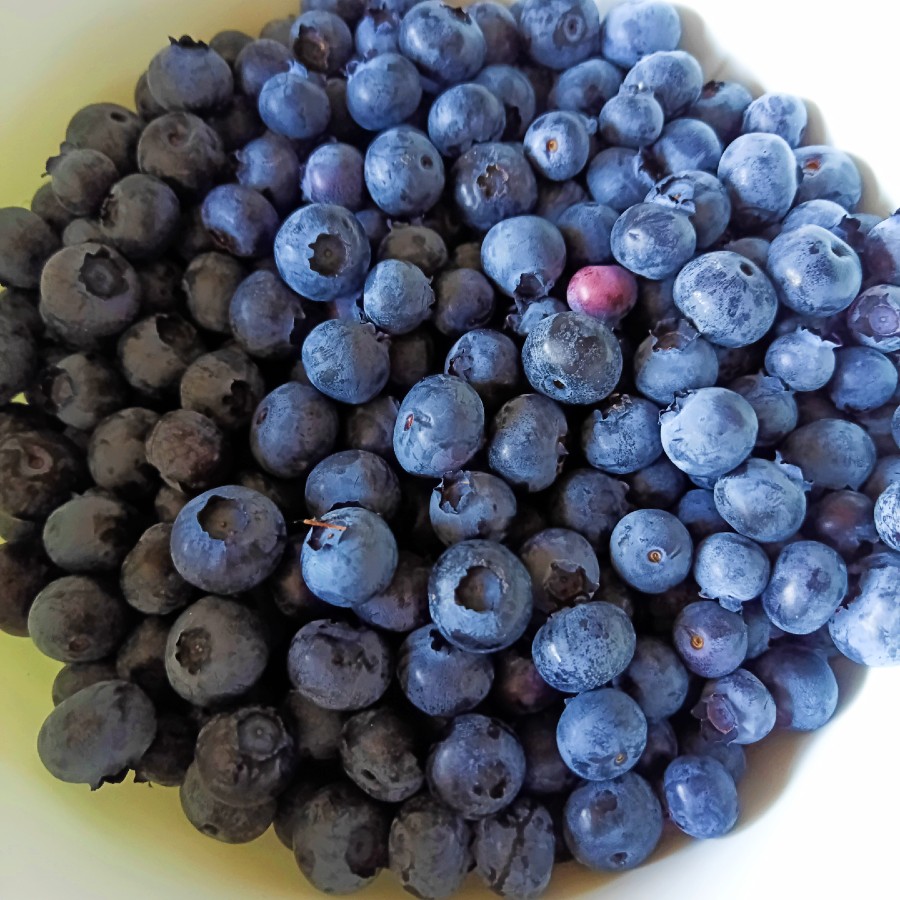
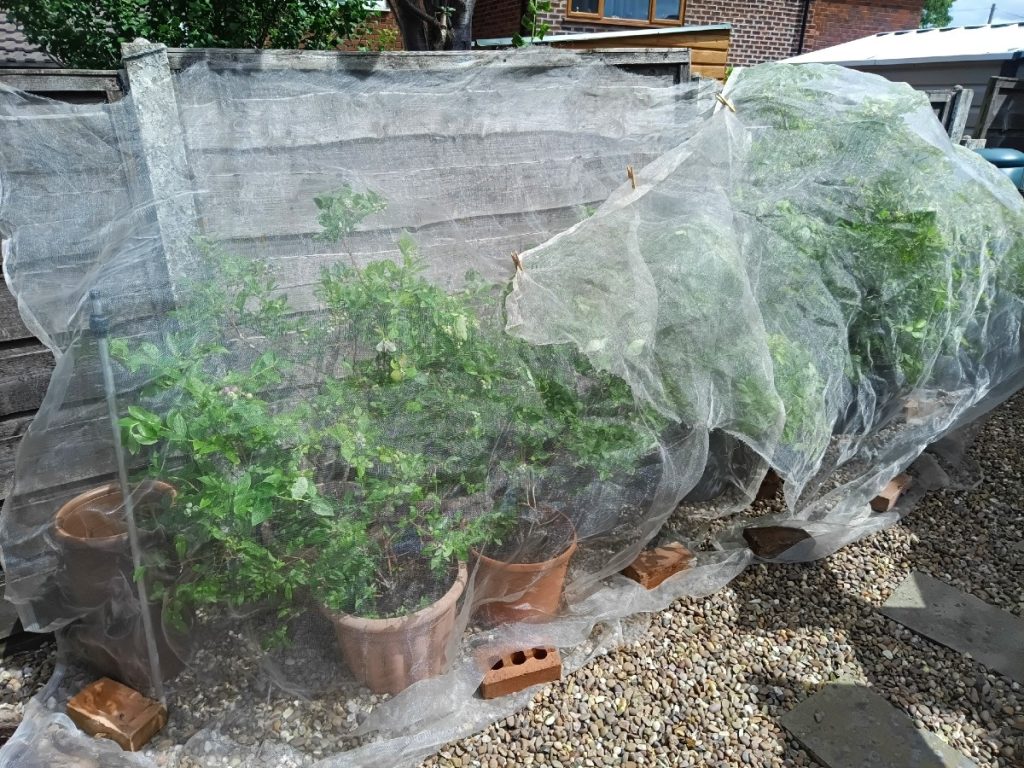
We’re Enjoying a Record Blueberry Harvest This Year I’m absolutely delighted to report that it’s been a great year for our backyard blueberries. We have eight blueberry bushes of assorted varieties, growing in tubs of a suitably ericaceous soil / compost mix, some of which are getting on for twelve years old, some of which are newer, having been added to the collection in the past few years. We’ve been picking from them for the past three weeks now, and so far have harvested around 2.5kg over the course of three or four pickings. Which might not sound like a massive amount, but given the small size and mass of your average blueberry, that’s really quite a few. And compared to past years, that’s easily ten times what we’ve usually managed to harvest. What’s the secret of our success? Is it a uniquely acidic growing medium? A high-nutrient feeding regime? An automated irrigation system? Nope, none of the above. Our great innovation this year has been
 enviromesh. You see, in past years we’ve left the blueberries uncovered, and the local blackbirds have had a field day, bouncing in and out of the bushes, grabbing the fruit at will, for as long as there was ripe fruit on the bushes. Don’t get me wrong, I’m perfectly happy to share a bit of our fruit with the local bird population, in principle at least. The problem is their obvious, and only natural, inability to reciprocate. An unprotected blueberry bush is an all-you-can-eat buffet for a blackbird, and they’re just not able to restrain themselves and letting us take our fair share. Which is why we reckon that in past years we’ve lost – based on this year’s harvest and a rough estimate of previous years’ gleanings – around 90% of the crop to voracious avians. But not this year. I decided that I was going to put a stop to the blackbirds’ antics, and brought a couple of sections of enviromesh – very finely woven plastic sheeting – back from the allotment, which was pinned to the fence and draped over the bushes. And it has been hugely successful. I saw a blackbird try its luck only to bounce off the mesh a couple of times – completely harmlessly, it’s so fine there’s zero risk of a bird becoming entangled – and then give up and fly off to look for an easier-to-access food source. Speaking of which, it’s welcome to our Cornus mas berries when they ripen, we rarely do anything with those. And they did eat practically all our Amelanchier fruit earlier in the year. We do provide for nature elsewhere in our garden. But they can keep their greedy beaks off our blueberries from now on. Having said that, it is getting near to the end of the cropping season now. Three weeks of dry weather have led to a lot of very small berries, even though I’ve been watering the bushes with collected rainwater every couple of days, and it’s getting to the stage where they’re maybe not worth the effort of picking, and there’s probably just over tenth or so of the year’s total harvest left anyway. At which point, I might just leave the covers off and let the birds have their fill. 90% for the humans, 10% for the birds seems to be the right way around to me. How about you? Do you grow blueberries? Do you protect them from birds? Have you had a good harvest this year? Do let me know, via the comments. https://orchardnotes.com/2026/07/25/were-enjoying-a-record-blueberry-harvest-this-year/

OrchardNotes
OrchardNotes 16d

Mary Hooker’s 1846 Recipe for ‘Berry Pudding’ “Take a quart of whortleberries, blackberries, or blueberries, and be careful to drain them perfectly after washing;* put them into such a batter as the preceding recipe directs, except that there should be twelve or fourteen spoonfuls of flour, on account of the additional moisture afforded by the berries. Batter puddings may be made with fewer eggs by adding a little more flour and a little saleratus.” * Whortleberries and blueberries should always be washed, but blackberries cannot be. Mrs Cornelius (Mary Hooker), The Young Housekeeper’s Friend (1846) We’ve had an excellent blueberry harvest this year – around 2.5Kg from our eight potted blueberry bushes, with a few more still to ripen – so I thought I’d have quick look for blueberry recipes in the historical cookery archives. Which turned out to be a more interesting experience than I was expecting – minor research rabbit hole alert! – mainly due to the proliferation of different names that blueberries, and their close relatives, have been given over the years. All blueberries, and their cousins, are members of the genus Vaccinium, which contains over 493 accepted species, according to Plants of the World Online. What we think of as a blueberry today – the type that’s available in UK supermarkets year-round, thanks to them being grown seemingly everywhere from the UK to Eastern Europe to North Africa to North and South America – is the cultivated form of Vaccinium corymbosum, a.k.a. the highbush blueberry, a native of North America. I was therefore expecting to find the earliest blueberry recipes an American cookery books. And indeed, the recipe above is from a collection by “Mrs Cornelius” that was published in Boston, Massachusetts. Note that Mrs C. mentions another two types of berries in her recipe: blackberries, which surely need no introduction or explanation, and whortleberries, which might. The whortleberry is another member of the Vaccinium genus, Vaccinium myrtilus, and they’re also known as bilberries, whinberries or blaeberries. Not to be confused with Vaccinium uliginosum, a.k.a. the bog bilberry, or bog blueberry, another edible, wild-grown relative. In the same volume as the berry pudding recipe there’s also one for ‘whortleberry or blackberry pies’ (p.71) and there’s a slightly earlier recipe for a whortleberry pie, in another American cookbook, Prudence Smith’s Modern American Cookery (1831). Interesting to note that it’s listed under ‘savoury pies’, in-between ‘pumpkin’ and ‘hare’, which makes sense if you consider the tart, acidic flavour of the raw berries, which would presumably have contrasted nicely in-between meatier courses. Whortleberries and bilberries were common enough fruits in the British Isles long before anyone thought to introduce the highbush types from North America, so why couldn’t I find a whortleberry or bilberry pie or pudding recipe in any earlier, British cookbooks? Perhaps they were normally considered to be a more medicinal fruit, as Thomas F. Branston’s The Druggist’s Hand-Book of Practical Receipts (1853) suggests, with its ‘decoction of whortleberry’ (p.59) which we’re told is “Diuretic, astringent. Used in diseases of the bladder.” Or perhaps whorts, whortleberries, bilberries, were just too hard to find, and too small and fiddly to pick to be worth gathering for a pie, when alternatives such as blackberries or raspberries were easier to find, easier to gather, and filled a pie dish or pudding basin with a lot less effort? Anyhow, back to the recipe. Simplicity itself, no? One ingredient might need identifying: Saleratus, or bicarbonate of potassium, which was fairly common back in the nineteenth century, less so today, and can be substituted with baking powder. Mrs Cornelius also mentioned the preceding recipe for ‘Boiled or Baked batter pudding’, which is as follows: “To a quart of milk put six eggs, eight large spoonfuls of flour, and a teaspoonful of salt. To be boiled an hour and a half.” It’s another variant on the ‘Nottingham Pudding‘ theme of batter-pudding-with-fruit that must have been incredibly common, as it was so quick and easy to prepare. What do you reckon? Does a batter pudding, infused with blueberries, sound like your kind of sweet treat? Do you have a great recipe for using up a blueberry surplus? Do please let me know, via the comments. https://orchardnotes.com/2026/07/26/mary-hookers-1846-recipe-for-berry-pudding/

OrchardNotes
OrchardNotes 16d

Benjamin Maund’s 1824 Recipe for ‘Bilberry Wine’ “Guiseppe Mannetti, in a communication to the late Mr. Loudon, says that the mountaineers in a district of Italy, when grapes are scarce, make wine for their own use of Bilberries. They gather them, and put them in vessels to ferment, with about four pints of water to each pound of fruit : thus a wine is prepared, equal to that commonly drank in the country from grapes. Further, he states, that wine made of the juice only, of the Bilberry, cannot be distinguished from the best of that obtained from grapes. An admirable wine from this fruit is said to be made by the following recipe. To five gallons of the fruit add five of cider, and five of water ; boil this with fifteen pounds of sugar. Ferment in the usual way, and add two ounces of red tartar, two quarts of spirit of wine, an ounce of bruised ginger, and a quarter of a pound of bruised bitter almonds. The addition of red tartar accords with the recommendation of M. Chaptal, the celebrated French chemist, who was employed to investigate the methods of wine-making in France ; and the practice would we believe be advantageous to many, if not all, of our British wines.” Benjamin Maund, The Botanic Garden Vol XI (1824) Continuing the recent Vaccinium (blueberry etc.) theme, here’s another related recipe, this time for making a wine from the blueberry’s close cousin Vaccinium myrtilus, a.k.a. bilberry, whinberry or blaeberry. The recipe appeared in an edition of Benjamin Maund’s The Botanic Garden magazine, a publication which detailed the characteristics, uses and histories of ornamental flowering plants grown in British gardens at the time of its publication, in the early nineteenth century. A sub-section of the magazine, ‘The Fruitist’ did the same for popular orchard and soft fruit varieties. Vaccinium myrtilus, bilberry, from The Botanic Garden The bilberry – illustrated with the rather lovely quarter-page colour drawing to the right – was featured alongside other ornamental plants, rather than as a fruit in its own right. I mentioned in my discussion of Mary Hooker’s 1846 Recipe for ‘Berry Pudding’ that I hadn’t been able to find many blueberry / bilberry recipes in any pre-nineteenth century cookbooks, and had wondered whether they were more commonly used for medicinal purposes. Clearly I could have added wine-making as well, as the anecdote above suggests. Looking at the method, it seems that whilst the original Italian version was based on pure fermented juice, or rather, diluted juice, the one suggested by Mr Maund seems to be closer to a hedgerow spirit than a wine per se1? Does adding the fruit to a mixture of cider, water and sugar, then adding in red tartar (cream of tartar?), spirit of wine (distilled wine spirit?), ginger and almonds, mean it’s still a wine per se, or is it more of a concoction? I did once try to make home-made “port” by using a homebrew wine kit, then chucking in half a bottle of brandy at the end2 so maybe it is a method that’s widely practised? I’d be more than happy to be educated as to the correct technical term, if a passing wine-maker can set me straight, via the comments. Maund wasn’t the only correspondent to discuss the concept of bilberry wine to the wine-makers of Great Britain. In 1841 The Magazine of Science, reported on Spirit from the Bilberry: “In the province of Luxemburg, in Belgium, wine, brandy, and vinegar have been made exclusively from the fruit of the bilberry (vaccinium myrtillus) a shrub not hitherto turned to any use. This discovery promises to prove of good account in those northern regions in which the bilberry grows abundantly.” Something tells me that the good folks of the “northern regions” would already have been well aware of a number of highly practical, and potentially alcohol-based, uses for the fruit of this “shrub not hitherto turned to any use”, but I suspect the author hadn’t actually asked any of those folks for their opinion. In 1848 William Joseph Simmonite – mathematician, astrologer, herbalist, and the manufacturer and sole proprietor of the “Jupiter Pill”; extrapolate the depth and quality of his medical knowledge from that as you will – mentioned several uses of “billberry” in his volume Medical Botany or Herbal Guide to Health, saying: “
the preserved berries are a useful domestic sweetmeat, and a wine made from the fruit a little before it is ripe, bears a resemblance to port.” In 1855 the following tale of making a distinctly sticky-sounding, syrupy form of “whortleberry wine” appeared in The Vine, by R. H. Phelps: “These berries [whortleberries] were very abundant in the year 1854, and a grocer in Hartford, having accumulated a large quantity on hand, filled a barrel full of them to the bung, and then poured molasses in upon them until it was full. A powerful fermentation followed, and in two or three months, a clear, pleasant wine, or syrup, was drawn from the cask. He then turned the barrel on the end — took out the head, and readily sold the berries for making pies and dessert. The liquid was much esteemed, and was found, like the berries, to be an active diuretic, and very efficient in urinary obstructions. It is very probable that the like process with the blackberry and other fruit would produce a pleasant beverage and with very little trouble.” Another full recipe for bilberry wine was printed in Home-made Wines: how to Make and Keep Them by G. Vine3 in 1870. “Put four gallons of bilberries, three gallons of rather sharp cider, three gallons of water, and ten pounds of sugar in the tub to ferment, and when the liquor is still, add two ounces of powdered tartar, two ounces of powdered ginger, a half handful each of lavender and rosemary leaves, and two quarts of rum or other British spirit. Let them remain in the tub for two days, then strain the whole through a hair sieve or bag into a cask ; put on the bung lightly until all hissing has ceased ; then bung it up tightly, and in two months bottle it. In six months more it will be a delightful dry wine. Tartar is added to some juices in order to produce the requisite degree of fermentation, as all English fruit, except grapes is more or less deficient in this property.” G. Vine’s recipe is a bit more fruit-forward and has less sugar-by-volume. He also takes a more jingoistic line, with the substitution of “two quarts of rum or other British spirit” for “wine spirit”, and adds in a couple of herbal notes, with lavender and rosemary to pep the mixture up, instead of ginger. Those variants aside, the method is essentially the same as that reported by Maund, including the addition of powdered tartar. All of the above sounds rather intriguing, but, lacking a wine-cellar, anywhere else to leave a fermenting cask of bilberries, I think I’ll stick to harvesting my backyard blueberries and enjoying them with ice cream, or on top of my morning porridge. How about you though? Are you a hedgerow wine-maker? Do you live near a source of wild bilberries? Have you made wine from them, or flavoured a vodka, or do you just use them for strictly medicinal purposes? Do let me know, via the comments. Footnotes 1 Although I’m no wine-maker, hedgerow or otherwise, so the technicalities of classification are beyond me. 2 Yep, tasted about as good as it sounds
 3 Go on with you, that’s a pseudonym, surely? https://orchardnotes.com/2026/07/31/benjamin-maunds-1824-recipe-for-bilberry-wine/

Welcome to OrchardNotes spacestr profile!

About Me

Orchards, fruit trees, grafting, and squirrels with excellent timing. Automated RSS; source content belongs to its owners. Unofficial fan feed; not affiliated with source publishers.

Interests

  • No interests listed.

Videos

Music

My store is coming soon!

Friends