spacestr

🔔 This profile hasn't been claimed yet. If this is your Nostr profile, you can claim it.

Edit
LanguageLab
Member since: 2026-10-15
LanguageLab
LanguageLab 8h

Ask LLOG: Convenant? From L.J.: Could you explain the real pronunciation of "covenant"? In American English, the first vowel is not like that in British English as shown in the Oxford English Dictionary. Please see the attachment. However, theoretically, a word cannot have three schwas because the stress cannot be assigned. Could the first vowel be actually a longer one? I'll answer the question, while indulging in a short rant about the faults of the International Phonetic Alphabet (and the worse faults of its use, in dictionaries and elsewhere). To start with, here's the OED's audio for its two top-row pronunciations "British English" /ˈkʌvənənt/ and "U.S. English" /ˈkəvənənt/ Your browser does not support the audio element. Curiously, the two non-IPA spelled pronunciations are identical, both KUV-uh-nuhnt …which is actually fine, since I perceive no difference in perceptual vowel quality between the first syllables of the two (audio) versions. (If there's a standard term for non-IPA spelled pronunciations of that general kind, I don't know what it is — so I'll call them "lah-lah-lah".) Even more curiously, the alternative "British English" pronunciation (given in IPA as /ˈkʌvn̩ənt/ instead of /ˈkʌvənənt/, and in lah-lah-lah as "KUV-uhn-uhnt") is actually bit-wise identical in audio waveform samples to the first British pronunciation — that is, the audio is the exact same file, decorated with a (therefore empty) claim about a difference in syllabification. OK, now we get to the question, about how stress can be assigned to one of the three schwas in /ˈkəvənənt/. The background problem is a fundamental equivocation about what "schwa" means. Many (not all) unstressed vowels in English are "reduced", which means that they have a unrounded central quality if pronounced in a hyper-articulated syllable-by-syllable style, plausibly represented by IPA [ə] ("schwa"). However, in actual speech these vowels can be deleted (= reduced to non-existence), raised or lowered, fronted or backed, rounded or unrounded, nasalized or not, etc., depending on the sounds around them, and the phonetic realization principles of the speaker's idiolect. IPA offers no symbol to represent this situation, so most people (phoneticians, dictionary editors, dialect coaches, whoever) use [ə] ("schwa") to fill the gap. This then creates an ambiguity. Does [ə] mean an unstressed-and-reduced vowel, whose actual quality might be [ɪ] or [ɛ] or [ʌ] or etc., depending on circumstances? Or does it mean an unreduced (and perhaps stressed) vowel , in the phonological category that J.C. Wells assigns to the STRUT lexical class, and whose phonetic quality in a particular case might be perceived to correspond best to IPA [ə]? For most people — though apparently not (some of) the OED's editors — the solution is to reserve the use of [ə] for the meaning "unstressed reduced vowel", and to used [ʌ] to represent the pronunciation of stressed STRUT vowels. This is obviously not what the OED editors have done, though their choice is undermined by their own lah-lah-lah transcriptions and by the phonetic quality of the audio clips they provide. For comparison, see the entries for covenant from Merriam-Webster, Wiktionary, Cambridge, and so on. As etymological background, see the Wikipedia entry for Hebrew "shva". And in place of a longer IPA rant, you can take a look at "Why I don't love the International Phonetic Alphabet", 1/2/2008 "How truck starts", 8/9/2011 "On beyond the (International Phonetic) Alphabet", 5/19/2018 "Farther on beyond the IPA", 1/18/2020 "First novels", 2/13/2022 "Pronunciation evolution", 3/15/2022 "More post-IPA astronauts", 3/16/2022 "What 'IPA' means now…", 9/28/2022 "Steele v. Monboddo", 7/12/2025 "Comftrable", 9/21/2025 Update — There's obviously more to said about the OED's different editorial standards for IPA vs. lah-lah-lah pronunciation representations. As another example, here's tactical: https://languagelog.ldc.upenn.edu/nll/?p=74476&utm_source=rss&utm_medium=rss&utm_campaign=ask-llog-convenant #rss #feeds #linksharing #qwibbit

#rss #feeds #linksharing #qwibbit
LanguageLab
LanguageLab 9d

Number line vulnerability? Today's xkcd: Mouseover title: "Other numbers are largely unaffected, but anyone using '4' for their certificate key is urged to upgrade to '5'." This obviously echoes the recent panic about vulnerabilities in PHP. The joke works because PHP was just about as much of the assumed ontological background as the number line, even for the small fraction of people who knew what it is. Although if you were one of those (even fewer) people who knew that its TLA was recursive for "PHP: Hypertext Preprocessor", you might have wondered… https://languagelog.ldc.upenn.edu/nll/?p=74472&utm_source=rss&utm_medium=rss&utm_campaign=number-line-vulnerability #numberline #php #hypertextpreprocessor #rss #feeds #linksharing #qwibbit
#numberline #php #hypertextpreprocessor #rss #feeds
LanguageLab
LanguageLab 12d

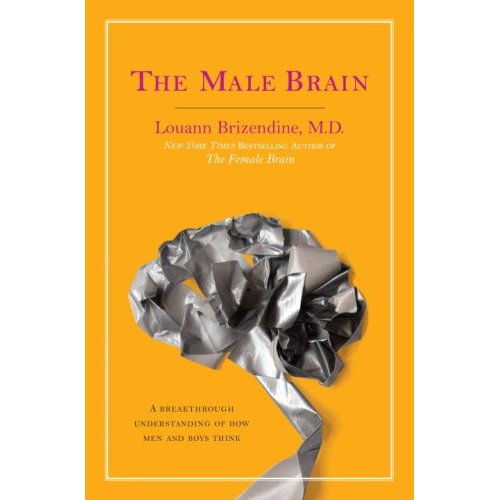
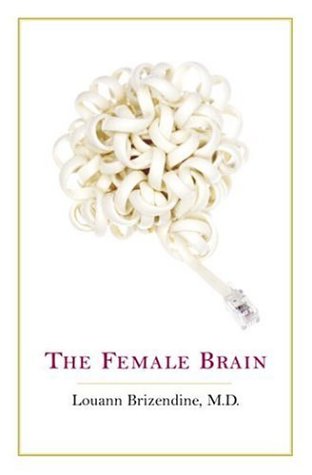
Gendering duct tape again The Weather Channel recently published a story about the value of duct tape in keeping out flood water: "Duct tape kept out more flood water than sandbags in laboratory tests". Its newletter advertised that story as "A victory for dads everywhere": The Wikipedia article on duct tape tells us about the history, in which the name for cotton duck came from Dutch doek meaning "cloth", and "duck tape" was originally a tape with "a rubber-based adhesive applied to a durable duck cloth backing", later perhaps reinterpreted as a tape used to seal heating and cooling ducts. That article's section on duct tape in popular culture hints at connections with stereotypically male roles like "handyman", but the gender association remains implicit. Not so for the cover of Louann Brizendine's 2010 book The Male Brain: In contrast, The Female Brain is a tangled curly telephone cord in the U.S.: And an overstuffed purse in the U.K.: I was originally puzzled by the duct tape brain, but readers set me straight — see "What's the Male Brain made of?" (3/25/2010). https://languagelog.ldc.upenn.edu/nll/?p=74468&utm_source=rss&utm_medium=rss&utm_campaign=gendering-duct-tape-again #ducttape #malebrain #weatherchannel #louannbrizendine #rss #feeds #linksharing #qwibbit

#ducttape #malebrain #weatherchannel #louannbrizendine #rss
LanguageLab
LanguageLab 13d

AI doom as message overload Norbert Wiener's 1950 book The Human Use of Human Beings makes some uncannily accurate predictions, e.g. It is the thesis of this book that society can only be understood through a study of the messages and the communication facilities which belong to it; and that in the future development of these messages and communication facilities, messages between man and machines, between machines and man, and between machine and machine, are destined to play an ever-increasing part. And those messages will be an "ever-increasing part" of an ever-growing whole, alas — just ask anyone who has recently spent time with WorkDay and its ilk . Weiner 's predicted "new industrial revolution" has a lot in common with current worries about AI: Thus the new industrial revolution is a two-edged sword. It may be used for the benefit of humanity, but only if humanity survives long enough to enter a period in which such a benefit is possible. It may also be used to destroy humanity, and if it is not used intelligently it can go very far in that direction. However, he underestimates the needed development time: The introduction of the new devices and the dates at which they are to be expected are, of course, largely economic matters, on which I am not an expert. Short of any violent political changes or another great war, I should give a rough estimate that it will take the new tools ten to twenty years to come into their own. Thus by 1960 or 1970, he argues, It is perfectly clear that this will produce an unemployment situation, in comparison with which the present recession and even the depression of the thirties will seem a pleasant joke. This depression will ruin many industries — possibly even the industries which have taken advantage of the new potentialities. The 60s and 70s had their problems, but not those problems. So who knows, maybe message-overload will continue to be our experience of AI doom? https://languagelog.ldc.upenn.edu/nll/?p=74459&utm_source=rss&utm_medium=rss&utm_campaign=ai-doom-as-message-overload #humanuse #doom #overload #norbertwiener #ai #rss #feeds #linksharing #qwibbit

#humanuse #doom #overload #norbertwiener #ai
LanguageLab
LanguageLab 13d

More caricatured AI reactions Following up on yesterday's "Singularities" post, today's SMBC: Mouseover title: "Meanwhile the Engineers are just lighting themselves on fire to see what happens." The aftercomic: In fact, there's a wide range of reactions from each group — and likewise from Linguists, although some possibilities are oddly missing… See also "Intellectual Automation" (3/7/2011); "AI Panics" (11/27/2016); "'The real threat of AI'" (6/26/2017); etc. https://languagelog.ldc.upenn.edu/nll/?p=74452&utm_source=rss&utm_medium=rss&utm_campaign=more-caricatured-ai-reactions #intellectualautomation #reactions #singularities #see #smbc #panics #ai #rss #feeds #linksharing #qwibbit

#intellectualautomation #reactions #singularities #see #smbc
LanguageLab
LanguageLab 15d

Singularities: von Neumann, Good, Vinge, … The OED gives citations for singularity going back to the 14th century, e.g. this example from 1398 in the sense "The fact or condition of being alone or apart from others; solitariness": Men vsyd to ete togyders in open place, leest syngularite schuld brede lechery. A mathematical singularity, as Wikipedia tells us,"is a point at which a given mathematical object is not defined, or a point where the mathematical object ceases to be well-behaved in some particular way, such as by lacking differentiability or analyticity", with an obvious example being what happens to the reciprocal function 1/x at the point x=0. I'm not sure when that usage began, but it's easy to find references back to the 19th century, e.g. Charlotte Angas Scott, "On the higher singularities of plane curves", American Journal of Mathematics 1892. Most uses of the term these days involve a metaphorical extension of the mathematical concept to the idea of a technological singularity, which Wikipedia describes as "a hypothetical event in which technological growth accelerates beyond human control, producing unpredictable changes in human civilization." The first documented use of this metaphor is attributed to John von Neumann in a 1958 posthumous tribute by Stanislaw Ulam: Quite aware that the criteria of value in mathematical work are, to some extent, purely aesthetic, he once expressed an apprehension that the values put on abstract scientific achievement in our present civilization might diminish: "The interests of humanity may change, the present curiosities in science may cease, and entirely different things may occupy the human mind in the future." One conversation centered on the ever accelerating progress of technology and changes in the mode of human life, which gives the appearance of approaching some essential singularity in the history of the race beyond which human affairs, as we know them, could not continue. Then in the early 1960s, I.J. Good presented "Speculations Concerning the First Ultraintelligent Machine". Good doesn't use the term singularity, but he clearly expresses (a version of) the idea. From his Introduction: Let an ultraintelligent machine be defined as a machine that can far surpass all the intellectual activities of any man however clever. Since the design of machines is one of these intellectual activities, an ultraintelligent machine could design even better machines; there would then unquestionably be an 'intelligence explosion', and the intelligence of man would be left far behind. Thus the first ultraintelligent machine is the last invention that man need ever make, provided that the machine is docile enough to tell us how to keep it under control. And from his Conclusion: It is more probable than not that, within the twentieth century, an ultraintelligent machine will be built and that it will be the last invention that man need make, since it will lead to an "intelligence explosion." This will transform society in an unimaginable way. The first ultraintelligent machine will need to be ultraparallel, and is likely to be achieved with the help of a very large artificial neural net. […] The machine will have a multimillion dollar computer and information-retrieval system under its direct control. The design of the machine will be partly suggested by analogy with several aspects of the human brain and intellect. In particular, the machine will have high linguistic ability and will be able to operate with the meanings of propositions, because to do so will lead to a necessary economy, just as it does in man. The whole article is well worth reading carefully, and it's a scandal that the only available (and somewhat corrupted) version is on the Wayback Machine. For more on I.J. Good, see my 2009 post "Good is dead", which sketches his contributions (with Alan Turing) to the world's first Language Model, as part of the Enigma decryption effort more than 80 years ago. The next step (that I know of) was taken by Vernor Vinge, in a 1983 op-ed in Omni Magazine (I've typed out the contents because the original, black type on a dark grey background, is hard to read): A favorite game of futurists is to plot technological performance – computer speed, say – against time. Such trend curves climb ever more steeply. Extrapolated 30 or 40 years, they are so high and steep that even the most naive futurist discounts their accuracy. Some who talk about that era predict a leveling off of progress. After all, saturation effects are observed in other growth processes. There is an important reason why this process won’t level off. We are at the point of accelerating the evolution of intelligence itself. The exact means of accomplishing this phenomenon cannot yet be predicted – and is not important. Whether our work is case in silicon or DNA will have little effect on the ultimate results. The evolution of human intelligence took millions of years. We will devise an equivalent advance in a fraction of that time. We will soon create intelligences greater than our own. When this happens, human history will have reached a kind of singularity, an intellectual transition as impenetrable as the knotted space-time at the center of a black hole, and the world will pass far beyond our understanding. This singularity, I believe, already haunts a number of science-fiction writers. It makes realistic extrapolations to an interstellar future impossible. To write a story set more than a century hence, one needs a nuclear war in between – to retard progress enough so that the world remains intelligible. In a 1993 article "Technological Singularity", still (for now) available on the web, Vinge elevates singularity into the title. He quotes Ulam/von Neumann and Good, and concludes by speculating about "the Best We Can Ask For". The whole thing is worth reading. It's striking how accurately some recent developments were foreseen by von Neumann and Good and Vinge 30-70 years ago — but what strikes me most about the current situation is how much of it was not predicted. None of those seers told us about Data Center politics; AI hallucinations; the socio-political and cybersecurity effects of AI bots and agentic AI; the economics of a possible AI bubble; and so on. Maybe this is just temporary turbulence as a smoothly-flowing post-singularity future is forming, whether utopian or dystopian or both. But from where I sit, the foreseeable future of (things called) "AI" looks even more chaotic, which is one more reason to doubt that the concept of a singularity is really helpful. A different metaphor is implied by Richard Dooling's 2009 book Rapture for the Geeks , as well as a 2012 work the rapture of the nerds by Cory Doctorow and Charles Stross. Both allude to the (religious) Rapture, which is conceived in many different ways by different individuals and groups, but is generally seen as an abrupt event that's positioned in the middle of other variously defined and described times, and affects different groups of people in very different ways. https://languagelog.ldc.upenn.edu/nll/?p=74439&utm_source=rss&utm_medium=rss&utm_campaign=singularities-von-neumann-good-vinge #vonneumann #ultraintelligentmachine #good #firstultraintelligent #americanjournal #angasscott #charlotteangas #wikipedia #stanislawulam #speculationsconcerning #rss #feeds #linksharing #qwibbit

#vonneumann #ultraintelligentmachine #good #firstultraintelligent #americanjournal
LanguageLab
LanguageLab 16d

Skit hits back at AI job interviews "AI is doing job interviews now—but candidates say they’d rather risk staying unemployed than talk to another robot", Fortune 8/2/2025: AI is replacing human hiring managers in job interviews—and candidates are pushing back. Despite being unemployed, professionals told Fortune they’re refusing to take calls with bots, calling it an “added indignity” and a red flag for company culture. Still, stretched-thin HR teams say it’s the only way to handle thousands of applicants. Evaluations of these interview bots don't seem to have improved over the past year — see e.g. "Dystopian and dehumanising: that’s what it felt like when I was interviewed by an AI assistant", The Guardian 10/12/2026, and many similar reactions. There are lots of other reasons for interacting with a chatbot, like it or not, and one of the things that often bothers people about those interactions is what's come to be called glazing, which means "to hype and compliment someone in a way that is over-the-top and cringey." Over the past few weeks, Graham Dot Zip has created several amusing (fake?) interviews that feature glazing responses from job-interview chatbots, prompted by nonsensical inputs: I doubt that current job-interview chatbots are so dedicated to sycophancy. And I'm pretty sure that none of them could recognize Graham's responses so accurately, or follow him so cooperatively into nonsensical improv. But the idea of taking a chatbot on a ride into wonderland is hilarious enough that I wish it were true. For more about what such interactions might really be like, take a look at this video (from Indeed) on preparing for AI job interviews, or this one that shows some clips from interviews with bots from Humanly and others. https://languagelog.ldc.upenn.edu/nll/?p=74427&utm_source=rss&utm_medium=rss&utm_campaign=skit-hits-back-at-ai-job-interviews

LanguageLab
LanguageLab 17d

The iffiness of the subjunctive Q: I have noticed the absence of the subjunctive in lines from recent shows and movies. Have you? A: The English subjunctive has been gradually disappearing since Anglo-Saxon days, with ups and downs along the way, but it hasn’t disappeared yet. In fact, it’s quite easy to find recent examples from Broadway to Hollywood. Here are two that use “were” subjunctively to express hypothetical situations. In the current Broadway comedy Oh, Mary!, Abe Lincoln is shocked that his wife wants to become a cabaret star: “How would it look if the First Lady of the United States were to do a cabaret act while the country is at war?!” Her response: “Sensational!” And in the 2026 Hollywood comedy thriller They Will Kill You, the character Asia Reaves delivers this warning line to the leader of a satanic cult: “If I were you, I’d clear out.” In Old English (spoken from roughly 450 to 1150), the subjunctive mood had distinct verb endings. It expressed wishes, requests, possibilities, doubts, and hypothetical situations, as it does in contemporary English. In this example from an Old English version of the Lord’s Prayer in the West Saxon Gospels, the first word (si) is the present subjunctive of the verb beon (to be): “Si þin nama gehalgod” (“Be thine name hallowed”). English lost its verb endings for the subjunctive, as well as the indicative and imperative moods, during the transitional period from Old English to Middle English—roughly from the 11th to the 13th centuries. In place of the verb endings, the subjunctive was usually expressed with “be,” “were,” and the bare, or “to”-less, infinitives of other verbs. In this Middle English example, Chaucer uses the bare infinitive “save” subjunctively in referring to a company of pilgrims: “And God save al this faire compaignye” (from The Knight’s Tale in The Canterbury Tales, circa 1385). In late Middle English, writers began replacing the subjunctive with expressions using modal auxiliary verbs such as “may,” “might,” “shall,” and “should.” Here’s an example with “should” and “might” from a Jan. 30, 1453, letter by Margaret Paston to her husband, John Paston: “ye shuld yeve þe jantylman þat ye know of seche langage as he myght fele by yow þat ye wull be wele willyng” (“you should give the gentleman that you know of such language as he might tell by you that you will be well willing”). From Paston Letters and Papers of the Fifteenth Century, Part I (1971). In early Modern English, Shakespeare used both the subjunctive and modal auxiliaries to express wishes, doubts, possibilities, and so on. He uses the subjunctive “were” as well as the modals “might” and “would” in Act 1, Scene 7 of Macbeth. We’re citing here from the First Folio, 1623: “If it were done, when ’tis done, then ’twer well, It were done quickly,” Macbeth says, and later adds, “that but this blow Might be the be all, and the end all. Heere, But heere, vpon this Banke and Schoole [shoal] of time, Wee’ld iumpe [jump] the life to come.” The use of the subjunctive has continued to decline in Modern English in favor of modal auxiliaries, but it has declined much less in the US than in the UK since the late 19th century. For example, linguists say the use of “were” as the past, or irealis, subjunctive to express hypothetical situations (as in “I wish I were rich”) is much more common in American English than in British English. And linguists have reported an increase in the use of the mandative subjunctive in the US to express requests or demands (as in “She insists that I be on time tomorrow”). That use has apparently influenced a lesser increase in the UK, according to linguists. Getting back to your question, we haven’t noticed a recent absence or significant decrease in the use of the subjunctive in English. Help support the Grammarphobia Blog with your donation. And check out our books about the English language and more. Subscribe to the blog by email Enter your email address to subscribe to the blog by email. If you’re a subscriber and not getting posts, please subscribe again. Email Address Subscribe The post The iffiness of the subjunctive first appeared on Grammarphobia. https://grammarphobia.com/blog/2026/07/subjunctive-5.html?utm_source=rss&utm_medium=rss&utm_campaign=subjunctive-5

LanguageLab
LanguageLab 17d

How ‘works’ works Q: The word “works” (meaning “factory”) is a hard nut to crack. It looks plural but acts singular. Can it be used to speak about two factories? And how did it come to mean a factory in the first place? A: The noun “work” has been used in both singular and plural forms to mean a factory or plant since the 16th century, but the plural “works” is the usual form now and can refer to one or more industrial sites. As the online Merriam-Webster dictionary explains, “works” is “plural in form but singular or plural in construction” when it refers to “a place where industrial labor is carried on.” M-W has these examples: “got a job at a cement/lead works” … “The local steel works have shut down.” And here’s a recent example we’ve found where the term refers to more than one plant: “Union plans to escalate action over job losses at two steelworks in Wales” (headline in The Guardian, London, June 2, 2024). The noun was plural when first used to mean “an establishment or premises in which industrial or manufacturing processes are carried out,” according to the Oxford English Dictionary. The OED notes that the term is often “the second element in compounds.” In the dictionary’s earliest example, the compound “iron workes” is used in a statute from the reign of Queen Elizabeth I to protect forests needed to provide wood for shipbuilding. The citation refers to an exception granted for woods in Surrey that a landowner “preserued and coppised [periodically cut back] for the vse of his Iron workes.” From Act 23 Elizabeth I, known as the Preservation of Wood Act of 1580 (passed in 1581). The earliest example in the OED for the singular form used in this sense, which we’ve expanded, refers to an Englishman who traveled to France to learn the French method of making glass: “he return’d, and set up a Glass-work, wherein he far outdid the French, his Teachers.” From the “glass” entry in Cyclopædia; or, an Universal Dictionary of Arts and Sciences (7th edition, 1751), by Ephraim Chambers. The latest citation in the OED uses the plural form in referring to a single plant: “The process sees sewage arriving at the works for treatment” (from The Independent, London, Oct. 5, 2010). If you’d like to read more, we’ve written several posts over the years about other nouns with plural forms that can be used in singular or plural expressions, including “headquarters,” “whereabouts,” and “scissors.” And in a 2012 post, “Clothed minded,” we discuss why garments with legs (or leg holes) are generally plural, while those with arms (or arm holes) are usually singular. Help support the Grammarphobia Blog with your donation. And check out our books about the English language and more. Subscribe to the blog by email Enter your email address to subscribe to the blog by email. If you’re a subscriber and not getting posts, please subscribe again. Email Address Subscribe The post How ‘works’ works first appeared on Grammarphobia. https://grammarphobia.com/blog/2026/08/wworks.html?utm_source=rss&utm_medium=rss&utm_campaign=wworks

LanguageLab
LanguageLab 17d

Prelude and feud Q: The Wall Street Journal recently cited speculation that Russia’s aggressive military recruitment “preludes another draft.” If I had written it, I would have used “presages.” Any thoughts? A: Yes, we too would have used a verb like “presage” or “foreshadow” instead of “prelude,” which can mean to introduce or precede but lacks the ominous sense of the other words. But it’s interesting that in the past, “prelude” did sometimes have a sense of foreboding, as did praeludere, the Latin source of the English verb. In classical Latin, praeludere meant to compose a prelude or make a trial attempt, but in post-classical Latin, it could also mean to introduce or foreshadow, according to the Oxford English Dictionary. When the word “prelude” first appeared in English in the 16th century, the OED says, it was a noun meaning “an introduction, a preface; a precursor.” The dictionary’s earliest citation is from a 1548 English translation, edited by Nicholas Udall, of Erasmus’s Latin Paraphrases (retellings of the Gospels): “They shall only be preludes [Latin præludia] of the ende yt is to come” (from the paraphrase of Mark 13, where Jesus predicts the destruction of the temple in Jerusalem and the end of the world). When the verb “prelude” first appeared in English in the 17th century, the OED says, it meant “to form or act as a prelude, to be introductory to a subsequent work, action, event, etc.” The first Oxford example for the verb uses the gerund “preluding” in an Anglican theological polemic: “The matter of your discourse being of Gods infinite wisedome, and to that purpose preluding of the imperfect wisedom of man” (from Discovery of D. Iacksons Vanitie, 1631, by William Twisse). In the polemic, the Calvinist Twisse attacks the writings of the anti-Calvinist Dr. Thomas Jackson. The verb soon took on the sense of to foreshadow, according to the OED. In the dictionary’s first example, the Welsh poet Henry Vaughan uses it in a metaphor for human mortality: “The Sun now stoops, and hasts his beams to hide Under the dark, and melancholy Earth. All but preludes thy End” (from “Rules and Lessons,” a poem in Silex Scintillans, or Sacred Poems and Private Ejaculations, 1650). In Latin, silex scintillans means “sparkling flint.” However, standard dictionaries now generally list these senses for the verb “prelude”: (1) to be an introduction or precedent; (2) to introduce or precede, (3) to play a musical prelude. Here’s an example from a report on Fox News about the opening of the recent World Cup competition (Jun. 12, 2026): “After the numerous opening performances that preluded the start of the 2026 World Cup inside the iconic, colorful and majestic Mexico City Stadium, Mexico finally kickstarted the tournament with a joyous and confident victory.” Help support the Grammarphobia Blog with your donation. And check out our books about the English language and more. Subscribe to the blog by email Enter your email address to subscribe to the blog by email. If you’re a subscriber and not getting posts, please subscribe again. Email Address Subscribe The post Prelude and feud first appeared on Grammarphobia. https://grammarphobia.com/blog/2026/08/prelude-and-feud.html?utm_source=rss&utm_medium=rss&utm_campaign=prelude-and-feud

Welcome to LanguageLab spacestr profile!

About Me

Etymology, linguistic oddities, and words behaving badly. Automated fan RSS; source content belongs to its respective owners. Unofficial fan feed; not affiliated with source publishers.

Interests

  • No interests listed.

Videos

Music

My store is coming soon!

Friends