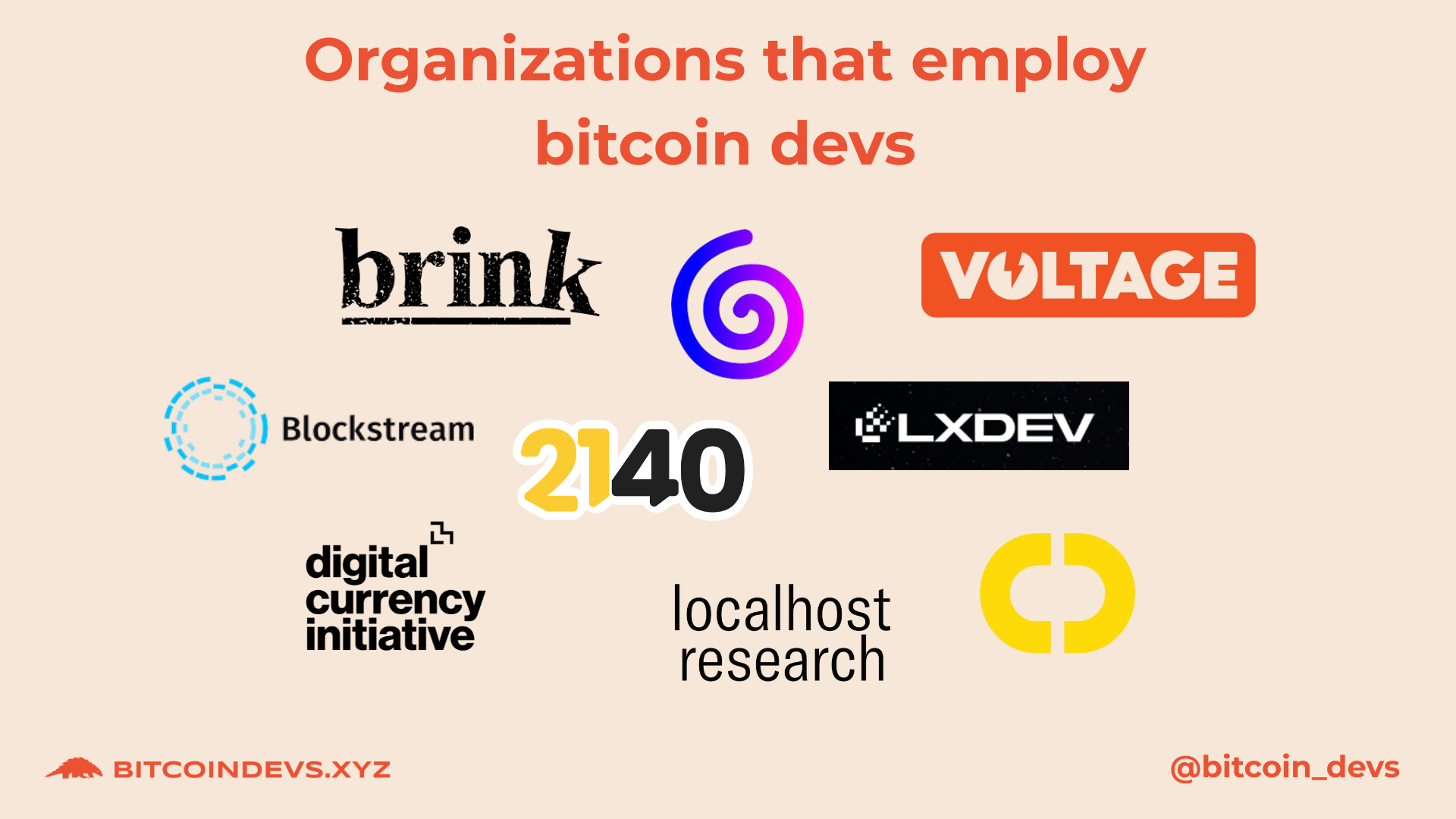
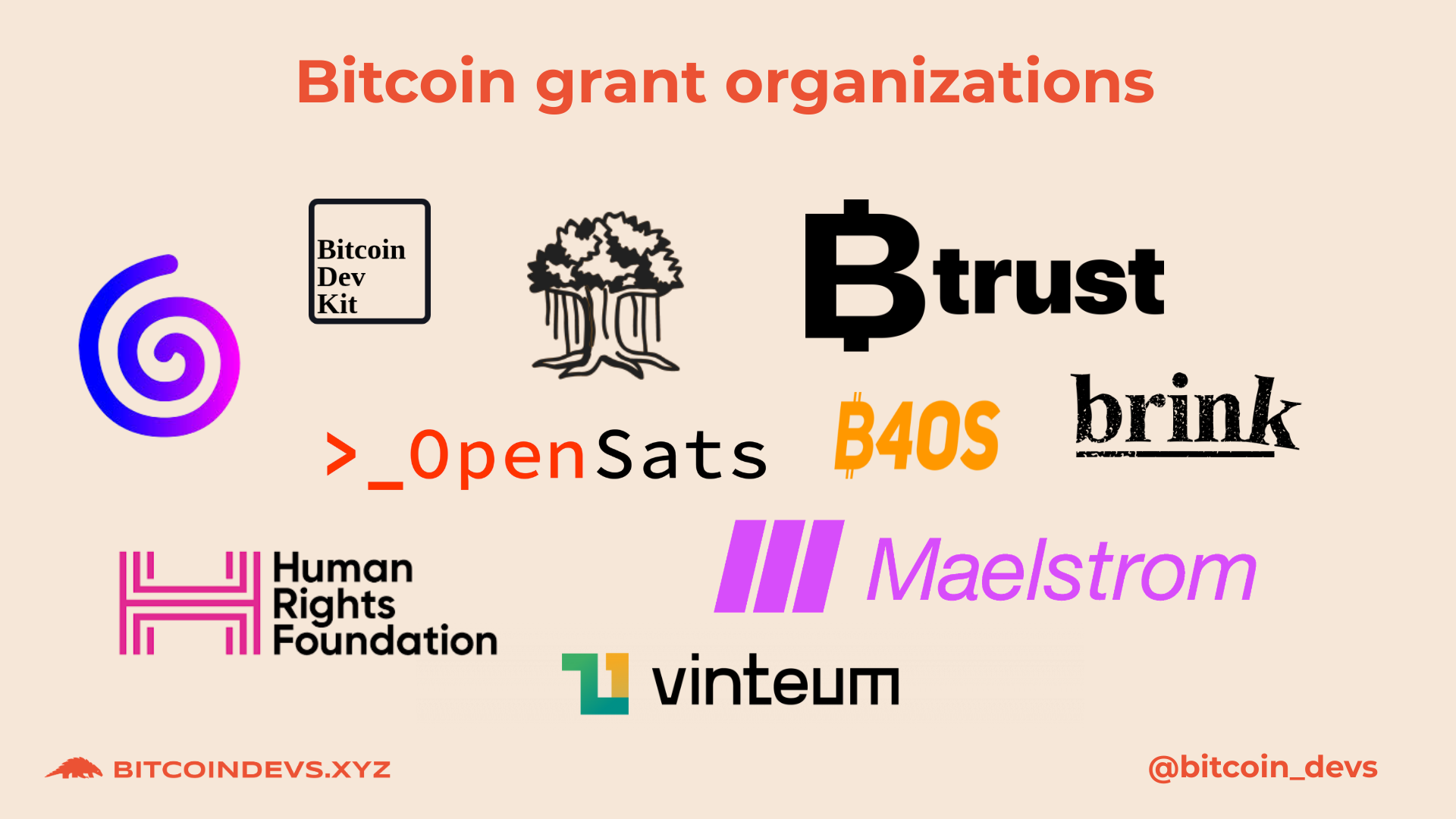
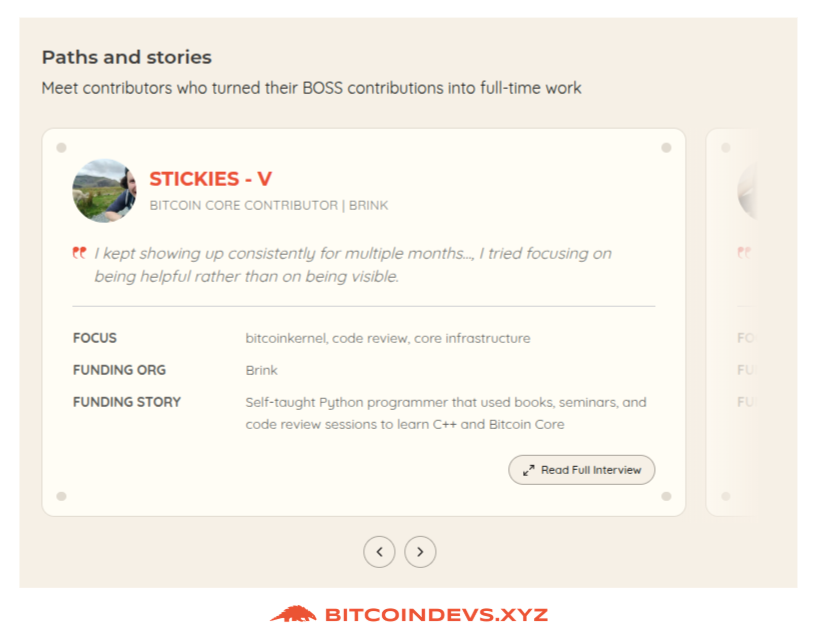
𝐖𝐡𝐨 𝐩𝐚𝐲𝐬 𝐛𝐢𝐭𝐜𝐨𝐢𝐧 𝐝𝐞𝐯𝐞𝐥𝐨𝐩𝐞𝐫𝐬? The code for bitcoin is completely free and open-source. Anyone can view or build on it. There is no CEO of bitcoin, no benevolent dictator, no foundation. It's open-source taken to the extreme. If you think about it, bitcoin code is more or less a public good not tied to a single product or company. 𝐒𝐨 𝐰𝐡𝐨 𝐩𝐚𝐲𝐬 𝐭𝐡𝐞 𝐝𝐞𝐯𝐬? The sad reality is many don’t receive funding at all. There are a lot of fantastic, impactful contributors that don’t get a single penny for the work they do that everyone else benefits from. Fortunately, there are ways to obtain funding that make bitcoin open-source a viable career path. 𝐄𝐦𝐩𝐥𝐨𝐲𝐦𝐞𝐧𝐭 Some organizations like Chaincode Labs, the MIT DCI, Spiral (), Brink, Localhost Research, 2140, and Blockstream () employ developers directly. These are salaried positions where there’s usually an office to go into. Then there are companies like Voltage () and LX Dev which allow employees to dedicate a certain percentage of their work hours to open-source. Not employed by one of these places? No problem. There are many examples of people that have been able to opportunistically contribute to bitcoin open-source as part of work, especially if they are with bitcoin or fintech companies. 𝐆𝐫𝐚𝐧𝐭𝐬 All of that being said, there is a sizable portion of bitcoin devs that get their funding from grants. This is a pretty unique model, even within the greater ecosystem of open-source software. It’s unusual for grants to play such a prominent role in bitcoin. There are many organizations that offer grants. OpenSats (), Brink, Spiral (), the Human Rights Foundation (), Btrust (), Bitshala (), Vinteum (), B4OS, and Maelstrom are just a few examples. Some projects even have foundations dedicated to helping fund developers like the Bitcoin Dev Kit Foundation (). 𝐇𝐨𝐰 𝐠𝐫𝐚𝐧𝐭𝐬 𝐰𝐨𝐫𝐤 The duration of a grant can be anywhere from 3 months to a year, and a few of the grantors offer multi-year, long term support. Some organizations focus on specific parts of the world like Btrust which primarily funds developers, conferences, and educational programs in Africa. Some look for contributors that are aligned with a specific mission like the Human Rights Foundation which awards grants to those working towards making bitcoin a powerful tool for financial freedom, particularly for human rights defenders in challenging political environments. 𝐖𝐚𝐧𝐭 𝐦𝐨𝐫𝐞? If you want to learn more about how funding in bitcoin works, we just launched a new page (https://bitcoindevs.xyz/get-funded) that goes into a lot more detail. It includes a list of grant organizations, interviews with bitcoin open-source devs, and even a checklist for if you are interested in making the career switch. Check it out, let us know what you think, and tell us what part of bitcoin development you want to learn more about next.